
A case study in planting small holdings

My friend, Pete, told me one evening he’d like to turn his seven acres into a more natural habitat but wasn’t sure how to go about it. “Don’t worry”, I told him, “Leave it with me, and I’ll connect you with Protect Earth”.
Not long after that initial conversation, Protect Earth came through, and the land is now several months planted, flourishing into a beautiful little woodland.
Many people have little and large pockets of land they want to plant and have questions about where to start. Let’s look at how Protect Earth helped my friend in rural West Wales transform his seven acres into a burgeoning woodland that will support loads of life in years to come.
Why would anyone visit rural west Wales to look at only seven acres?
Pete lives in rural west Wales. It’s beautiful - loads of space, beautiful rugged coastlines, hills, and on go the benefits. But it is pretty remote! There’s only one motorway in the whole country! And that remoteness can make people feel like they’re an inconvenience - who will come all this way to look at a few acres?
The process of surveying Pete’s land and ensuring it was suitable for planting and what species to plant was relatively straightforward.
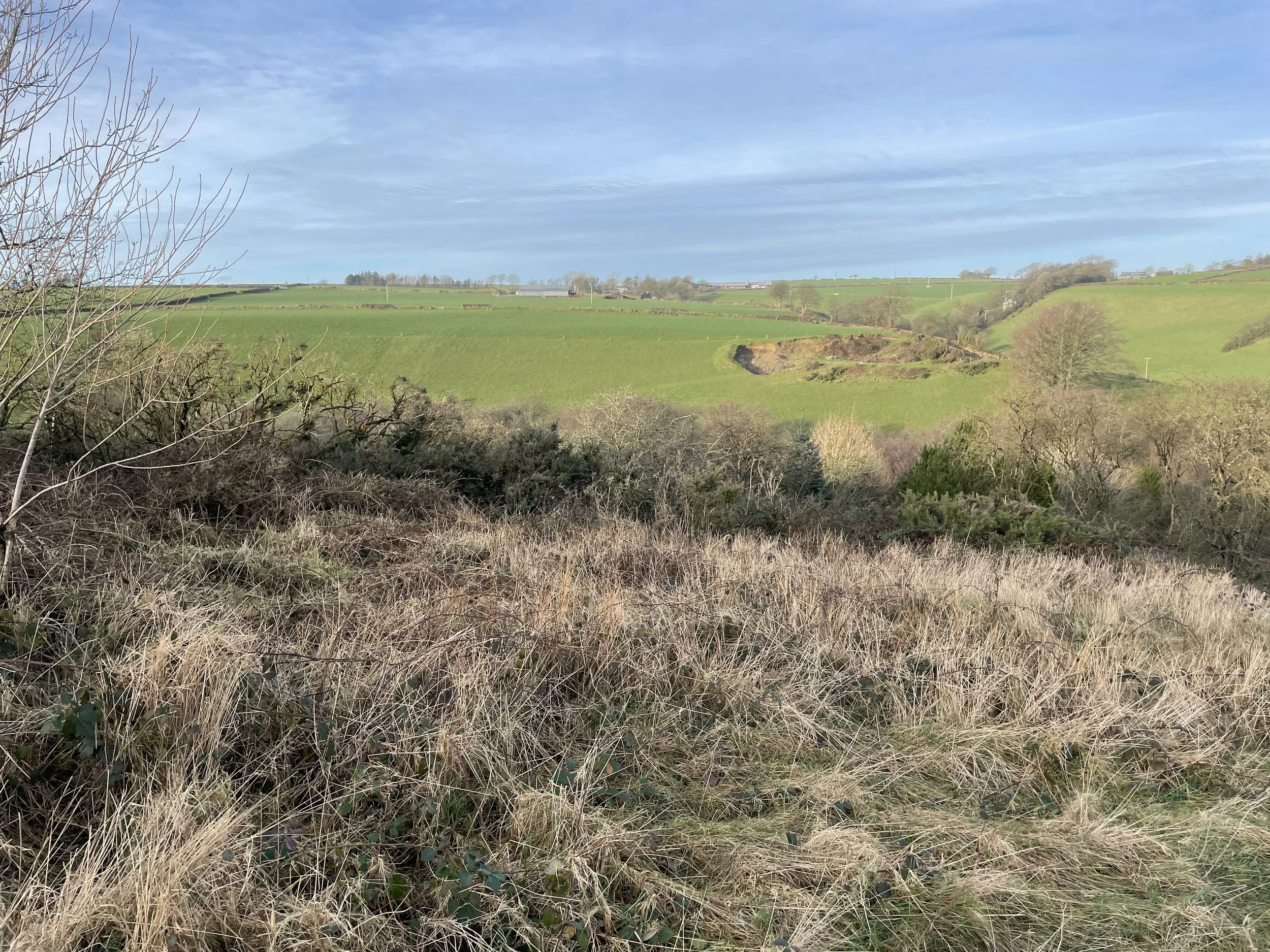
Steve looked at a few maps to understand the topography and water sources. He looked at Google Maps and Earth to better understand the site. And he researched the type of soil around Pete’s land. Using all that information, he put together a list of species best suited to the land and how densely they should be planted.
Steve’s suggestions, after his survey was to plant:
-
Alder
-
Aspen
-
Blackthorn
-
Crab apple
-
Downy Birch
-
Hazel
-
Sessile Oak
-
Rowan
-
Small-leaved Lime
How will I get the trees - who pays for them?
Peter was keen on getting the trees - he just wasn’t sure where to direct that keenness to get his hands on the trees. So when Steve devised a plan on what to plant, Peter was prepared to pay for the 500 trees himself.
But, again, Protect Earth was able to help and covered the cost of the trees, stakes, and guards. The landowner has already paid by providing the land, and they’re going to pay with labour looking after these amazing trees for decades, so hooking them up with funding from our funding partners like Ecologi and Reewild is no trouble.
How do I plant hundreds of trees?
Pete was confident he and the two tree planters he could enlist could finish the job. The other two lads are professional tree planters spending weeks and months away each winter whacking in tens of thousands of trees.
As it happened, the professionals bailed, and Pete was left alone looking at planting 500 trees! But I had planned on going along for the day. And Phil, Protect Earth’s founder, also arrived prepared for some planting. That night, the cycling club Pete and I ride with was having its AGM dinner. Phil, Pete, and I cycled over, we managed to get Phil a dinner, and the three of us cycled back to Pete’s to crash there as his family were all tied up doing other things elsewhere. Thankfully, Peter’s suggestion of trying his zip wire after returning from the pub in the dark wasn’t mentioned again!
We got up the next day and continued planting, staking, and guarding until it was done.
All species planted are native species and are varied enough to develop that all-important biodiversity!
What do I do when all the trees are planted?
The short answer is to enjoy it! Protect Earth - in the form of me - went back to Pete’s a few weeks after planting to take photos of the trees. The photos prove that Protect Earth did what we said we’d do, to be reimbursed for the project. But the photographing was super simple - we had lunch together, and I took photos for a few hours afterwards. Even though it was only a few weeks after planting, and there was little growth - it was still really rewarding to see. There were bird droppings on many of the stakes - clear evidence that life was already stopping by to eye up this nascent woodland as potential homes for them, their children, and their grandchildren!
To sum up
If you have a piece of land - large or small - that you’d like to develop its biodiversity but don’t know where to start, we do!
Protect Earth can help with any of these:
-
Planning the right species to go into your space,
-
Finding funding,
-
The paperwork for funding, and
-
Planting
Contact us - we’d be very happy to help you bring your ideas to life and see them flourish!