
Keeping Saplings Alive with Mulch Mats
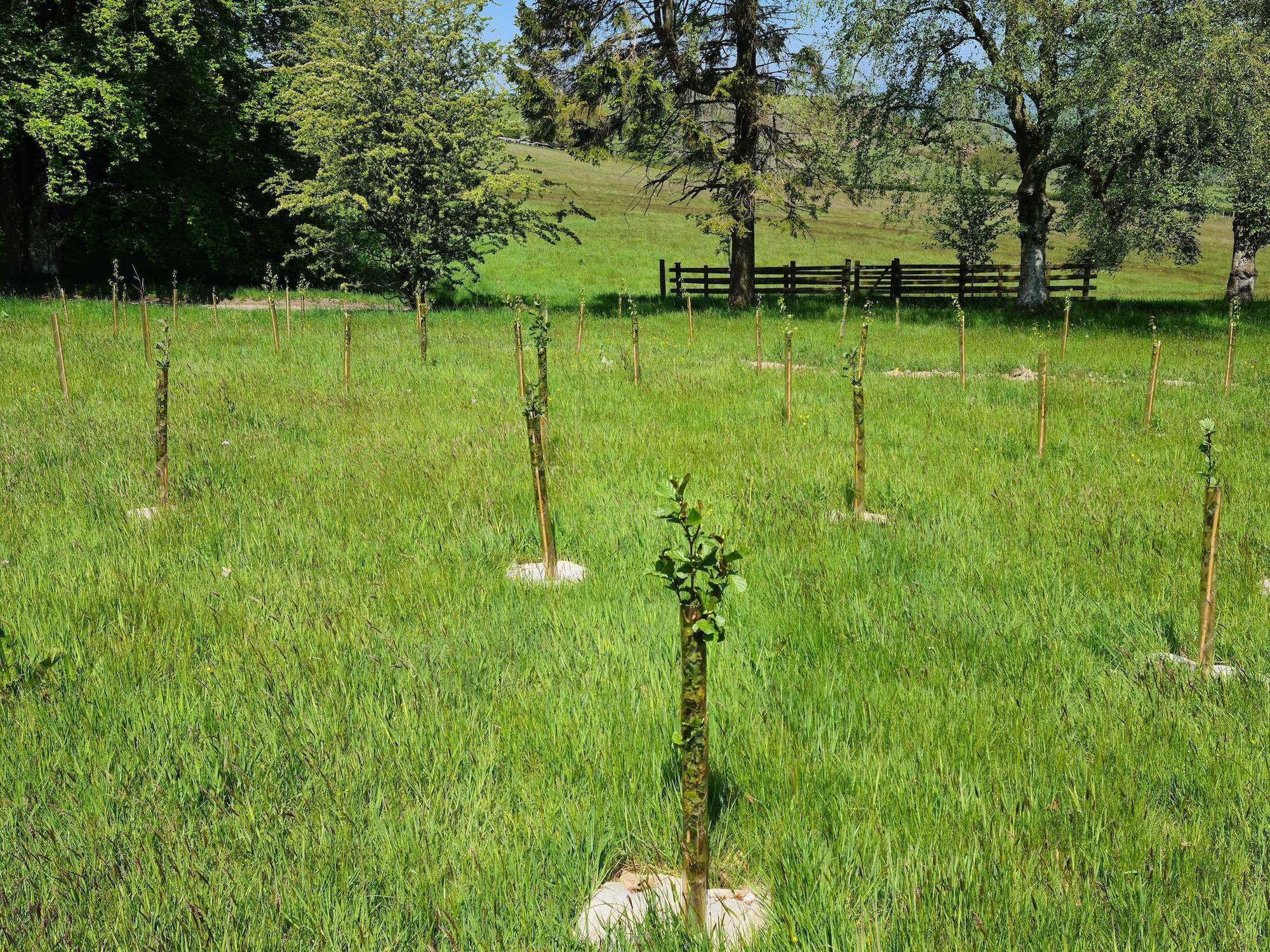
Tree planting season is October/November to March/April, depending on where you are, what the weather is doing. and what trees you’re trying to plant. Basically, the tree saplings at the nurseries go dormant when it gets cold enough in Winter, and they sprout in Spring, so you have that amount of time to get them all planted. This makes life rather hectic in winter, but there is still plenty to do the rest of the year.
Other than figuring out all the grants, permissions, finding land to buy, and land owners to work with, there is a lot of maintenance to be done. In spring everything starts to grow: saplings, grass, weeds. Our saplings are mostly “bare root whips”, small twigs that have been grown at a nursery for two years, then plopped into whichever field we are planting. Due to being so small, they can easily suffer competition from grass and weeds, and that can kill the saplings. This happens because the root systems for grass can be so thick just below the surface, that no water is able to get through to the saplings roots below. Weeds can grow so tall, that sunlight will not get to the leaves of the sapling, meaning it’s got no food, and no water.
So what do we do about it? There’s a few options. We could spray a bunch of chemicals around, that’s not particularly environmentally friendly. Chemicals can leech into the water table, kill other plants, and generally it’s not who we are. Hand weeding can help, but we’d have to hand-weed every few weeks. With sites spread all over the country, that is a tall order for a voluntary organization, and we do not want our land owners suffering through that mundane task when most of them have enough work growing food to feed the country!
Mulch mats can help, but usually they’re plastic. One shelterbelt we planted (thanks to funding from Ecologi!) had a team of professional planters, and they went for an experiment: a single, heavy duty plastic mulch mat on about 10% of the shelterbelt. The whole thing was laid down before any planting is done, pegged in place, then the trees are slit planted through it.
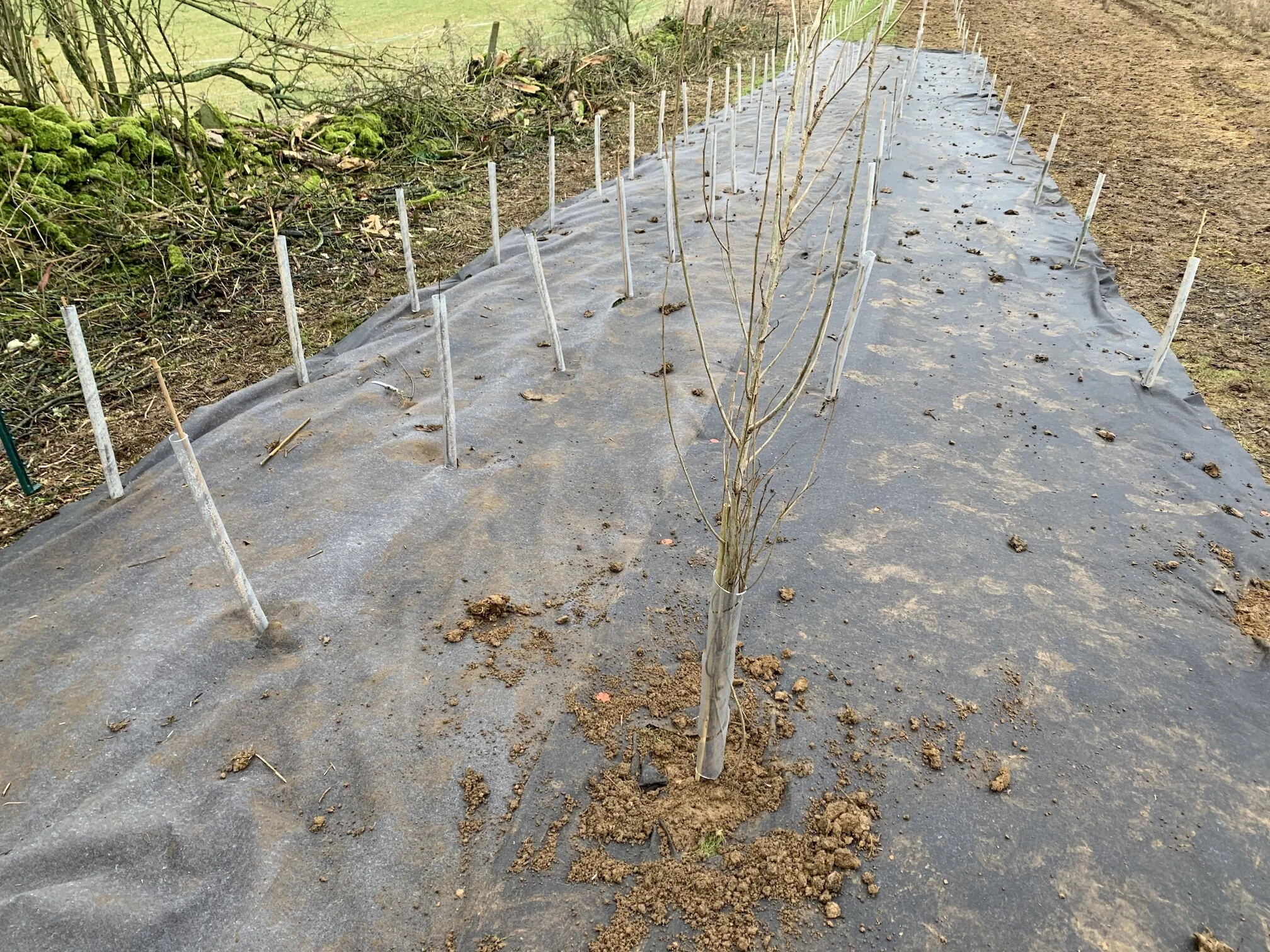
As mentioned in our article about tree guards, we want to avoid plastic whenever possible, especially virgin fossil plastic, which these mulch mats pretty much always are. Another concern with plastic is that water will not get through it, which can kill the tree… if you open up the plastic mat to let water through, you just end up with weeds coming out the gap and crowding out the tree from inside the tube!
We threw around a few ideas, like following “No dig” practices that suggest shoving down loads of cardboard boxes (big box stores, cardboard bicycle boxes, etc.). Before we had to even think about that, our friends over at Coforest introduced us to another option: hemp mulch mats!
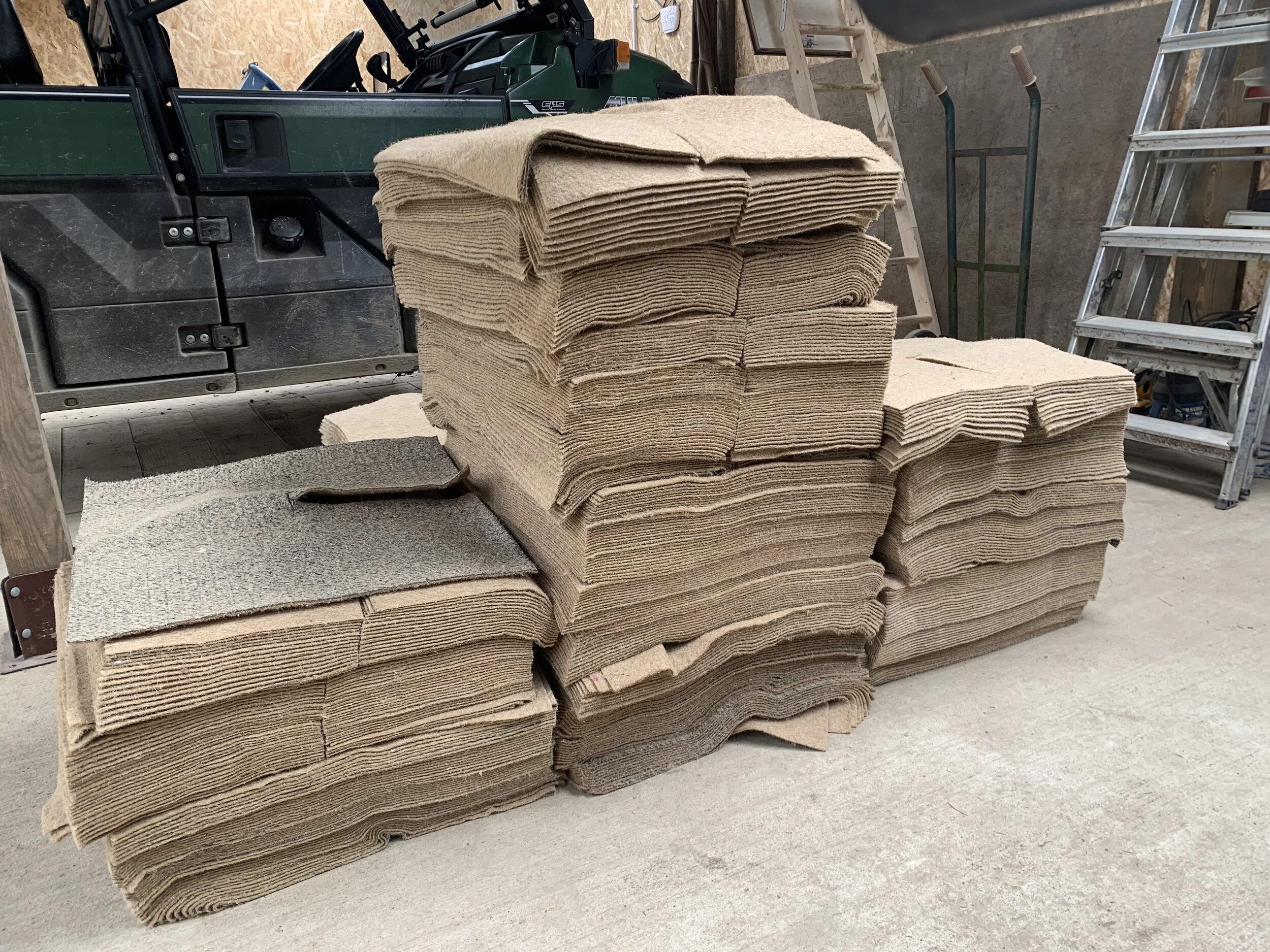
For about 70p a tree, we can put down these all natural, bio-degradeable, no-plastic mulch mats. They do the same job as the plastic mats: they’ll block sunlight from getting to the grass and any weeds waiting to pop up below, even right next to the sapling stem thanks to their slit design. Even better, they’ll let water through to the sapling too! They’ll last for about two or three years, then they’ll just be food for the sapling.
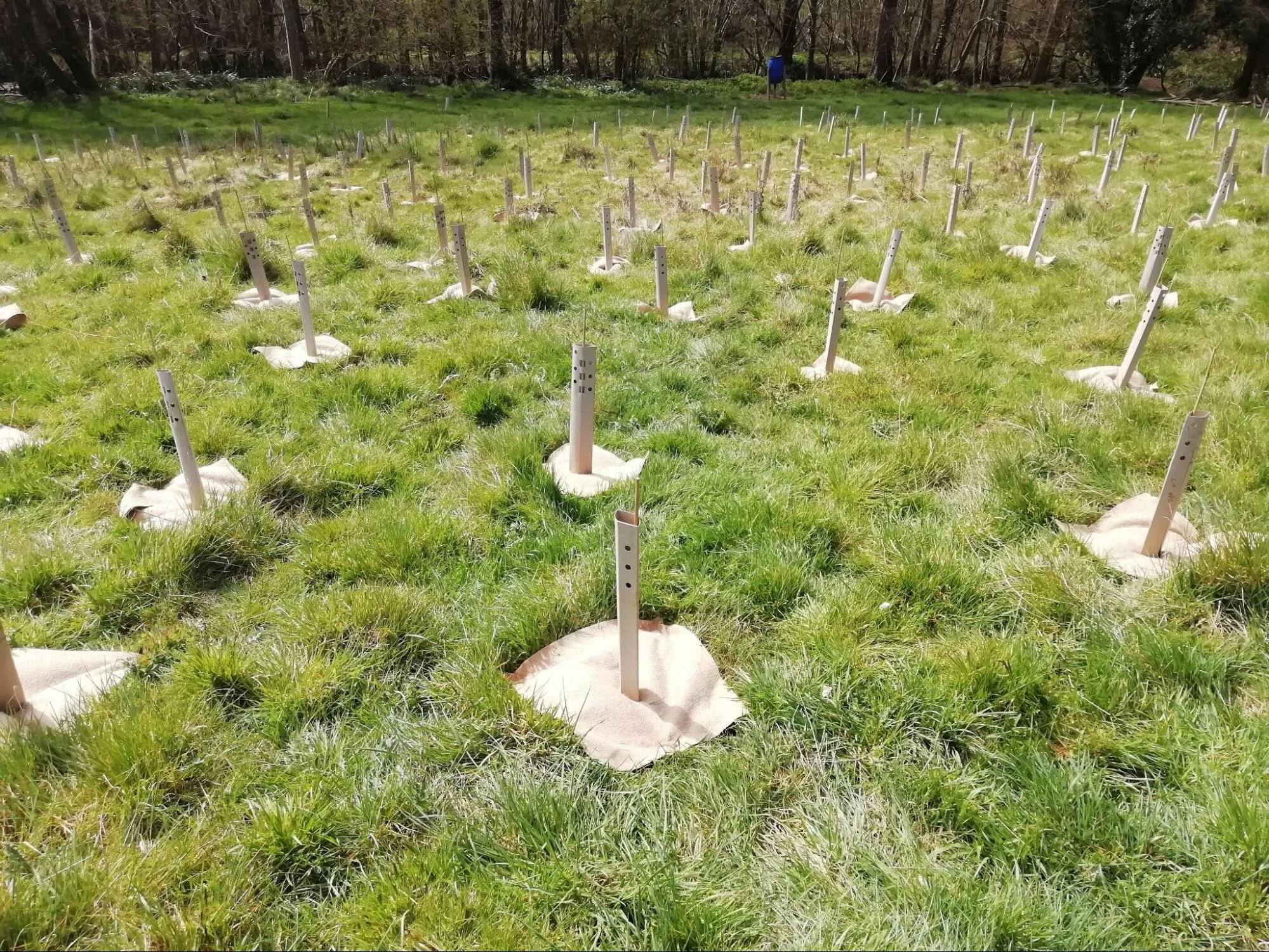
We are using Ecomatt Bio Weed Mats from Green Tech, and so far we’ve put down about 1,000 at Pantpurlais, Hazeland Woods, and South Lodge, and we have another 1,000 to put down on Howard Court on May 29th (volunteers welcome!)
Much of this is an experiment. We want to know:
-
How long will they actually last?
-
How effective are they at keeping back weeds and grass?
-
Will the bioplastic pegs actually biodegrade in place?
-
Will the survival rate of the trees with hemp mulch mats be noticeably higher than those without at the same site?
Avon Needs Trees (owners of Hazeland Woods) are experimenting with even more options in partnership with the University of Bristol. As well as the 500 hemp mulch mats we gave them, they’re also trying out:
-
Broken glass mulch - suns rays magnify and kill the leaves of anything popping up at the surface.
-
Woodchips in nets - reusing downed wood through a chipper and a net to stop it blowing away.
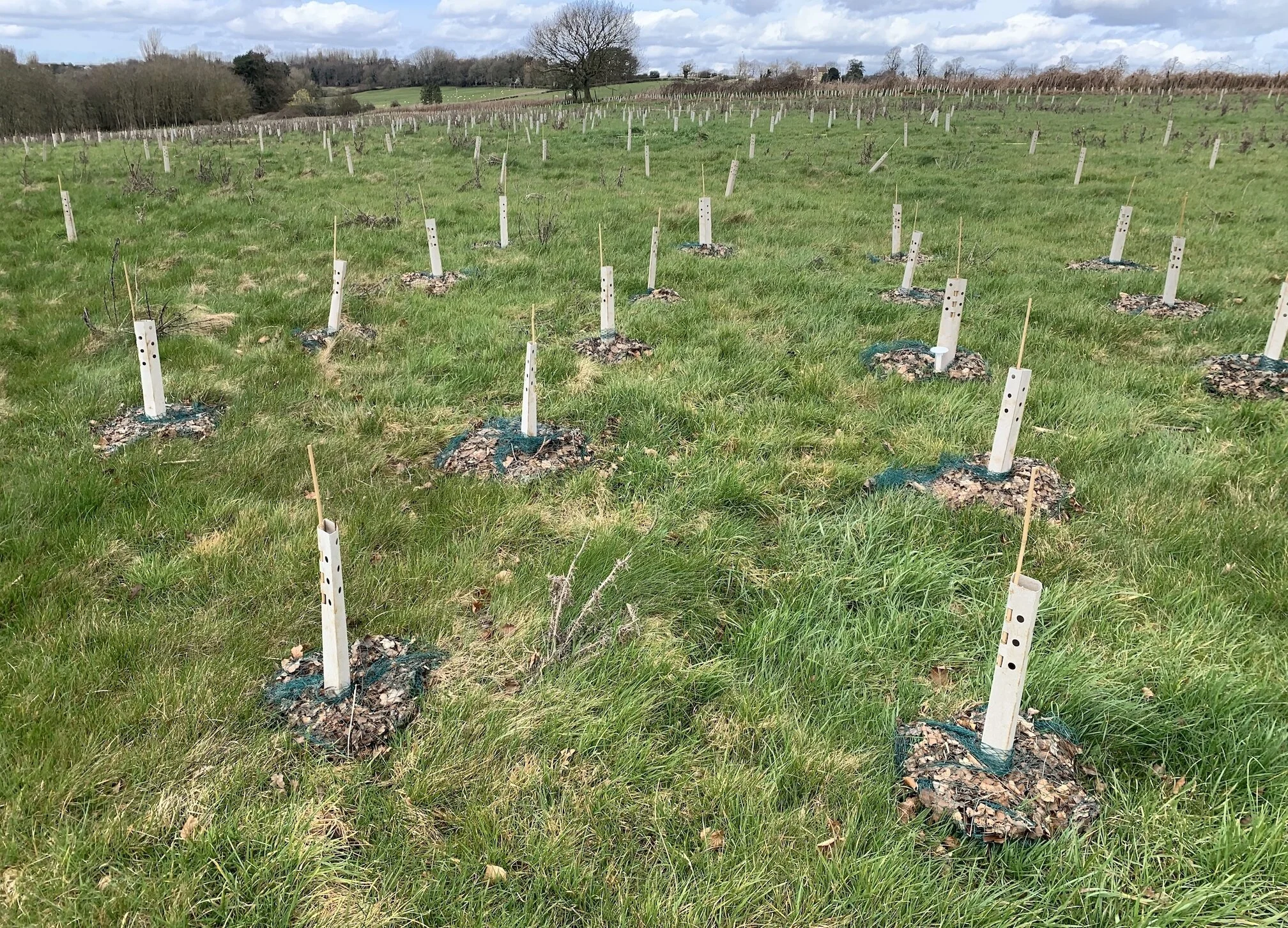
All really interesting stuff and we will be sharing the results of our own experiments, and linking to whatever the University of Bristol publish if it’s publicly available. In the mean time, there’s more mats to lay, and then we’ve got to start planning the watering of these trees, as summer is probably going to be vicious on these saplings…