
Biodiversity - what it is and why it's so important to achieve

Biodiversity? What? What can that word possibly mean? Isn’t tree planting sucking loads of carbon out of the atmosphere and storing it? Aren’t forests of trees being planted? Surely, planting a forest and they will come will work, right?
And, what’s really better - planting hundreds, thousands of trees or restoring only acres of biodiverse habitat?
There is some confusion about biodiversity out there. And, understandably so. This article will help you understand what a thoughtful approach to woodland restoration means and what it can achieve.
What’s the difference between tree planting and habitat restoration?
Tree planting is the simple act of planting a tree. And planting trees leads to the planting of a forest. And trees pull carbon from the air. All this is true! But, when it comes to forest development, you have to look at motives. Forests were created throughout the UK about 100 years ago because it was recognised that the UK harvested far too many trees and was far too reliant on international sources of timber. So, efforts were made to right that. Plantations sprang up all over. But, the demand to improve tree numbers in the short term was such that the trees had to grow quickly. These plantations were planted with fast-growing non-native conifers. That means around 36% of Britain’s total wooded area is non-native conifer today! Non-native species come with problems, though. They block light from shining onto the forest floor. They drop their needles and acidify the soil, spoiling soil conditions. And the lack of light and acidic soil creates an environment other plants can’t grow in. Non-native forests are very often devoid of wildlife. Wildlife hasn’t adapted to non-native tree species. Plus, with nothing else growing there, there’s no food to support wildlife.
Conversely, if a more considered approach is taken, it’s possible to create balance - a forest that can be harvested for timber and a home for many plants, insects, and animals.
How? It’s all in the title and approach - habitat RESTORATION. Projects that restore habitats don’t plant species that don’t belong. Instead, projects will look at various environmental factors (for example, soil conditions and moisture levels) and will look at matching native plant species to that habitat. Sometimes projects will also forgo planting trees throughout the entire space. Sometimes, space is reserved for meadows and open spaces. When the right plants are in place and settle in, they invite insects, birds, and other animals to come and check out the real estate to encourage them all to move in, creating new homes. As well as new insects, birds, and animals, some woodlands - depending on where they are - will also start to see lichens, fungi, and mosses start to grow. All these new plants, insects, birds, and other animals already live side by side and know how to live together, creating a biologically diverse ecosystem.
Benefits of habitat restoration
Biodiversity plays a critical role in maintaining the stability of ecosystems, protecting them from pollutants, foreign species, and disease. It also helps to reduce the impact of natural disasters and climate change by providing greater resilience and protection. Moreover, enhanced biodiversity can ensure that ecosystems are more capable of absorbing shocks while remaining relatively stable over time.
Why do we hear more about tree planting than habitat restoration?
The simple answer is metrics. The one place biodiversity doesn’t look like it’s more than tree planting is when it comes to the numbers.
Tree planting is recorded by each tree planted.
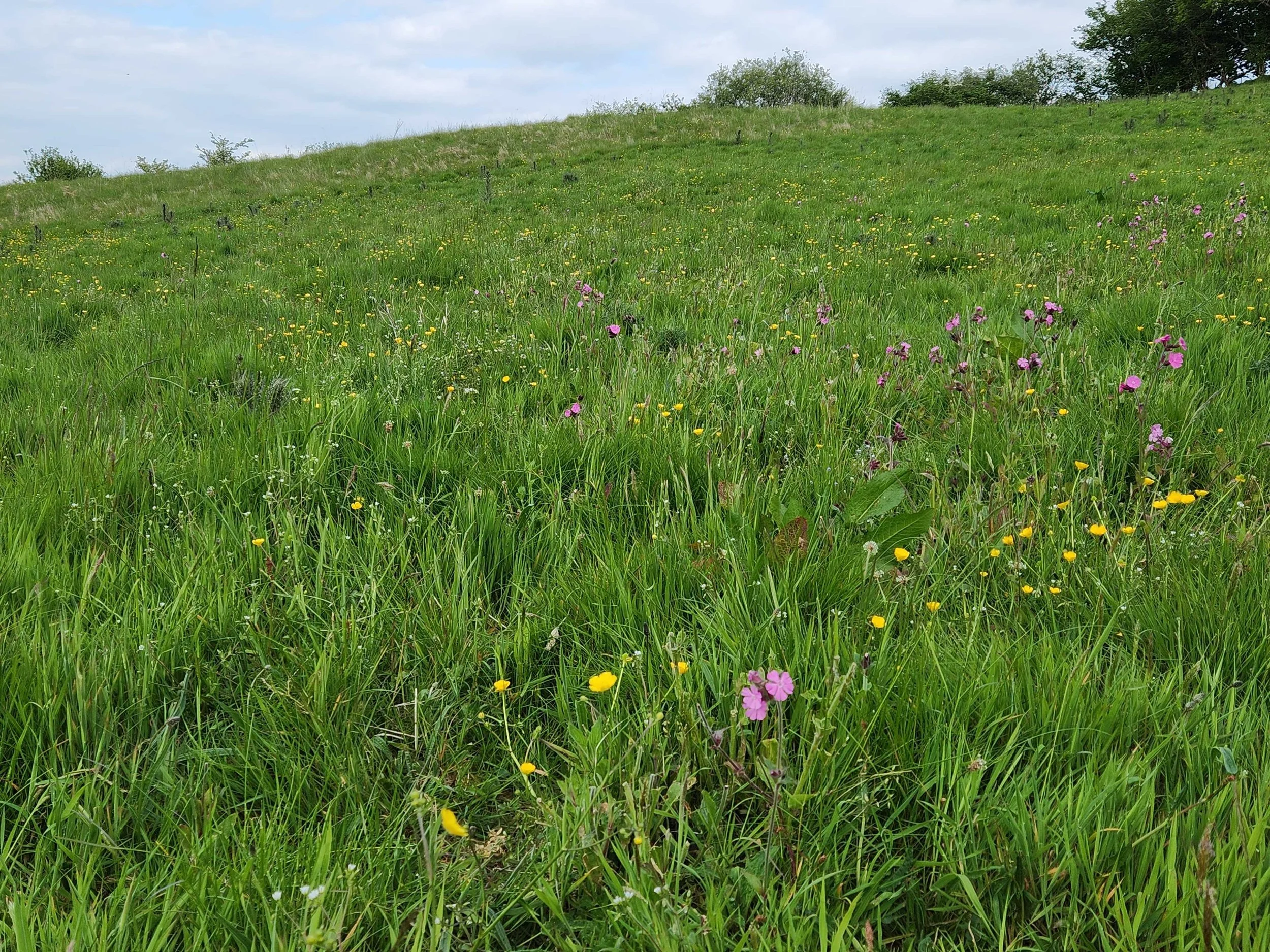
Some organisations talk about habitat restoration in the hectares, some in the acres, and others go with square metres. But, even square meters - four trees can be planted in one square metre!
And everyone wants to see big numbers - whether corporates or individuals, we all want to see our money and donations go as far as they can. So, it looks more impressive when you see that a tree planting project resulted in 1,000 trees planted rather than 2.5 acres of woodland restored. By the way, 1,000 trees would generally fit on 2.5 acres of land.
There are a few other factors why tree planting would seem more attractive than habitat restoration - it’s difficult to measure biodiversity development, and it takes time for these habitats to be fully developed.
To sum up
Rather than looking at the number of trees planted or space restored - the bottom line numbers to focus on are the expectations of improvement. Both tree planting and habitat restoration are being done to remove carbon and fight climate change. Where possible, it’s important to understand how much carbon will be removed from the atmosphere by a project, as that is ultimately the goal we’re all moving towards.