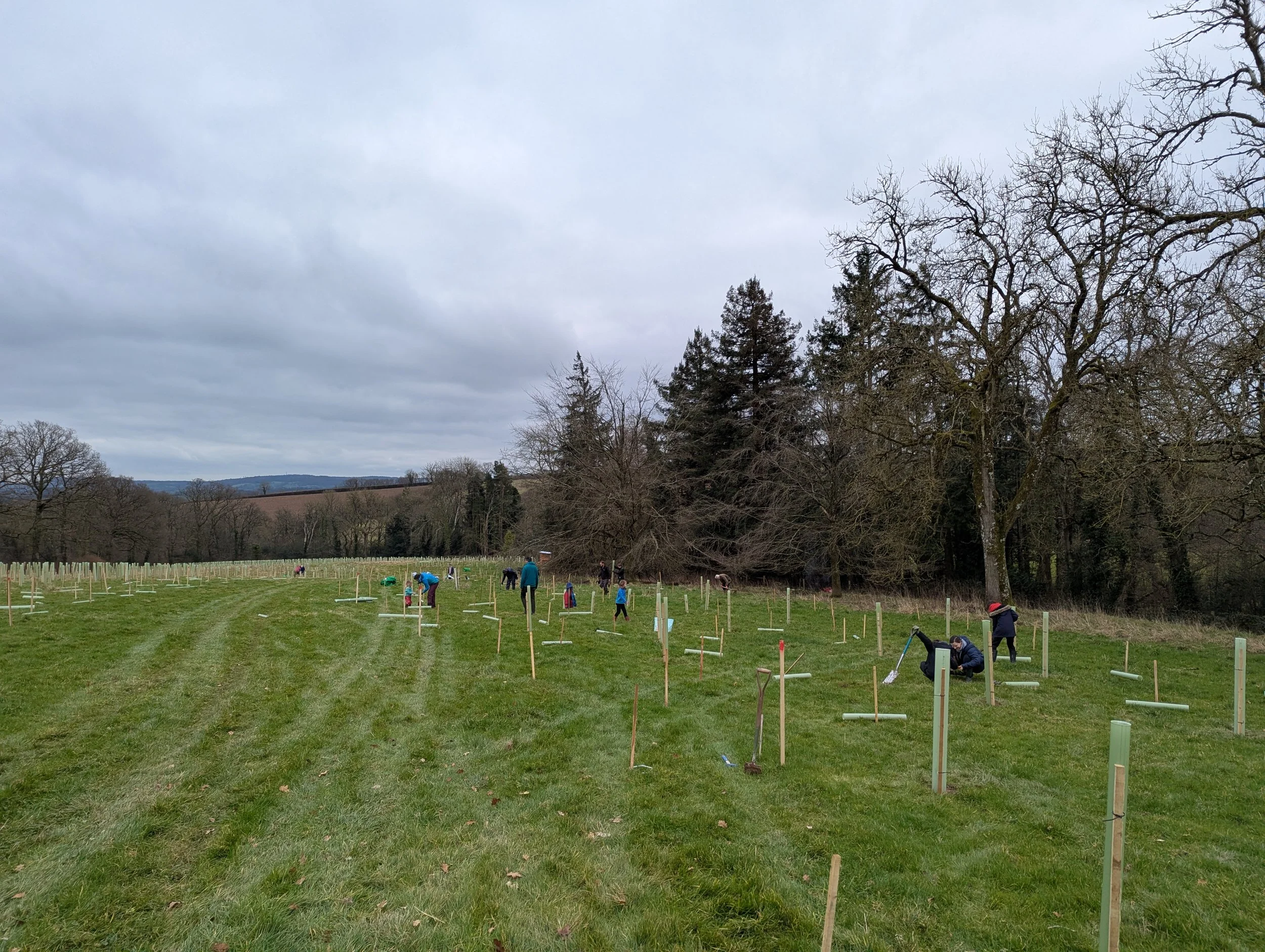
Blending Natural Regeneration and Tree Planting: A Woodland Success Story

Many in the environmental community and outside of it are divided on natural habitat restoration methods. On one hand, there are proponents for natural regeneration - leaving a space to itself and allowing nature to find a way. The converse is the interventionist approach of planning what species should be planted, their densities, and creating an artificial woodlands.
We’ve covered this old as time debate elsewhere. But this piece talks about a project where Protect Earth incorporated both methods on a 8.5 acre site!
What is Natural Regeneration?
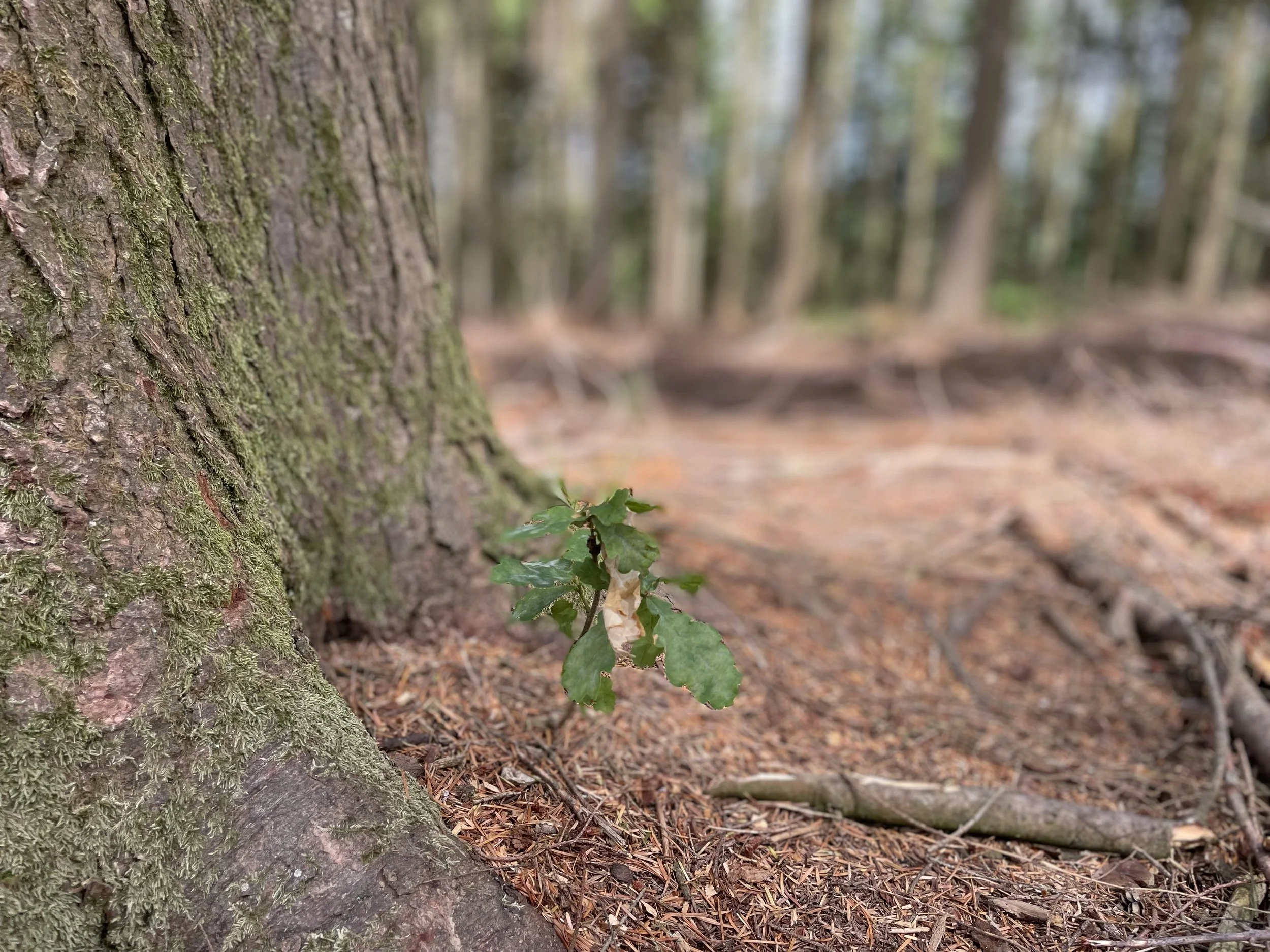
Natural regeneration in its most simplest form is to leave land unmanaged in the knowledge that nature will find its way creating a natural habitat.
There’s no doubt that nature will find a way. However, this approach does have shortcomings. One is availability and the other is time.
The UK is facing a biodiversity crisis, meaning that species supply is at a deficit. How can nature regenerate what isn’t there? When there’s the supply, nature can do wonders to restore habitats. But, in barren, nutrient deprived low-grade soils, nature can only do so much.
The second drawback to natural regeneration is time. Nature takes its course and it takes its time. Say you had an acre of former grazing land. Its surrounded by hedgerows demarcating boundaries. Hedges turn into trees if allowed and trees turn into woodlands if allowed. But, how long would it take nature to regenerate that acre? Tree planters could plant that acre in a day with the same species found in the hedgerows enabling the soil to recuperate and extend home availability and food availability for nature.
What is Tree Planting?
Tree planting is the act of going into a space, taking a sapling, and planting it. Do that ad infinitum and there’s a woodland.
It’s a fast and reliable way of developing woodlands helping to combat biodiversity loss. It’s artificial though. For the first 5 years, the landscape is marred by plastic guards that look more and more unsightly. And, it’s possible to see tree guards row on row as tree planting is usually done in rows.
Steve the Ecologist is rather relaxed in his opinion about this artifice. In the short term, he argues that creatures don’t care - if there’s food and shelter, they’ll happily inhabit a artificially created woodland. Over the longer term, nature will take hold - trees will fall and seeds dropped from trees will turn straight rows into unidentifiable shapes.
West Field Wood
Nestled within an area rich in biodiversity, West Field Wood has all the ingredients for a flourishing natural habitat. It borders over two acres of existing woodland on two sides and is home to Stockingford Water, a meandering brook that nourishes a valuable wet woodland—officially designated as a Local Wildlife Site. The remaining trees are remnants of ancient woodland, hinting at what once stood here and what could be restored with careful planning and stewardship.
Why Allow Natural Regen In Some Areas and Plant Other Areas of West Field Wood?
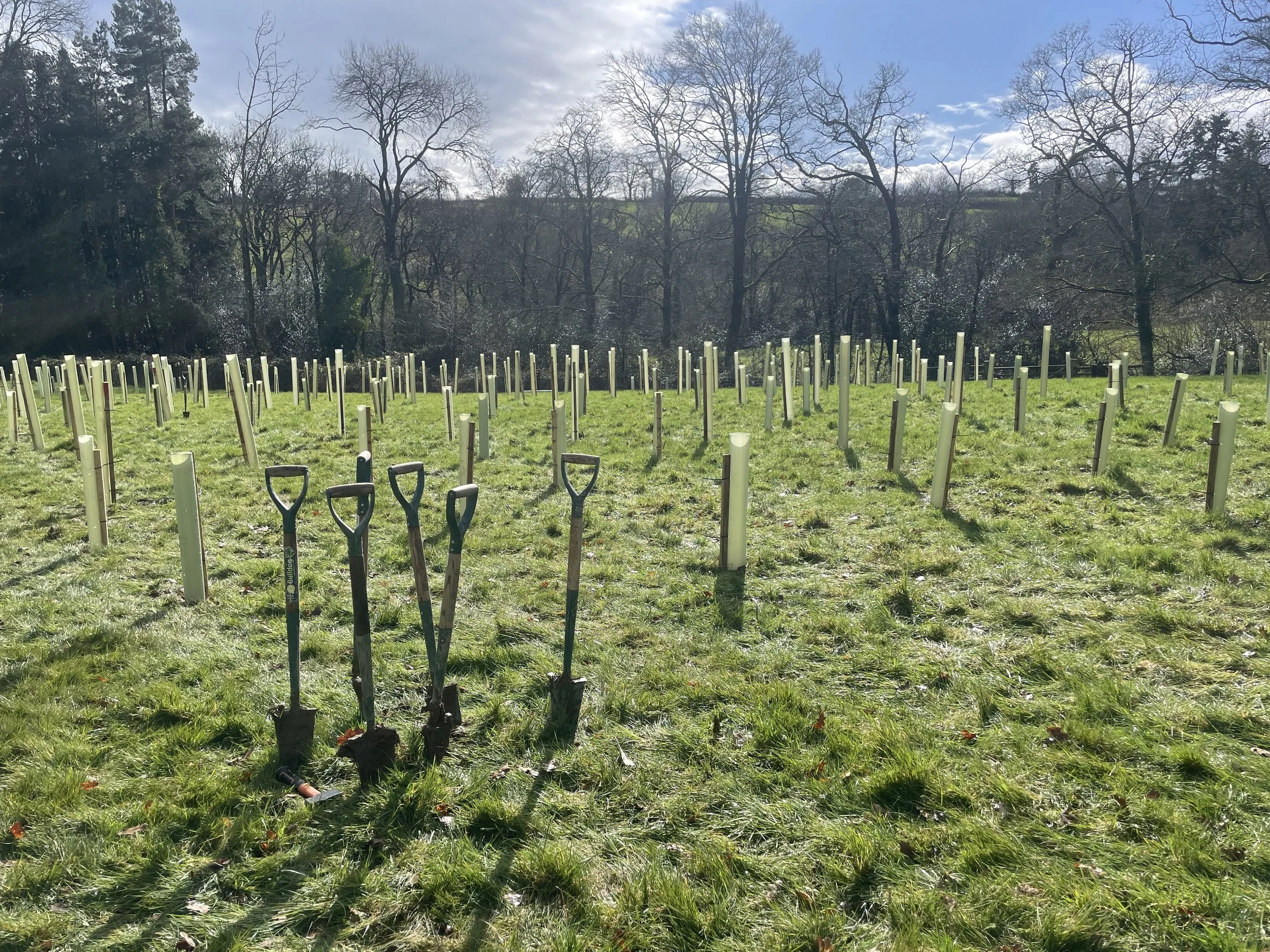
West Field Wood is only partly wooded. On two of its boundary lines, there’s extant woodland with traces of ancient woodland. Nature will seed that area with great seeds that will grow as fast as anything Protect Earth can plant. So, rather than waste resources planting saplings that would have occurred there anyway, we’d rather tag nature into action and let it be the manager there.
The remainder of the space is former grazing land with depleted soil health. It’s going to need more nurturing and it requires support to be planted.
Within two seasons, Wood Could Should now has 8.5 acres planted using two approaches. Over time, the benefits of an ancient woodlands and established woodlands will spill over helping the saplings we all planted to mature transforming low grad pasture land into a woodland supporting a wide range of biodiversity.
To sum up
Many see natural regeneration and tree planting as opposing strategies, but they can complement each other beautifully. Protect Earth demonstrated at West Field Wood that combining both methods can accelerate woodland recovery while preserving natural resilience.
Protect Earth has many more projects like this in the pipeline—but funding is always a challenge. Every donation and sapling purchase supports future woodlands. Help us grow more forests today.