
Removing Invasive Bamboo to Improve Biodiversity

Bamboo is an amazing thing. Some species of bamboo in their native habitat can grow almost one meter a day, can be used to make everything from toilet paper to clothes, and its CO2 drawdown potential is 10X larger than that of trees. People also love the look of bamboo, leading to its explosion across the United Kingdom, being available in every local garden center and B&Q around.
The problem is, bamboo is an invasive species in the UK. It says as much on the label in the store. Regardless of the color, species, or whether you’ve got the “clumping” or “running” variety, all types of bamboo can colonise huge areas of land. Even when “root barriers” are used, they’ll break right through that, and keep on going through the foundations of homes, invading neighbors gardens, going through *their *foundations, and spreading through nearby parks and disused land where access can be hard to do anything about.
So it’s a spreader? Does that matter? Sadly yes. Birds rarely nest in bamboo as the branches are so weak. Bamboo steals habitat from other native trees and plants, which is an issue for our rapidly declining bird, butterfly, and insect species which are used to the native species in the UK. Our wild spaces are already under threat from housing, road development, plastic lawns, and other invasive species.
No matter what positive aesthetic or carbon sequestration benefits bamboo may have, the negatives are too much for us to ignore. So we’ve started offering bamboo removal as one of our environmental action services alongside woodland creation, woodland restoration, and wildflower meadows.
After a few smaller experiments, we took on a huge job up near Bolton. Several homeowners in the village of Belmont (near Bolton) got in touch wanting to get rid of the bamboo that is taking over their gardens and their public space.
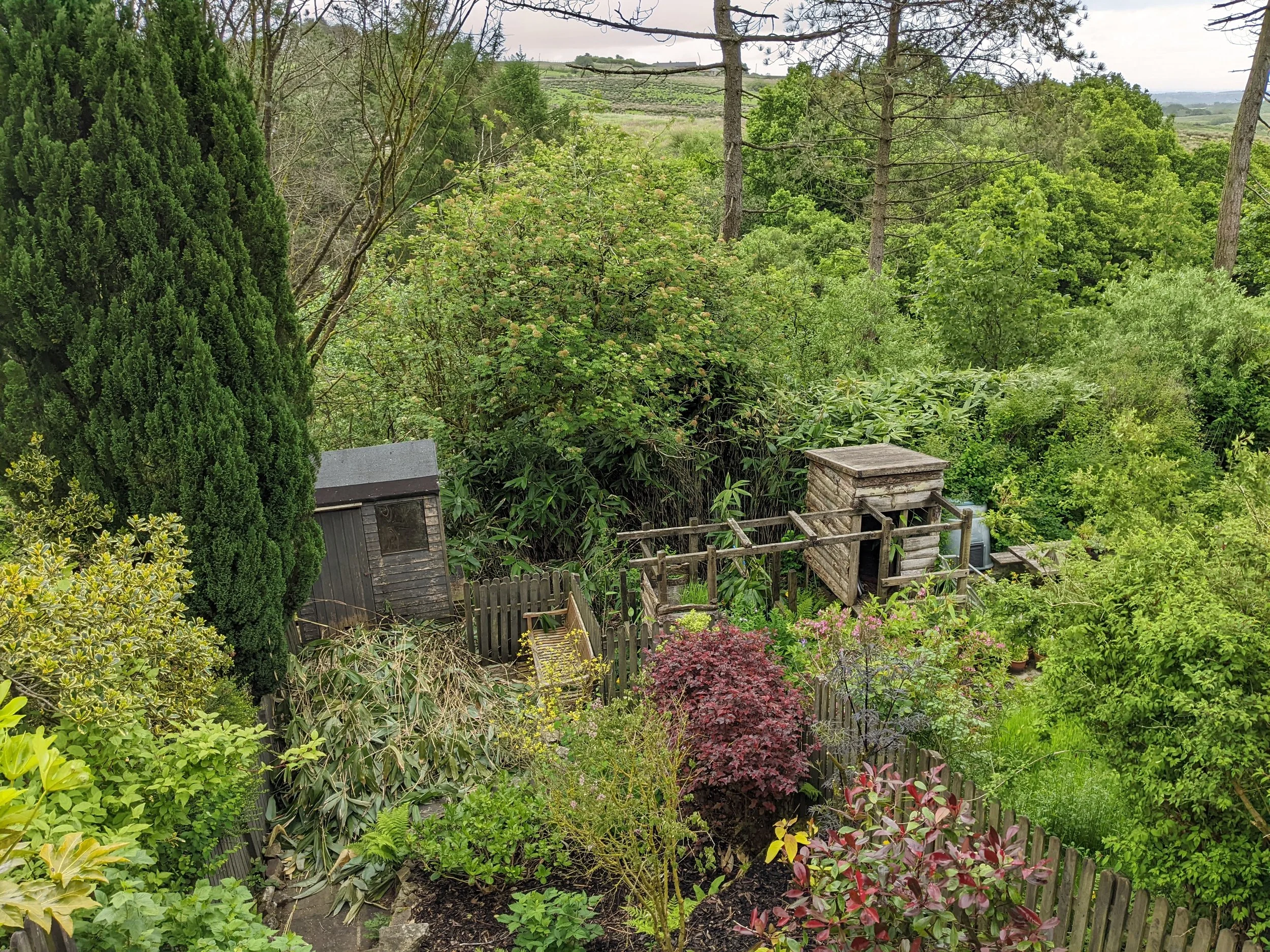
Many of them have tried to remove the bamboo over the years, but unless every single above ground stem is removed it will always come back, as the leaves are creating energy for the entire network.
A team of volunteers got together for several days of grueling work. The goal was to remove all of it, all at once. We had to cut every stem, even those over the edge of a steep hill behind the gardens, so harnesses and ropes were used and the cutting was done by experienced climbers.
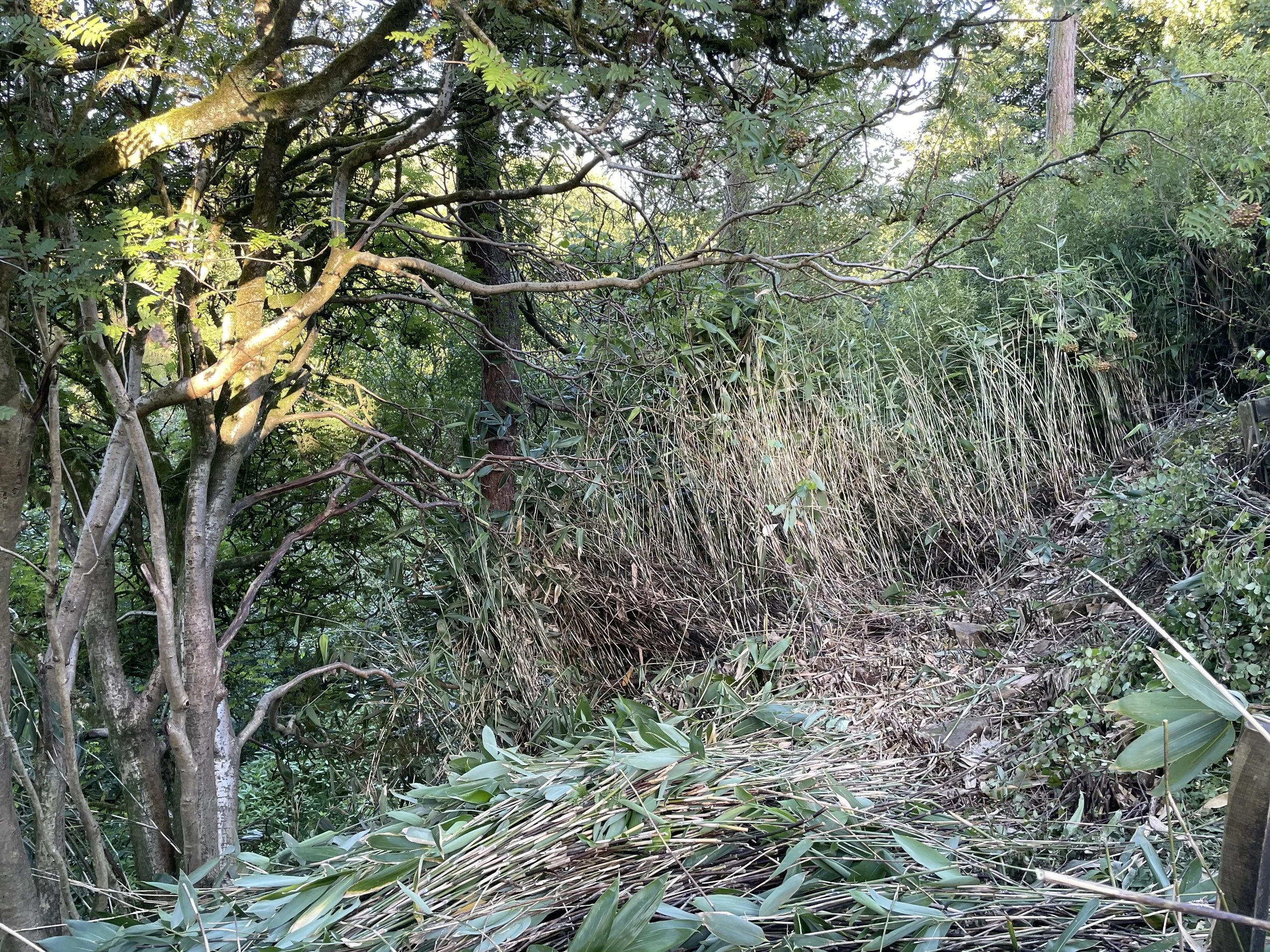
Once the bamboo stems are cut down, we process them by removing all the branches and leaves for composting, then cut the remaining stem into 1 meter segments. These stems will not go to waste. We dry them out in covered piles for a few months to dry them out (otherwise they’d simply reshoot when we planted them), and when they’re completely dead and tough we can use them for planting trees!
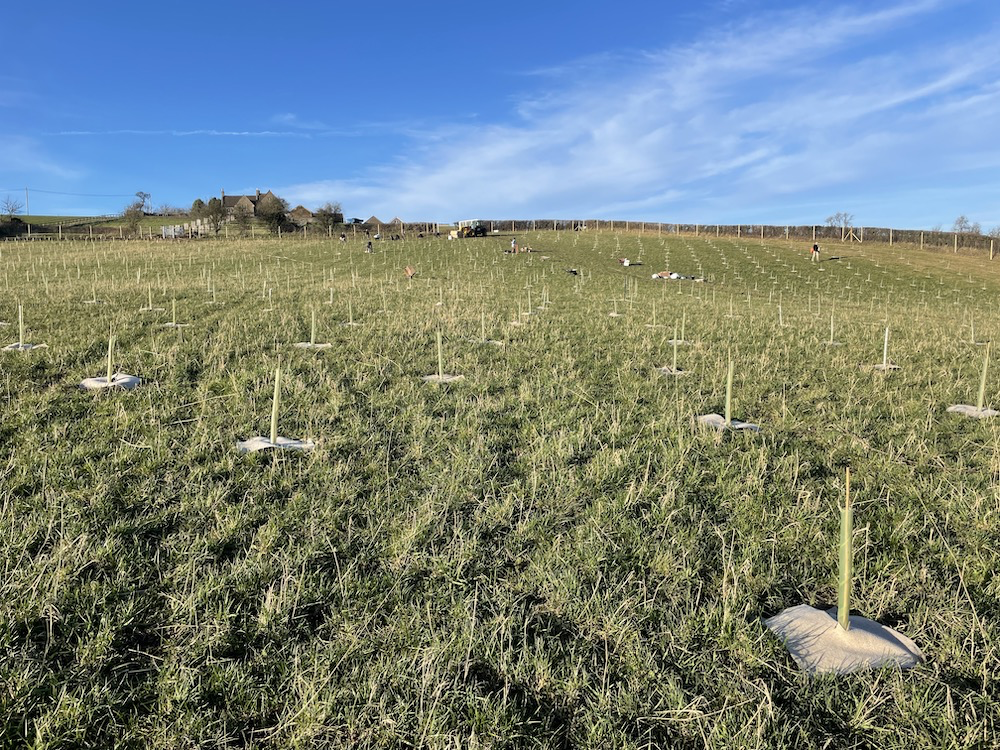
We use bamboo to hold up our biodegradable rabbit guards, and improve the survival rate of our saplings. Harvesting invasive bamboo saves us importing farmed bamboo from China, reducing our reliance on imports, and the emissions associated with its production and transport.
Normally once the stems are removed we would then attack the roots and rhizomes, to disturb the network and reduce the amount of shoots it was able to produce. Sadly with the hill there that would just mean a whole bunch of soil erosion, so instead the locals will be patrolling the area looking for new shoots. If enough fresh stems are removed, the network will eventually run out of energy like any battery. Then local species will either reconolise the space, or something native and beneficial can be planted to keep soaking up CO2.
Once we’d cleared this huge amount of bamboo in Belmont we realized that further down the hill was Himalayan Balsam. That’s a whole other problem, and another project for another day, but suffice to say the invasive species list we’re planning on battling is going to be getting longer. We have some patches of Japanese Knotweed we’re looking into zapping with electric tools, there’s Rhododendrons and Cherry Laurel popping up all over High Wood, and plenty of other threats to biodiversity that come sneaking in, looking like nature, but pushing our struggling ecosystems into further decline.
In the meantime if you would like to take a swing at removing bamboo yourself, there are plenty of guides and videos around online.
If the work is far too much for you to handle yourself, please get in touch. We are gathering tools, experience, and qualifications so cannot make specific promises, but as we are able to take on more and more of this work we want to know how to reach out to. Projects of any size will be considered.
With everything we do we rely on ecologist guidance to make sure we’re taking responsible actions. Before starting work we checked with our ecologist resident Steve, and we also inspected the bamboo carefully in case there were any nesting birds.
The next bamboo bash will be in Liskeard, Cornwall, probably in August or September. There is a lovely chap we met on a trip to High Wood who has had his garden completely taken over by bamboo. There’s almost half an acre of the stuff, so we’ll be sending in a team. Pop your email address into the Volunteering Events page if you’re interested in helping out!