
Wildflower Meadows, Summer Planting, and Gift Aid

Most tree planting happens between November and March in the UK, but that doesn’t mean we’ve not been busy the last few months. We’re still hunting for the right piece of land to buy. In the meantime we’ve been hard at work talking to landowners all over the country, with the goal of planting 100,000 trees through the 2021/22 planting season. It’s a whole lot of phone calls, site visits, contracts and grant applications. So far we’ve got about 60,000 trees on the books at some stage, and we’re hoping we’re about to get all of those nailed down, and find the next 40,000 to hit our targets.
Thankfully every single day we’re getting emails and phone calls that get us further with our goals:
-
Farmers who need shelterbelts to reduce soil erosion and crop damage.
-
An energy drink company that wants to sponsor shelterbelts.
-
A law firm that wants to buy land and plant trees and want help from ecologists and foresters to get it right.
-
Another farmer who wants to plant an empty field but is struggling with the grants and paperwork.
-
A town near London looking to create a community forest with 200 apple trees.
These calls have all been coming in, and it’s on us to glue it all together and match funding with land and manage all the benefits and expectations. It’s not glorious work that makes for nice updates, but we’re on the case.
Wildflower Meadow Experiment
Back in February we planted 600 trees at Pantpurlais in mid-Wales. We’re happy to announce that the trees are healthy, happy, and growing quickly. The survival rate has been beyond all expectations, around 99%, which is absolutely brilliant for the first year. Any losses will be replaced, but we’re not expecting to have to replace many. Some of this is thanks to the mulch mats we laid in spring keeping back competition, and some is due to the soil being incredibly fertile from a thousand years of sheep droppings.
Another field at Pantpurlais is about to be converted from an ecologically uninteresting grassland, to a wildflower meadow! We were impressed with the results of our experiment with a small patch of garden near the farmhouse.
Here’s a before and after comparison:
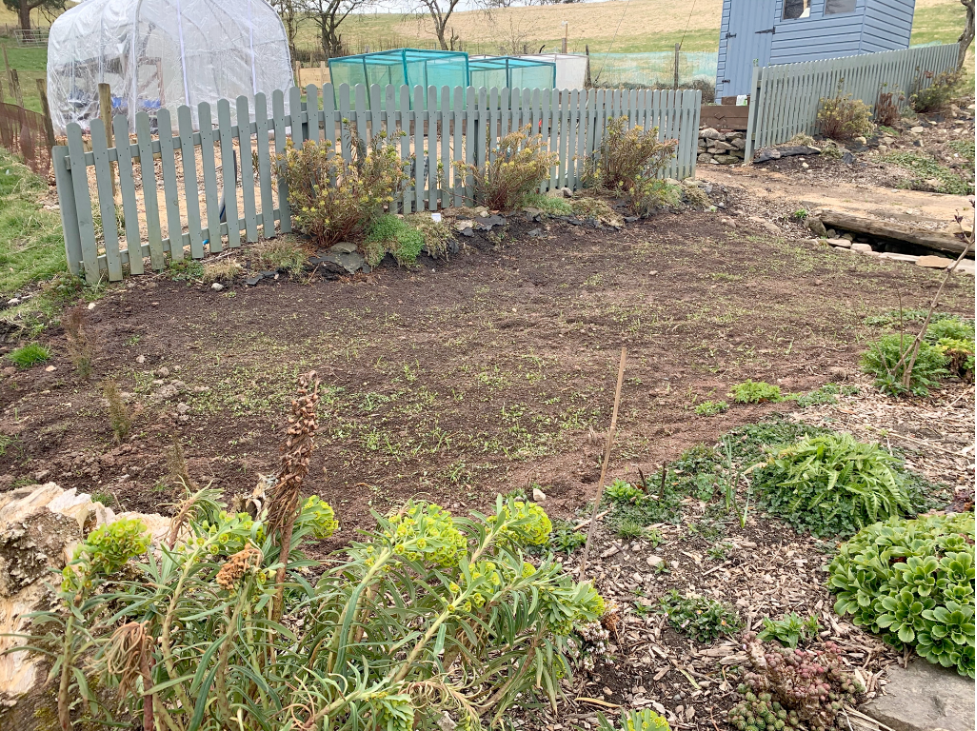
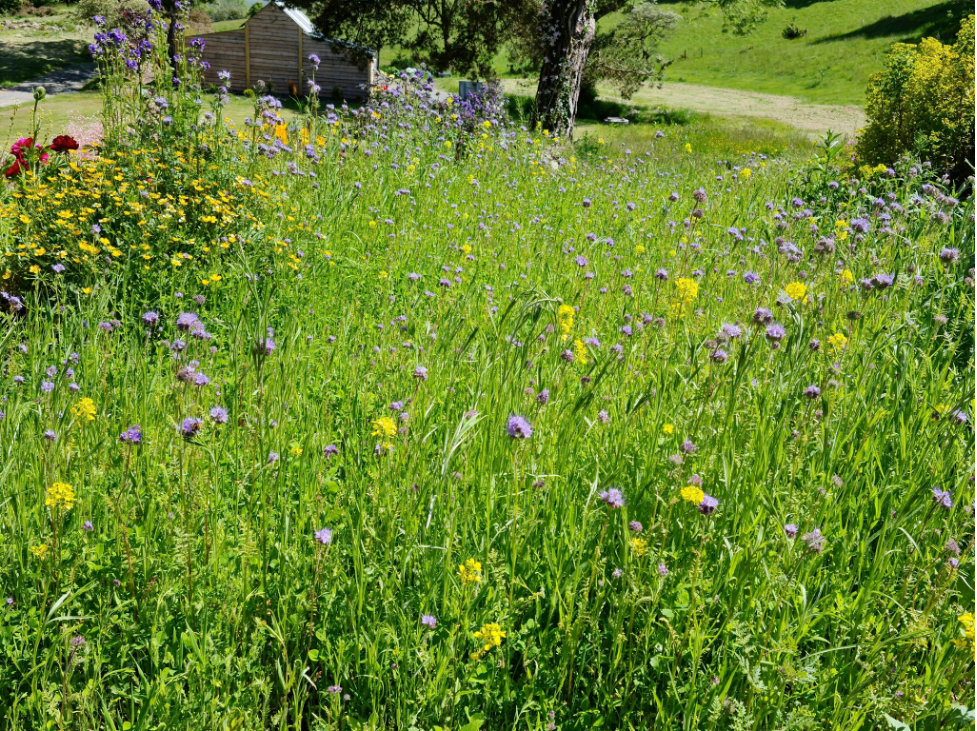
Beautiful! This small patch of thick growth will be home for bees, butterflies, and countless other insects. With this experiment working out nicely, we have bought enough native wildflower seed to create one acre of wildflower meadow at Pantpurlais!
We often talk about trees sequestering carbon, but some reports suggest a wildflower meadow can sequester twice the carbon of a native broadleaf woodland, due to the thick root systems and perennial nature of the growth. There are 500 more trees to plant in another acre here, so it could be interesting to measure the change in soil carbon of both acre fields. If you’re studying or qualified in this discipline, please get in touch.
This acre of meadow will be a great win for biodiversity and carbon sequestration, and we could not be any happier about getting this opportunity. The goal will be for all our sites to be as diverse as possible, beyond purely woodland, with wildflower meadow clearings, wet woodland areas, lakes, ponds, and maybe even peat bogs some day. There’s a lot of ways to sink carbon naturally whilst improving biodiversity, and we’re interested in all of them.
Year-round Tree Planting
Another experiment on Pantpurlais is an attempt at year-round planting. Most reforestation organizations have historically used bare root trees, which are little twigs with no growth and barely any root system, as the way they are pulled up before delivery doesn’t leave much root system left. This sounds destructive, but it’s done when the trees are dormant in winter, which is why there is such a short timeframe on most tree planting.
The first 600 saplings we planted there were bare root saplings, as have all of the other 5,400 we planted last season, but now we’re experimenting with “cell grown” saplings.
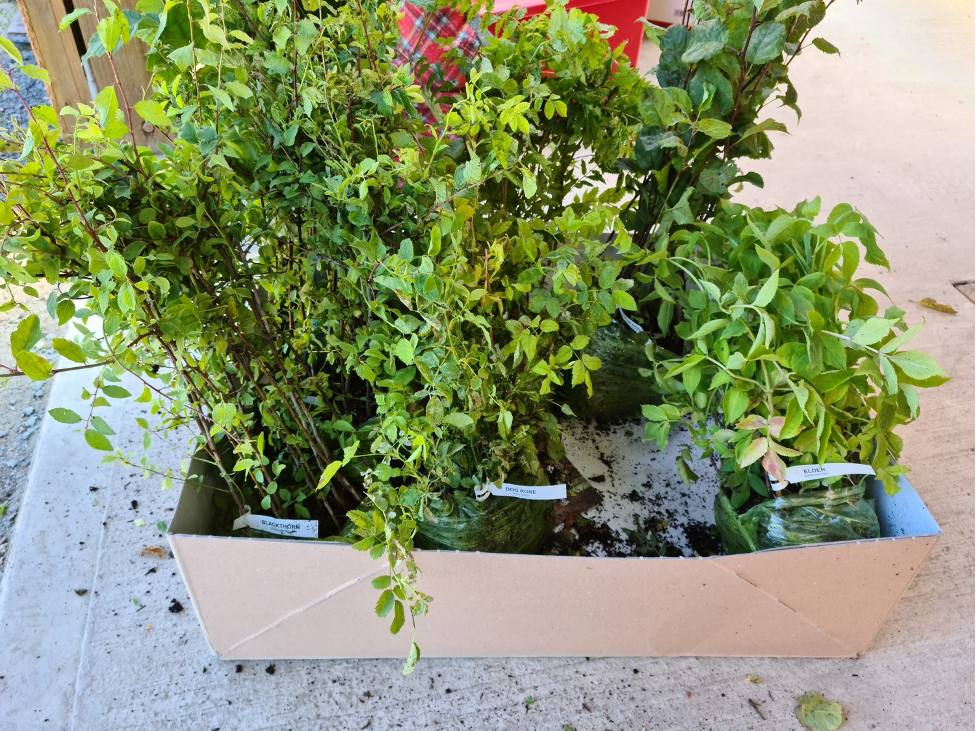
Cell grown saplings come from the nursery looking like little garden plants, with soil around their base and a relatively intact root system ready to be planted. We got a pack of 105 from the Woodland Trust and plopped them in another unused hilly field. These are being protected with some lovely cardboard guards, as we - like most reforestation organizations - are urgently trying to get away from the use of plastic, which has been the industry standard for far too long.
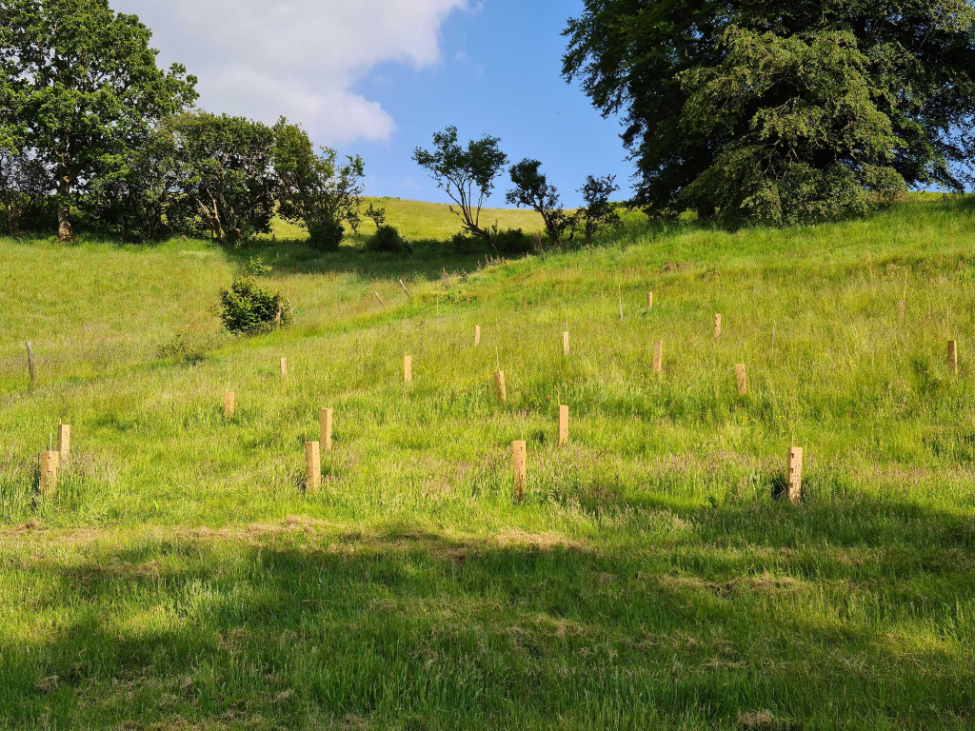
Last season we looked into alternatives to bare root saplings and the prices were all prohibitively expensive, but for some reason this season the difference is only about an extra 10p on the cost of the sapling. It’s a little more work moving them around as they have more growth to worry about, and the soil is heavier, but this should open up a lot of doors for us to take care of smaller projects (500-1000 trees) outside of the usual rush of winter planting season!
We have a few projects in mind and might be planting some near you soon. We’ll announce them on the newsletter, and post them to our Events page when dates are set.
Gift Aid
After six months of back and forth with HMRC, and some difficulties with the banks, we’ve finally got all set up with Gift Aid! This means donations from U.K. Taxpayers are eligible for an extra contribution, usually adding an extra 25% on top of the amount of your donation!
Interestingly this can also be claimed retroactively for past donations, so if you have done a one-off donation in the past, we’ll be in touch to ask for your home address, which is all we really need to get it back.
If you have a monthly donation going on Donorbox and are eligible to allow us to claim Gift Aid, we would be immensely grateful if you can cancel and set up your subscription again with the Gift Aid box checked. While we have you, if you can use a debit/credit card that would be ideal because some of our supporters have had difficulties paying via PayPal.