
The difficulties and benefits of wildflower meadow creation

Steve Wiltshire, Protect Earth’s Ecologist, contributed this piece.
Wildflower meadows are particularly tricky ecosystems to develop. Counterintuitively, they require nutrient-deprived soil, which requires experience and time to reach the right conditions. They are a lot of work to maintain. But the benefits outweigh the difficulties - they are very intricate places that become home to so many insects and animals and are incredibly beautiful and satisfying when all the insects and animals move in.
Wildflower Meadows
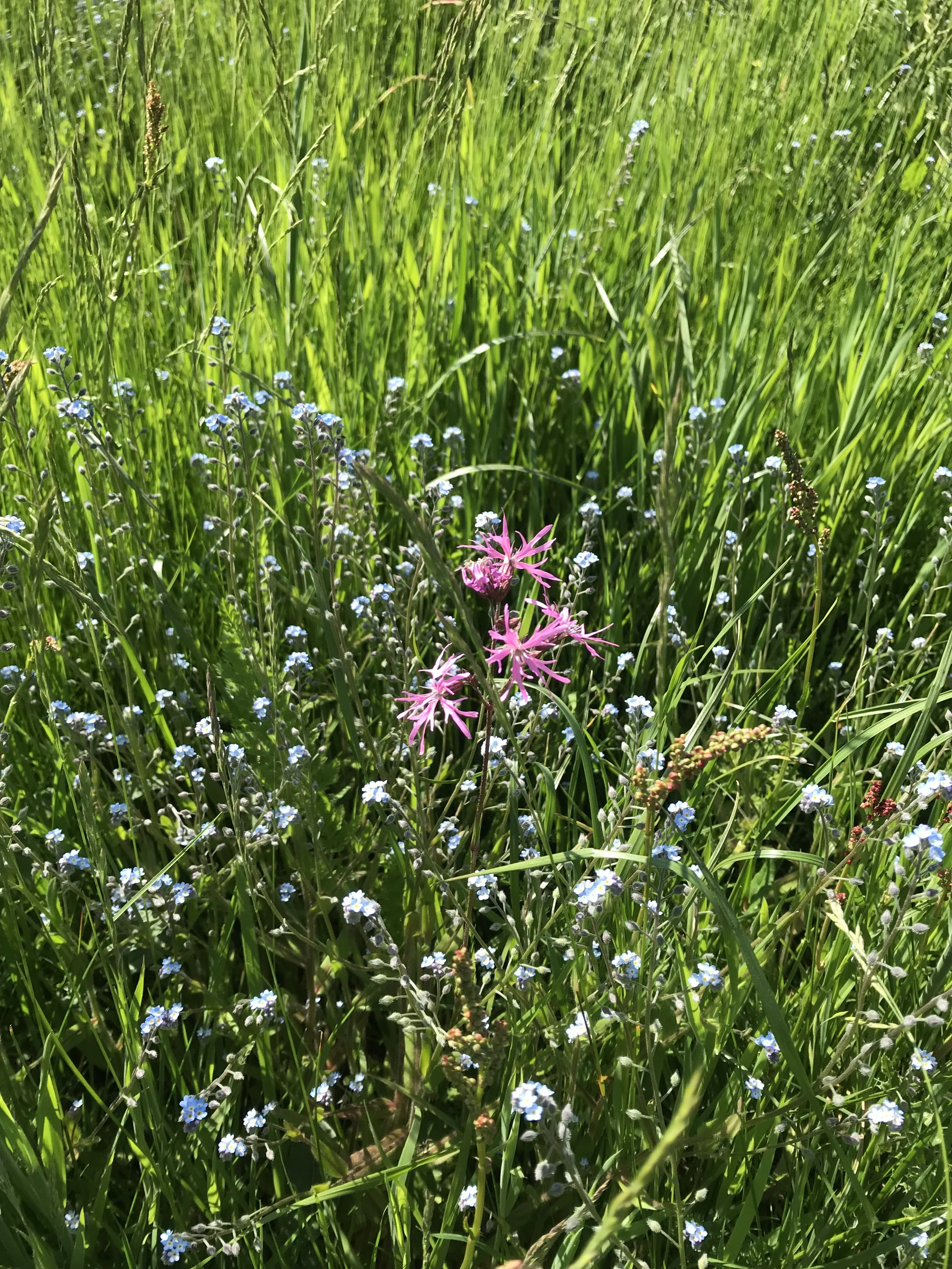
A wildflower meadow in the full bloom of high summer, alive with bees, grasshoppers and brightly coloured butterflies, is one of the British landscapes’ most intoxicating wildlife habitats. Sadly, they are now also one of the scarcest; the vast majority having been ploughed or fertilised into oblivion, another victim of modern farming practices. Most wildflower meadows that remain are found on nature reserves where they are carefully managed or, literally, hanging on to very steep, uncultivable hillsides.
Ironically, wildflower meadows are man-made habitats – created originally by the same hand that would later become intent on destroying them – conservationists might more correctly call them ‘semi-natural grasslands.’ But they have existed for millennia, brought about by pre-industrial farming systems, specifically, taking a hay-cut in late summer to provide winter fodder for livestock before lightly grazing the regrowth. The advent of mechanisation, artificial fertilisers, changing farming practices (silage) and animal husbandry has swiftly led to the demise of wildflower meadows. And it is not that wildflowers dislike nutrient-rich soil per se. It is more that they are outcompeted by more dominant weeds and grasses in the high-nutrient, highly fertilised conditions found amongst modern pastures. Nutrient-poor conditions allow a higher diversity of species to gain a toehold. This is why some of the best-remaining wildflower meadows persist in areas with chalky soils – here nutrients are washed quickly away through the permeable top soils.
What’s in a wildflower meadow?
An established wildflower meadow might have as many as 30-40 different plant species per square metre (plus all the other attendant invertebrates and birds that depend on them). In comparison, modern pastures may only have two or three species. Wildflower meadows are some of the most bio-diverse habitats in Britain, and the specialist insects that inhabit them are some of the rarest.
So why don’t we create more wildflower meadows?
And why, when landowners ask me to help them create a wildflower meadow, do I say, ‘Are you sure you want to do this?’ I hesitate because a true wildflower meadow can be very difficult to create successfully.
Sure, we could produce a quick fix of cornfield annuals like Cornflowers and Corn Marigolds. Species that will appear quickly, look nice, and have some value for pollinating insects but would then need to be re-sown every year. This would not constitute a true wildflower meadow which should contain a wide range of perennial plant species and fine grasses.
Establishing a true wildflower meadow will take work and time because lowering soil nutrient levels and consistently maintaining those levels can be difficult. Just preparing the area can be an extensive operation, sometimes requiring the removal of a thick layer of nutrient-rich topsoil with a digger. Then, sourcing a good quality wildflower seed (necessary to kick-start the process) will be expensive. Next, management will need to be ongoing, year after year, cutting and collecting, which will require machinery and /or manpower – and if you have access to some livestock to graze the area lightly, so much the better.
Protect Earth developed a wildflower meadow
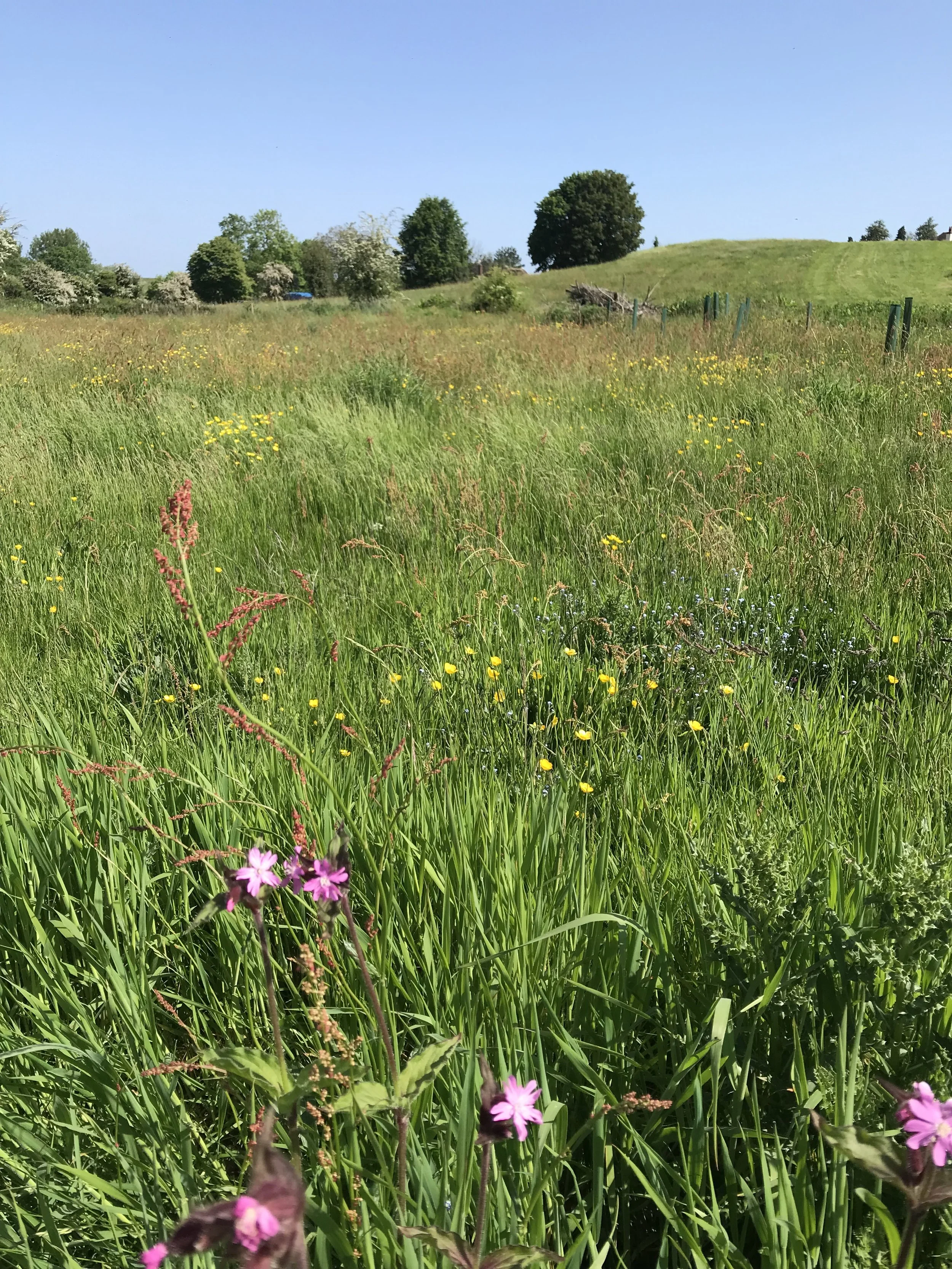
Last spring, Protect Earth set about establishing a wildflower meadow on an area of rough pasture in Warwickshire.
The land was well prepared: cut very short, chain-harrowed to bare earth, and the highest quality seed sourced. When the landowner gave assurances they definitely could carry out the necessary ongoing management – everything seemed in place. The fine seed was carefully sown in a mixture of silver sand to stop it blowing away, and at the end of the day, optimism was high. In the weeks that followed, the weather forecast frequently promised rain, which never arrived, and before long, the entire country slipped into one of the hottest and driest summers on record. ‘Nothing’s happening,’ were the opening remarks from the landowner after a month or so. Had all that wildflower seed failed to germinate and just become very expensive bird food, we wondered? Of course, much of the seeds were perennial species, plants that may not produce flowers until the following year. The meadow was dually cut and raked up in late summer and kept short over winter – but until the following year, we wouldn’t know if it had been a success.
A few weeks ago, I arrived at the site with some trepidation. We’d done a good job preparing the area, but had the elements conspired against us? I needn’t have worried – the meadow looked a picture. After just a few paces into the knee-high grasses, I could already see Kidney Vetch, Mouse-eared Chickweed, Ribwort Plantain, Red Campion, Buttercup, Forget-me-not, Pignut and Ragged Robin. And further inspection would reveal many more species. And with continuing thoughtful management, it will only get better and better – altering the dates of the cut, for example, to encourage a range of different species from one year to the next.
Plant your own wildflower meadow
Please do consider creating a wildflower meadow – they’re wonderful.
Protect Earth is an environmental charity focussing on restoring natural land. To achieve this, we plant and develop forests, woodlands, meadows, and even look at removing non-native plants that have been introduced into the environment. Protect Earth can support you to develop your own wildflower meadow - helping you to achieve the right soil conditions, determine seeds to sow, how to sow them, and advise on the meadow’s maintenance once it’s established. Contact us if you’d like your own wildflower meadow!
But remember, it will take careful preparation, ongoing management and time - plenty of time. There is no quick fix, and results may not come straight away. But the more you put in, the more you get out – and the greater benefits there will be for wildlife… and for you.