
The South West Gains Another Hedgerow and Becomes a Little Greener

This February, we returned to South Molton at the request of a brilliant landowner whose smallholding has become a little greener every time we visit. Our previous project with this landowner was to create natural screening for their horses. Happy with the results and Protect Earth’s goals, they wanted to work with us again to create hedgerows. Long, winding, carbon-sequestering, wildlife-loving hedgerows.
A Hedgerow in February
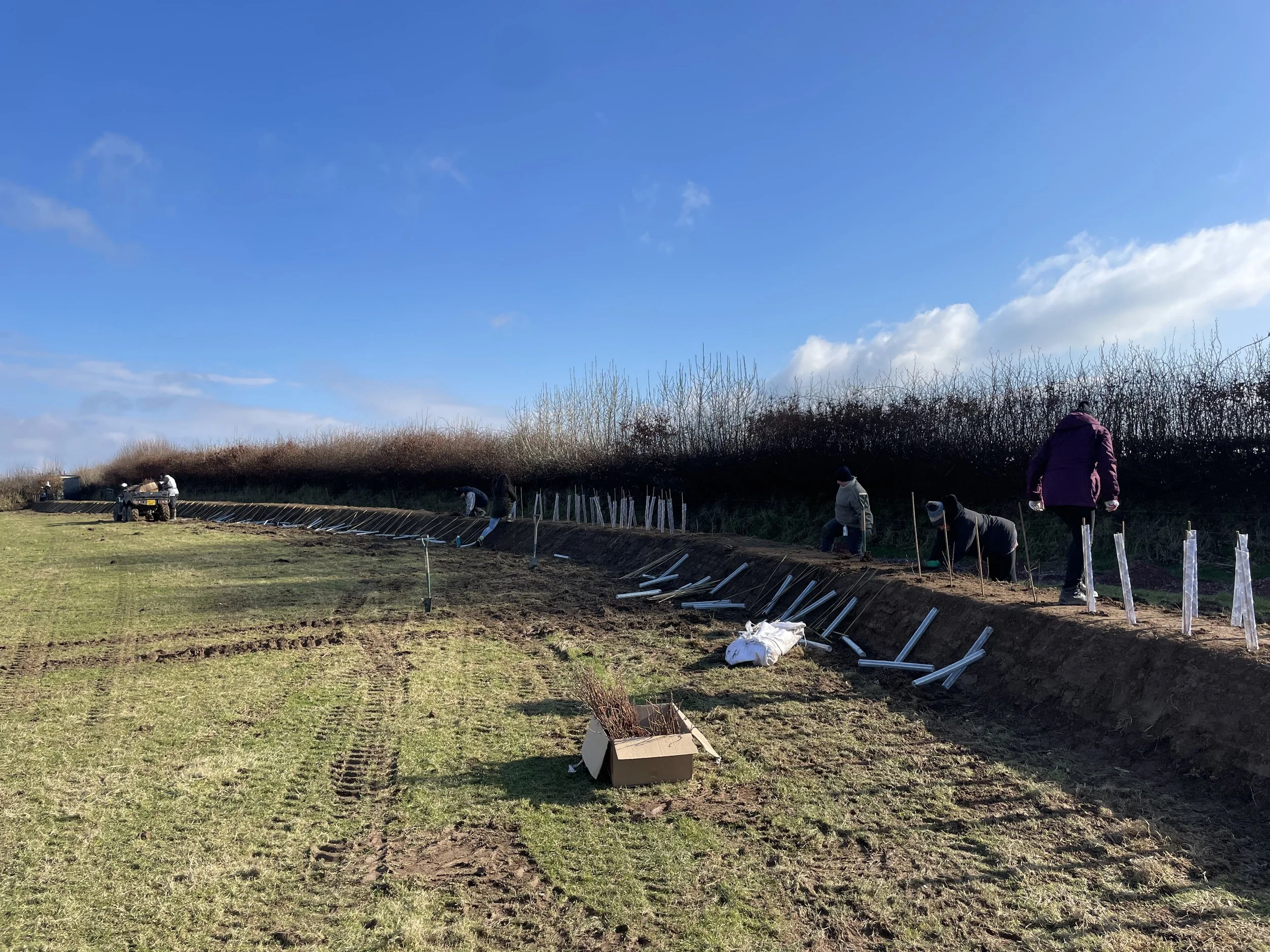
Over two brisk but beautiful days (8–9 February 2025), we, alongside a merry band of volunteers, got to work in the South West, planting 400 metres of mixed native hedgerow - a total of 2,375 saplings popped lovingly into the soil: common hazel, hawthorn, blackthorn, goat willow, common beech, and dog rose. It’s not just a hedgerow. It’s a biodiverse banquet, a future corridor for wildlife, and in 50 years, it’ll have quietly hoovered up over 1,000 tonnes of carbon.
Powered by Passion (and Hot Coffee)
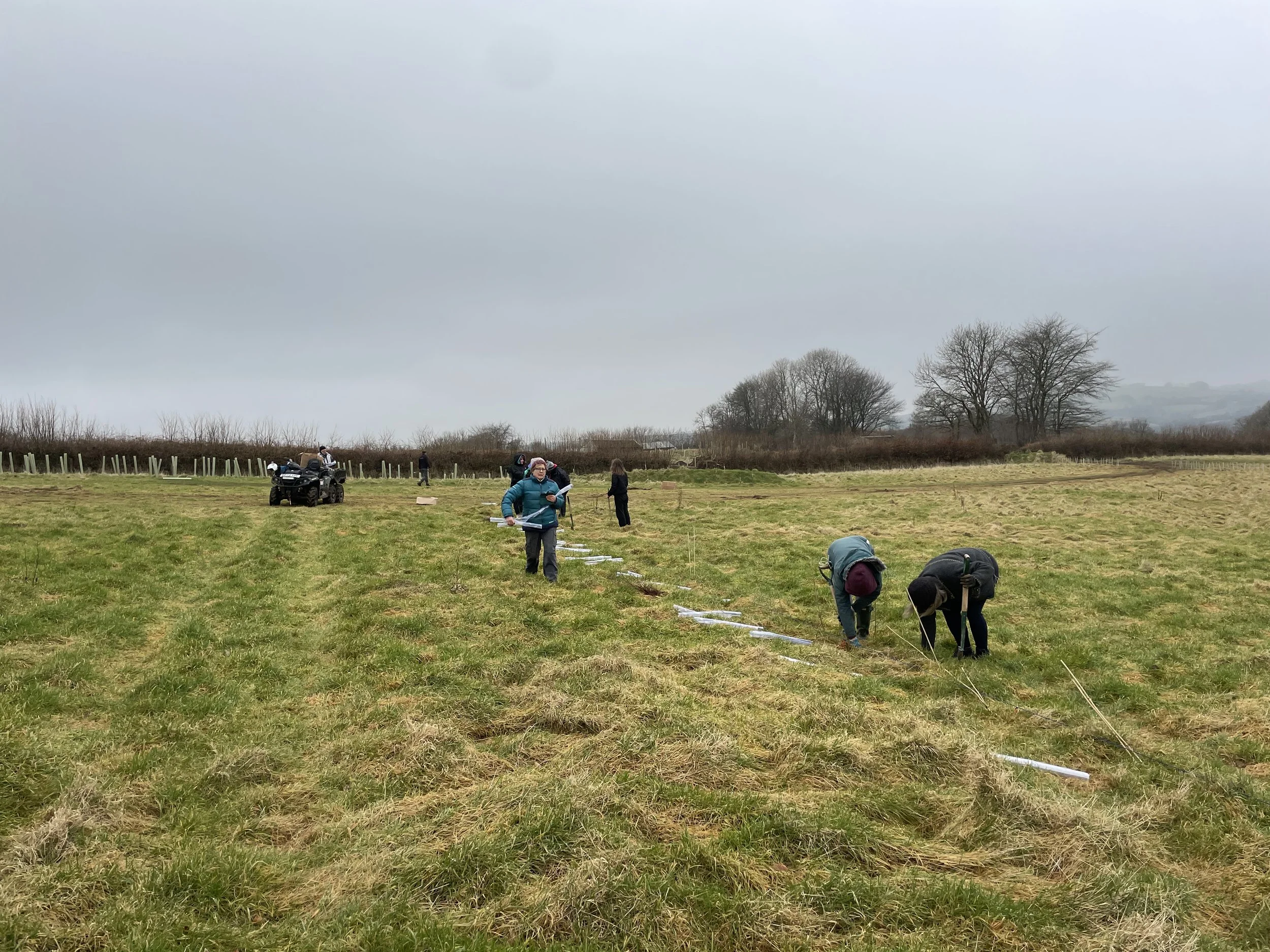
The real magic, as always, was in the people. Fourteen volunteers turned up across the two days, including folk from Argyll Vet Centre, some of their children, and a mother-and-son duo (with the son working toward his Duke of Edinburgh Award – gold star for that lad). Spirits stayed high, warmed by hot coffee, teamwork, and that unbeatable glow from doing something meaningful with your mitts in the mud.
One volunteer summed it up perfectly:
“We just all really enjoyed the day as a team, from being warmed up with the hot fresh coffee to eating outside on a cold day in February.”
And the landowner? Equally full of praise:
“It’s obvious that these guys [Protect Earth] care deeply and have a driven passion to make a real difference in protecting the planet.”
Why This Matters (and Why We’ll Keep Doing It)
Hedgerows are the unsung heroes of the UK’s countryside. They provide shelter, forage, nesting sites, and safe passage for wildlife. They stabilise soil, reduce wind erosion, and store carbon. For a smallholding like this one, they’re not just a boundary – they’re a boost to biodiversity.
We may not be changing the world in one weekend, but 400 metres of future woodland habitat is a solid contribution to the UK’s green spaces