
Wales’ Wildlife: Report Identifies 30 Years of Decline

One in six species is currently at risk of vanishing from Wales, which has seen a 20% decrease on average in its wildlife over the last 30 years.
The Climate Change, Environment and Infrastructure Committee, set up by the Senedd (Wales’ government), says that not enough is being done.
Why are landscapes disappearing, displacing and reducing wildlife numbers?
It’s a complicated one, but in a nutshell, there are two reasons why species decline is happening in Wales:
-
People have altered land use, and nature has become an uninvited guest. Two examples spring to mind. The land is owned and comes at the capital expense that must be recouped and profited against. A flood doesn’t allow this and is considered a bad thing in farmer’s eyes, whereas floods are nature’s way of redistributing nutrients. Similarly, until the 1500s, beavers were abundant in the UK. Having been hunted to extinction and gone from conscience for so long, it’s hard for so many to accept that beavers have a place in UK waterways today. We are so used to looking at nature as it is now (modified beyond identity) that we just can’t figure out the right balance between society’s functioning and sharing with nature.
-
Climate change.
What can be done to give nature a chance?
Simply put, nature needs a home. Allocating land solely reserved for nature will help to balance species loss in Wales.
Protect Earth has recently completed phase one on our land in Lloney, Wales, where we planted 12,000 saplings, creating a new woodland.
The team is in North Wales, undertaking a second project, planting 11,000 saplings.
The species planted have all been planned being the right species mix for the spaces, have all been sourced from nurseries local to the planting sites, and will, because they are species naturally found in the UK, go on to become homes for some of those species that have been identified as in decline - if they’re still around when the trees are old enough to support life.
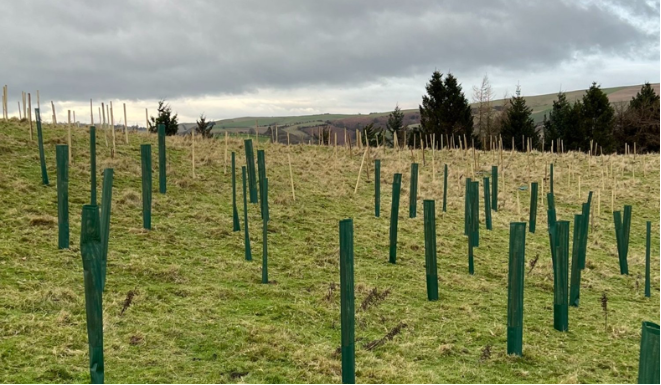
We haven’t tightly packed saplings into every nook and cranny. The land has been divided up based on its suitability and value today. Some land already supports life, which we’ll only manage over the long term, not change. Other spaces are now becoming woodlands, while other spaces will become meadows of wildflowers, providing yet more food and shelter for pollinators and other valuable creatures and insects.
To sum up
It’s important to remember that the land is to be shared, and community members can also include nature, deserving its own space and respect. Fortunately, a lot of space can easily and quickly be given over to nature, especially on farms and along roadways.
Over the coming years, Protect Earth will continue partnering with landowners throughout Wales, helping them increase their land’s biodiversity to improve farm productivity and soil quality or for their own personal sense of achievement and well-being. We will also continue to purchase land and take on custodial responsibilities for land, making space for nature to be prioritised.
Demand to develop natural habitats is outstripping funding. Please help us match the funding gaps, so we can help the UK become greener with a healthier natural environment.