
What Lies Beneath: A Citizen Science Peek into High Wood's Soil Life

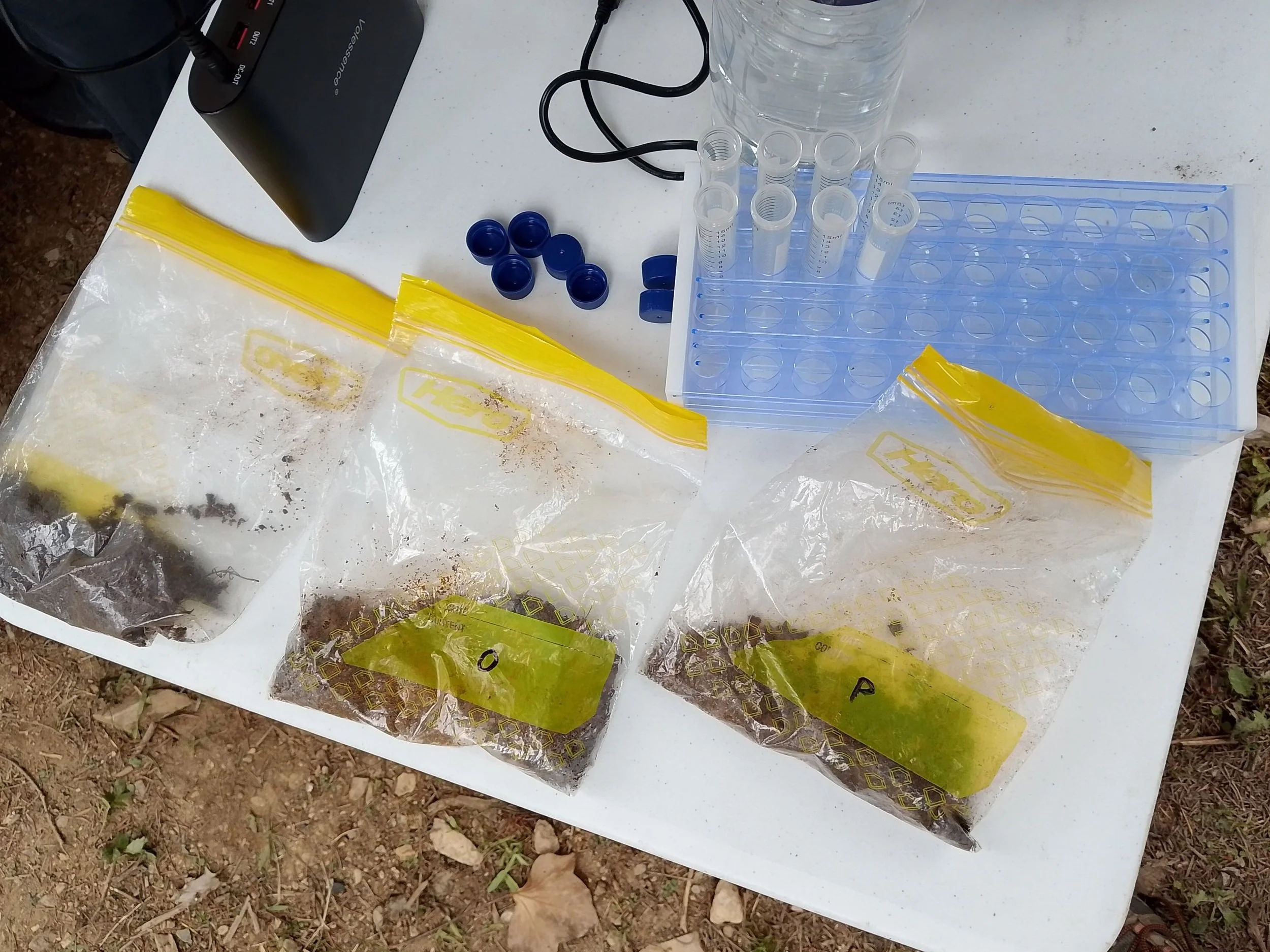
At Protect Earth, we tend to focus our energy on what’s growing above ground—native trees, bursting buds, and woodlands full of potential. But at this year’s High Wood Summer Fair, we had an impromptu encounter that reminded us just how much action (or lack thereof) might be happening beneath our boots. When a visiting wildlife trust representative (and self-confessed soil fanatic) casually announced he had all the gear in his car to do some soil sampling, we thought: why not? What followed was a fascinating, slightly underwhelming, and entirely valuable bit of citizen science.
Three Zones, One Question
Let’s set the stage. High Wood is a PAWS—short for Plantation on Ancient Woodland Site. It’s a mixed bag of conifers planted over centuries-old woodland and surviving patches of native broadleaf trees. Over the last few years, Protect Earth has begun to set things right: conifers have been removed, and native species have been planted in their place. One area has been completely replanted, while others are being halo-thinned to give mature oaks their space back, and some spots still stand as they have for generations.
So, with this mix of habitats, our spontaneous scientist chose three sample zones:
-
Within the conifer plantation (aka the sad zone),
-
Among the ancient native trees (the control, if you like),
-
And in the recently restored area (the hopeful zone).
What were we expecting? Well, not much from the conifer zone—those needle-dropping giants are notorious for dulling biodiversity. We hoped the ancient woodland patch would be teeming with microscopic partygoers: nematodes, fungi, bacteria, and the like. And the restored bit? Somewhere in between. But what did we find?
Not a lot.
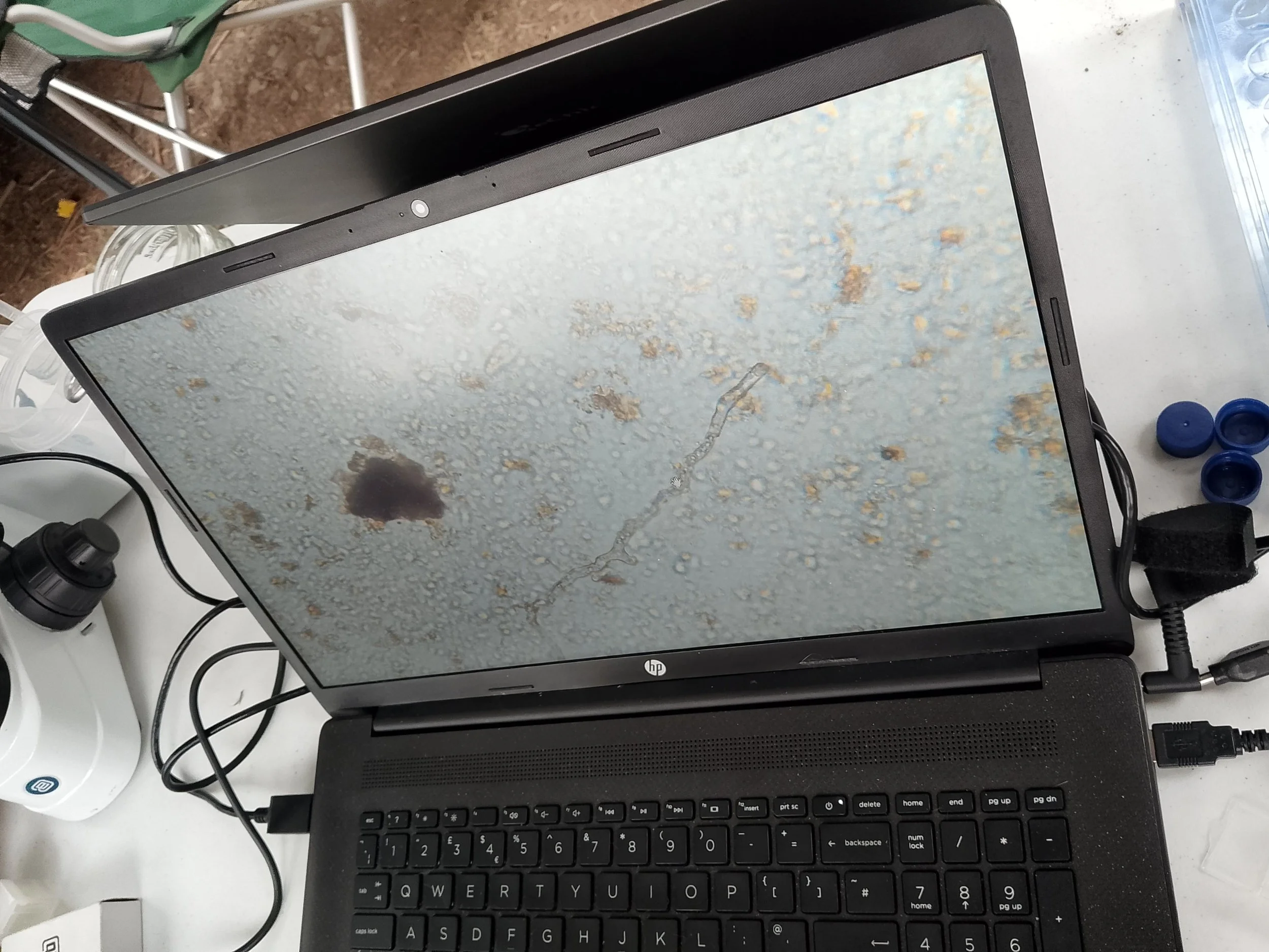
Despite healthy-looking soil texture and colour, the samples were relatively lifeless under the microscope. A few nematodes wriggled their way into view—no nasty ones, thankfully—and a scattering of arbuscular mycorrhizal fungi made a cameo appearance. These fungi are a great sign, particularly when their structures appear rectangular (which ours did—gold star). But the overall verdict? The soil’s doing okay, but the underground revival hasn’t kicked into high gear yet.
And that makes sense. While we’re already seeing foxgloves and woodland wildflowers popping up where once there were only conifers, the story of soil regeneration is a slower one. Microbial communities need time to recolonise. And time, unfortunately, doesn’t always bend to our optimism.
To sum up
This wasn’t a polished, peer-reviewed research project. It was a post-event, pop-the-boot-open kind of experiment. But it told us something important: woodland restoration is as much about patience as it is about action. And while our rewilding efforts are showing results on the surface—colour, diversity, and growth—the underground networks are still rebooting.
Protect Earth is keen to support citizen science experiments like this. They help us, and the communities we work with, dig deeper—sometimes literally—into what makes a place like High Wood ecologically rich and to measure how it’s progressing. We welcome more of these collaborations, from spontaneous soil safaris to formal research efforts. Because understanding what’s happening below is just as crucial as celebrating what’s sprouting above.