
Surveying Wildlife at Highwood

**Protect Earth ecologist and conservationist Steve Wiltshire reports on Summer wildlife at High Wood, our community woodland in South-East Cornwall. ** “Bird surveys at Highwood recorded 30 species of breeding bird overall this Spring. There were good numbers of common woodland birds like Song Thrush, Goldcrest, Wren, Treecreeper and Nuthatch. Later surveys produced summer visitors including Blackcap, Willow Warbler and lots of Chiffchaffs. The latter’s distinctive two note song, along with explosive trills from Wrens, are the soundtrack of High Wood in springtime. Ravens were recorded passing through, along with other exciting visitors such as Red Kite and, perhaps best of all, a Hobby. These small falcons are summer visitors to Southern Britain and, amazingly, have come all the way from Botswana or Zambia.
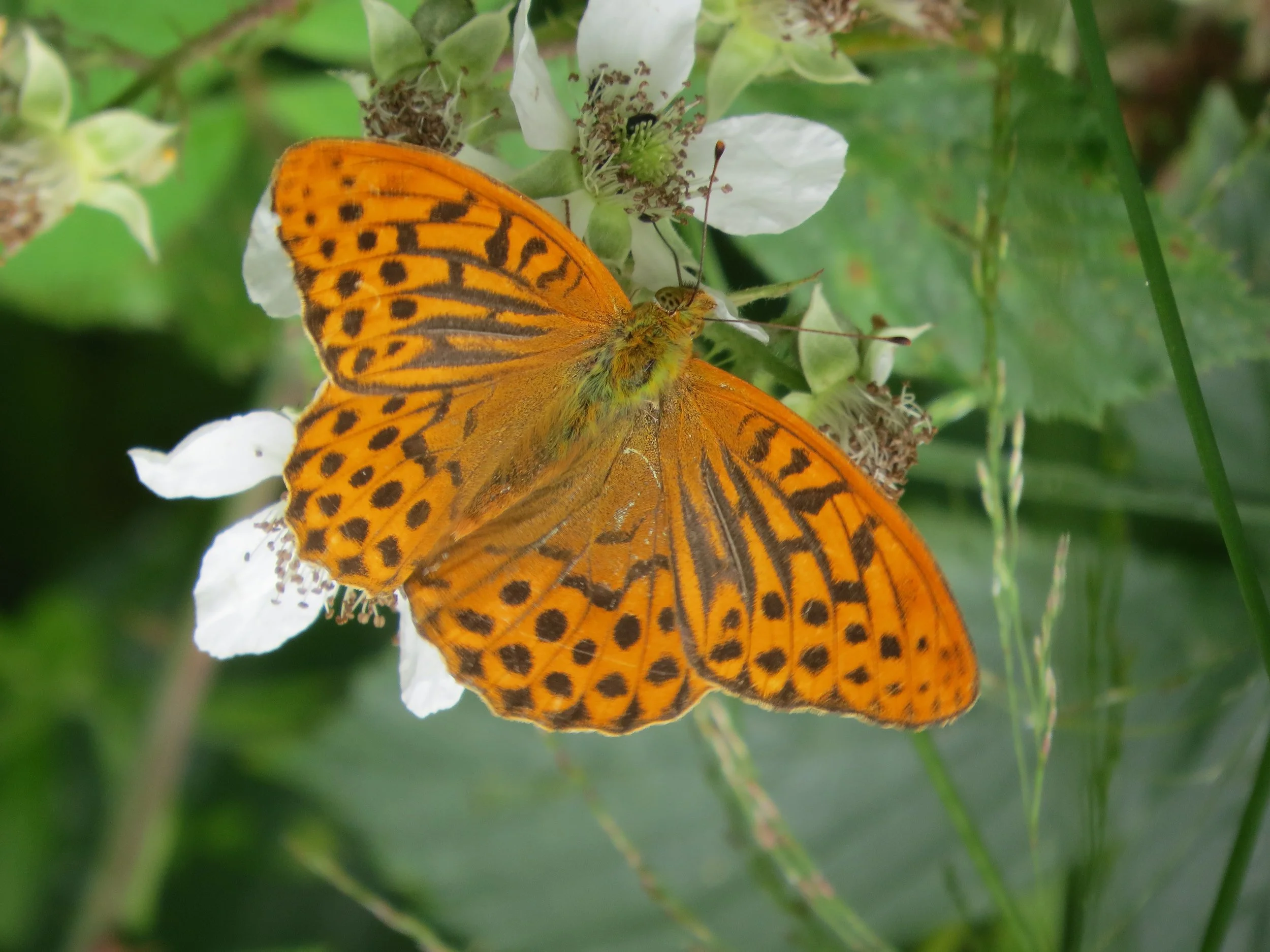
Trackside flowers like Valerian and St. John’s Wort, hummed with insects during the hot days of mid-summer. Meadow Brown and Speckled Wood, the most common butterfly species, were occasionally joined by the spectacular Silver-washed Fritillary. Golden-ringed dragonflies – about the size of a pencil – patrolled the woodland edge, as Beautiful Demoiselles fluttered elegantly below. On one early morning wander I encountered a huge Toad the size of a tennis ball and even a Grass Snake.
Highwood’s a pretty special place – but it could be better. Most of the wildlife I found was around the woodland edge. The interior of the conifer plantations – which make up the majority of the site – were rather dark and lifeless. All this great wildlife was just about hanging on at the periphery of the woodland – it had been pushed to the margins.
Over the next few years we hope to make much more of the site great for wildlife. By cutting a woodland ride through the conifers, for example, you immediately increase the amount of ‘woodland edge’ habitat so favoured by the butterflies and dragonflies. Replanting native broadleaf tree species means there is better habitat for woodland birds, most of which find it difficult to locate food and nest sites in alien conifers. This winter the habitat work will begin, and hopefully, surveys in years to come will begin to record more and more wildlife.”