
Supporter initiative - sapling grow bags

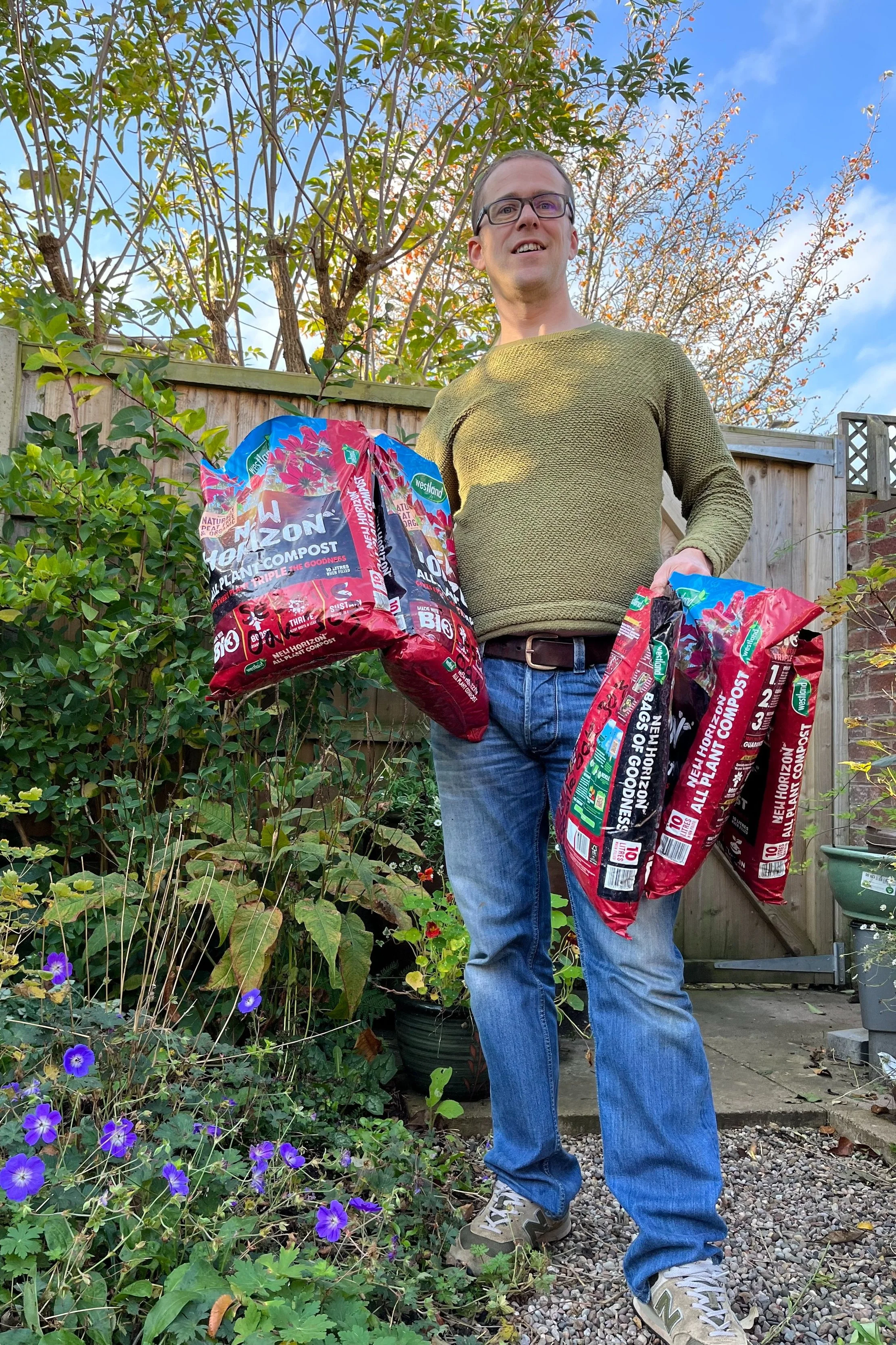
Andrew Gifford is a Protect Earth supporter.
He is experimenting with growing saplings at home that we can use at sites close to him in the 2023/ 24 planting season.
Usually, Protect Earth buys saplings grown by commercial growers for planting in the autumn and winter months.
As much as we can, we buy saplings from commercial growers near the site we will plant and whose seeds and saplings have grown from native UK tree species nearby. This means we are planting trees that are supposed to be there (they are already part of the natural ecosystem). If the seeds are local to where we’re planting them, they have generally adapted to the local environment already.
These were the instructions given to Andrew - get native seeds from trees close to the area we’ll be planting your saplings!
Why Andrew fostered seeds into saplings
Andrew has supported Protect Earth since its beginnings a few years ago. He has a tech headhunting company in Bristol, and Protect Earth became the company’s charity in 2021 and 2022.
Andrew has ME/CFS, which impairs energy. Carrying trees and planting for the day is a fun way of getting involved with Protect Earth - but knackering! Andrew has cooked up a solution that works for him and is super beneficial for us.
The process of growing your own saplings
Andrew has been good enough to record how he has approached growing saplings. Here’s his kit list and instructions.
Most British native tree seeds/acorns need a period of stratification to germinate. This process is usually triggered by weeks or months of frosty conditions, whereby the shell of the seed/acorn is softened and then broken by natural processes, enabling the fleshy internal seed/acorn root to emerge and support growth. Each species has a slightly different strategy, and this can be ‘hacked’ by removing the seed manually and soaking the fleshy seed, but it’s easier to sow the seeds in time for them to go through the winter and emerge in spring.
Kit list:
-
A convenient shady or part shade location for multiple grow bags, where the saplings won’t be regularly heat stressed nor short of water
-
British native tree seeds/acorns, sourced locally to where they may be planted
-
10L peat-free compost bags (growing density of 20-25 saplings per 10L bag); at the time of writing, these can be bought online for around £3.50 ea
-
Extra peat-free compost to top up the 10L bags
-
Marker pen, or plant labels and pencil
-
Scissors
Method
-
Source the seeds/acorns having first established their provenance (region of origin) on this map, noting the region code associated with each batch of seeds/acorns, and taking care to use either seeds from UK trees only or that have a verifiable(?)/‘plant passport’ approved seller
-
Write the species and provenance code on the compost bag (this may bleach out in the sunshine, a plant label may be better)
-
Shake the compost bag - to break up compaction
-
Puncture thoroughly with scissors - to allow water drainage
-
Cut one end off the compost bag - wash the offcut and recycle it with carrier bags
-
Ideally, add some more compost - so the bag is 60% full
-
Add seeds/acorns, one species per bag - Andrew is trying 25 per bag, which is likely the upper limit
-
Cover with 10cm of mulch/compost - so acorns/seeds don’t dry out
-
Roll the top end of the bag down to 10cm above the line of compost
-
If there’s a dry spell ahead, water lightly
-
Position for overwintering - and don’t let it fully dry out
-
Green shoots should appear in Apr-May, from when you can treat them as any young plant
-
The saplings will benefit from feeding during the growing seasons, e.g. monthly after the first three-six months, liquid seaweed or similar is fine
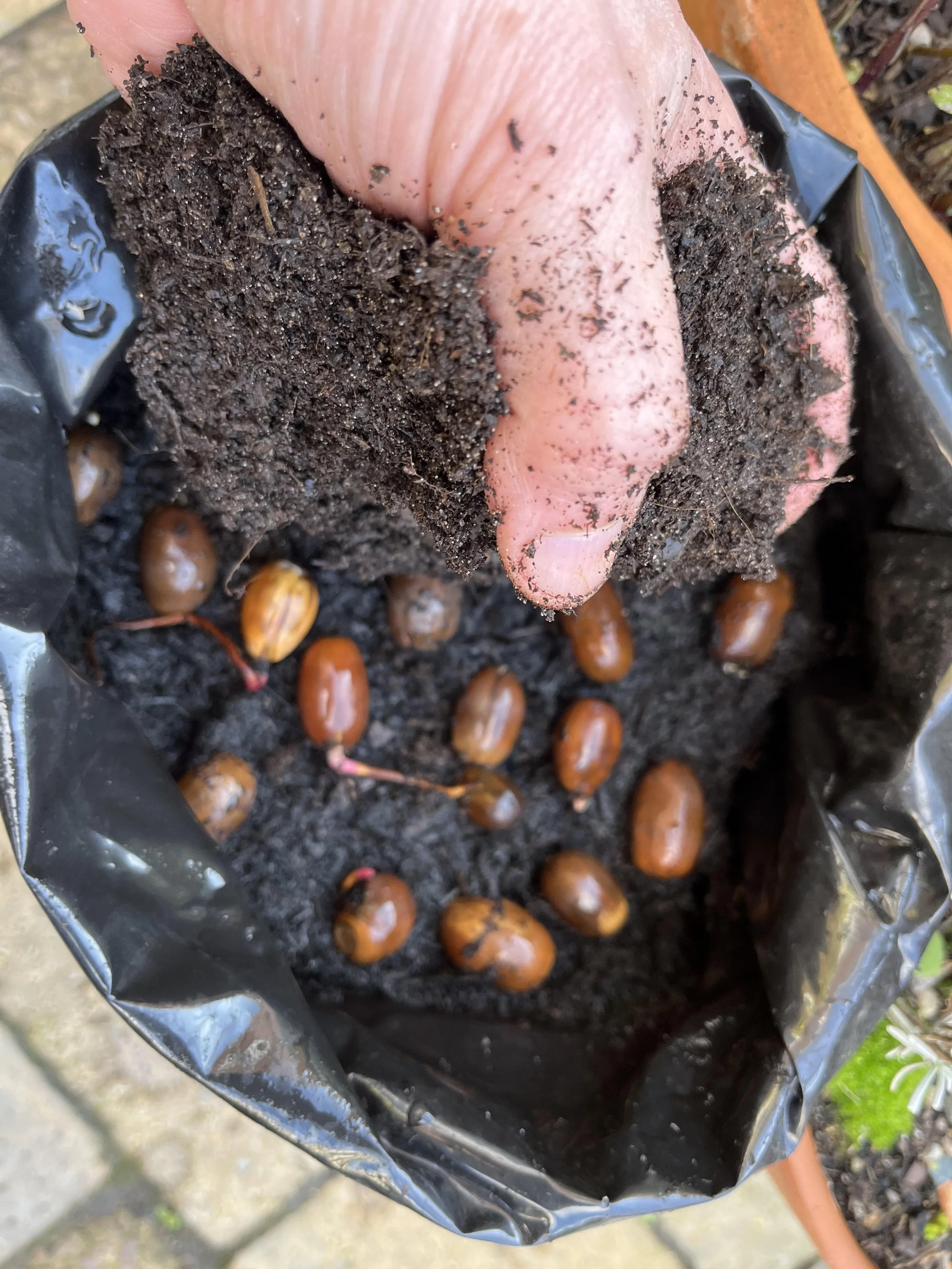
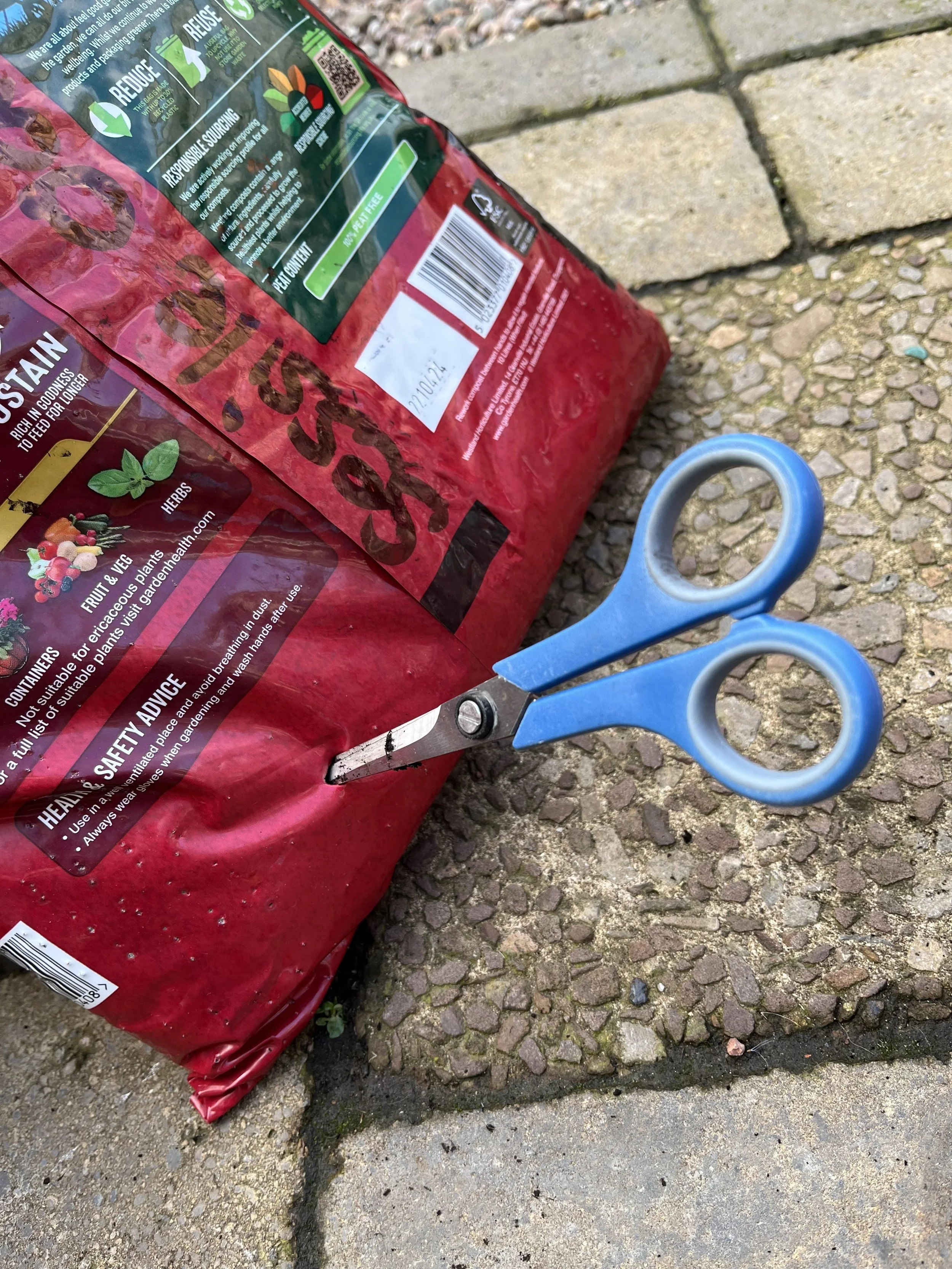
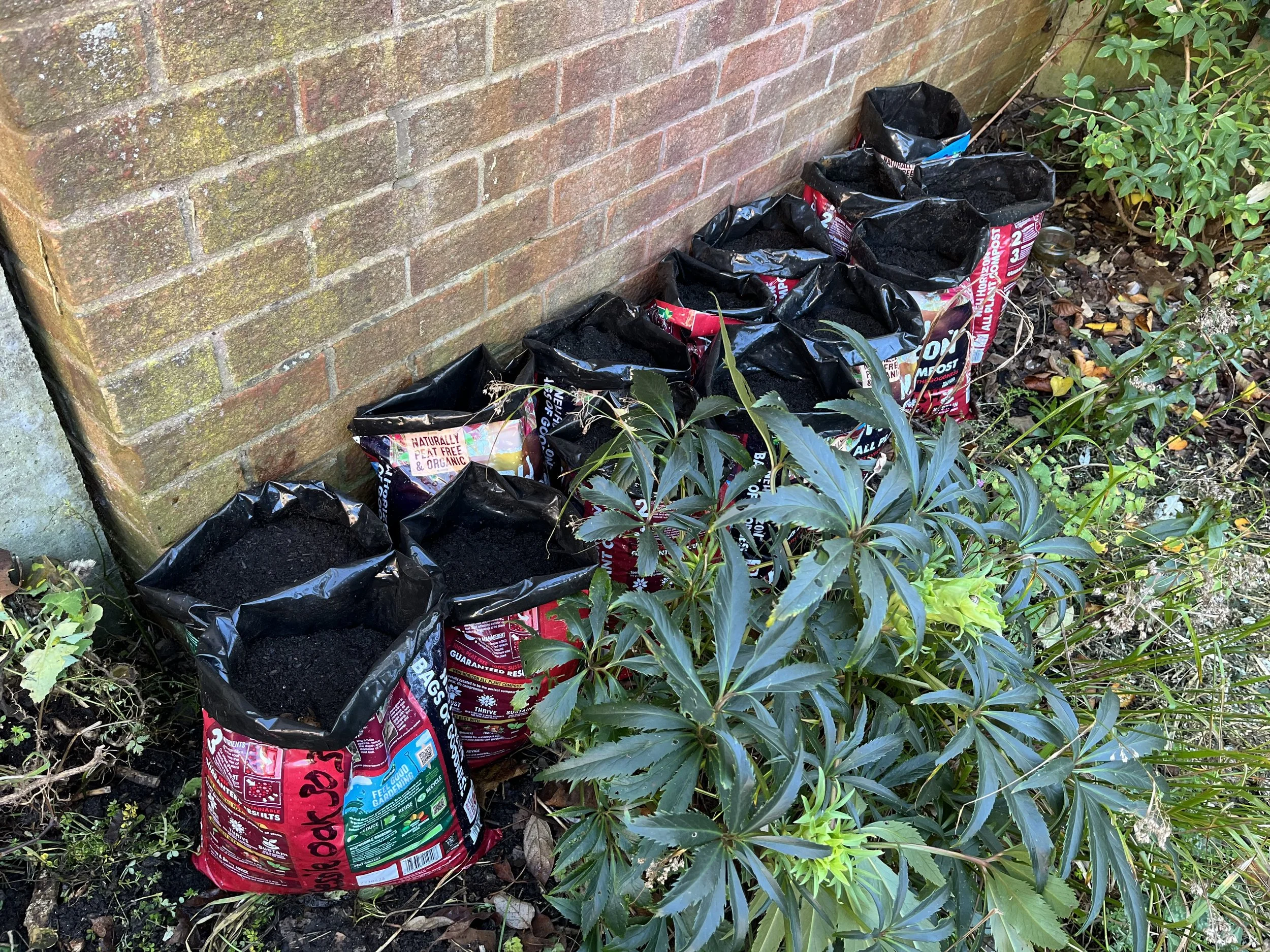
If your chosen location has mice or squirrels, you may lose a few seeds/acorns to predation, so it might be worth covering with chicken wire or positioning them somewhere less likely to be eaten - so long as they will still experience a few weeks’ frost.
Andrew will keep us posted on his experiment and the results. He started with Common Hazel, English Oak and Sessile Oak. Protect Earth looks forward to seeing how well saplings grown through this method fare through their first summer and will add an update on this initiative to the blog.
If this idea interests you - you’re looking for a project with your kids or grandkids, you now have a blueprint! Ensure you have space and time to look after the saplings for 12-24 months!
If you want to donate your saplings to Protect Earth, please check with us first which species are needed for upcoming planting projects in your region and in what volumes. Please also check before you start whether you are in a location that’s practical for Protect Earth to collect the saplings from or consider a suitable means of their transportation.
If you want to join us to plant the saplings you’ve grown from seed, that would be amazing!