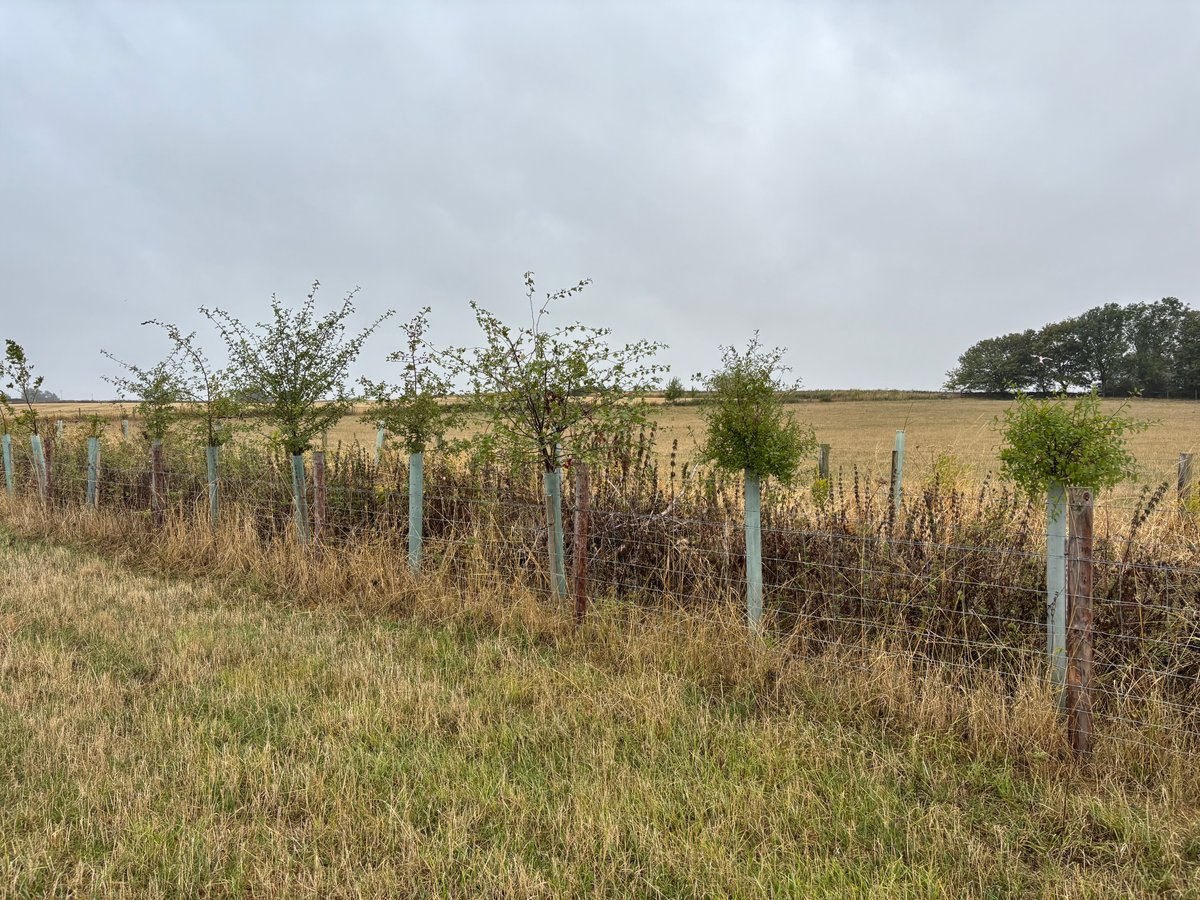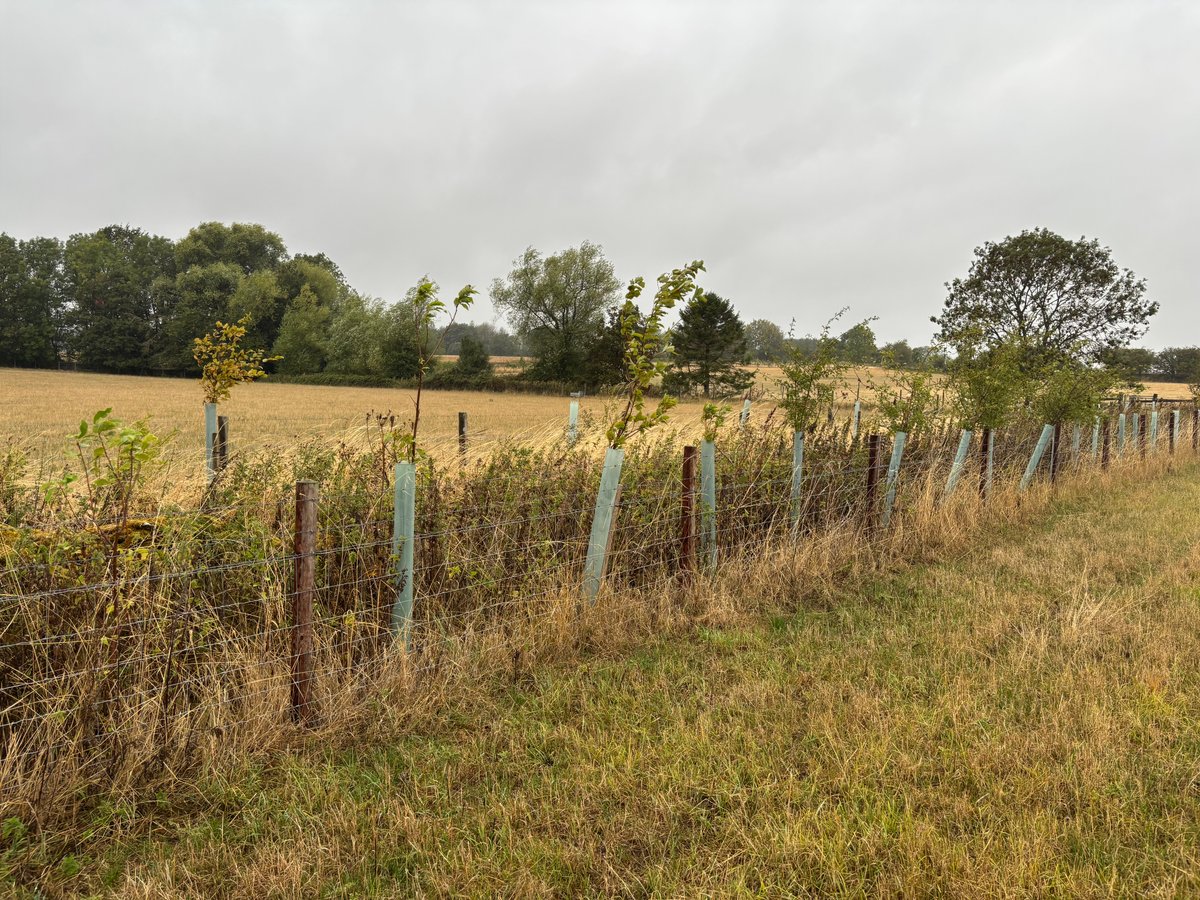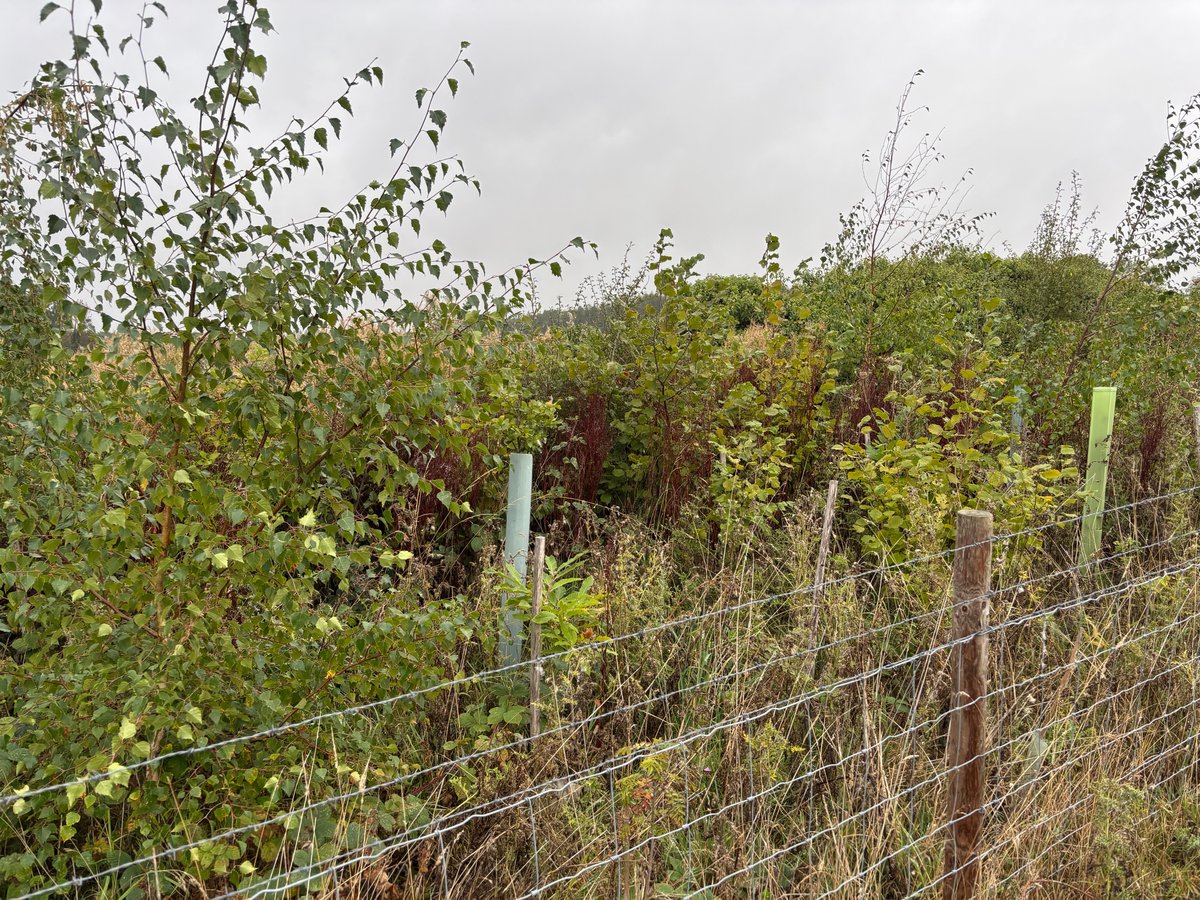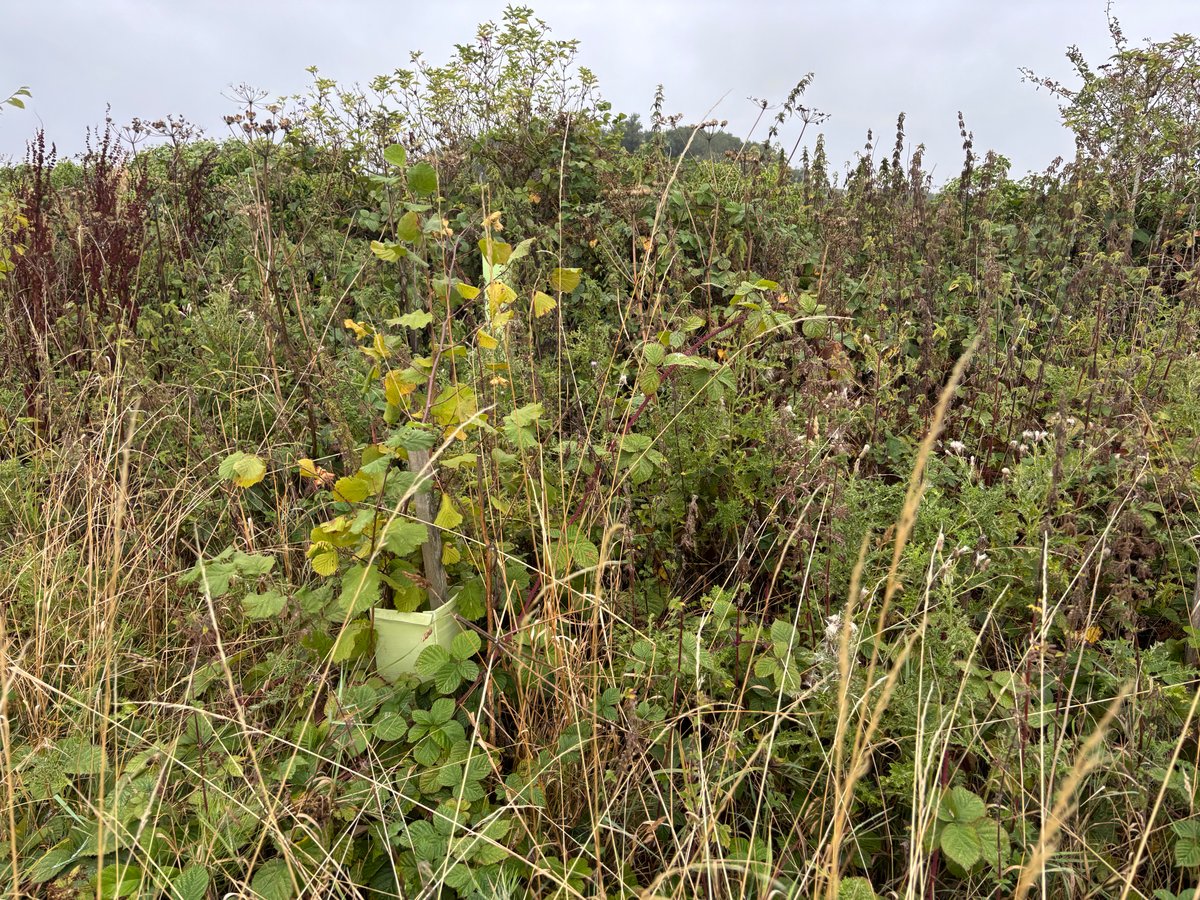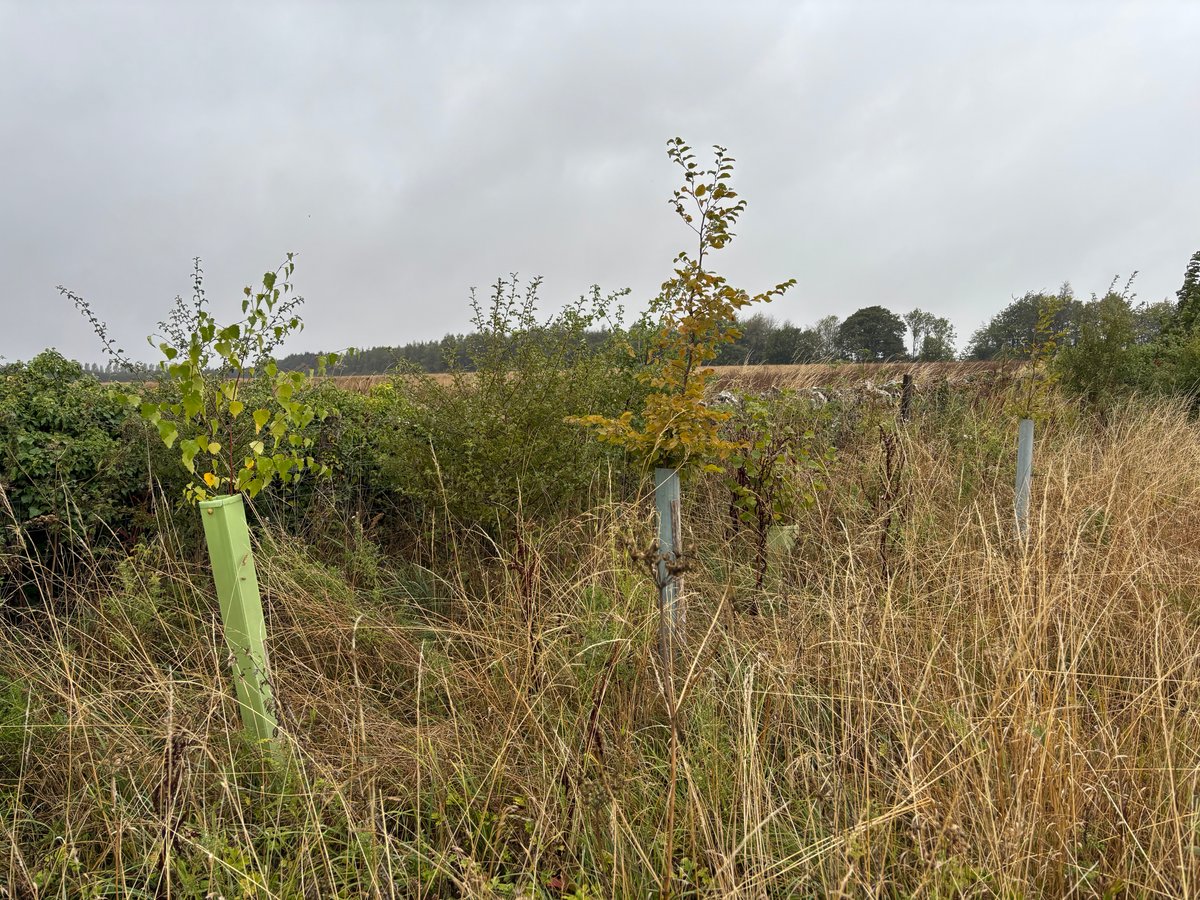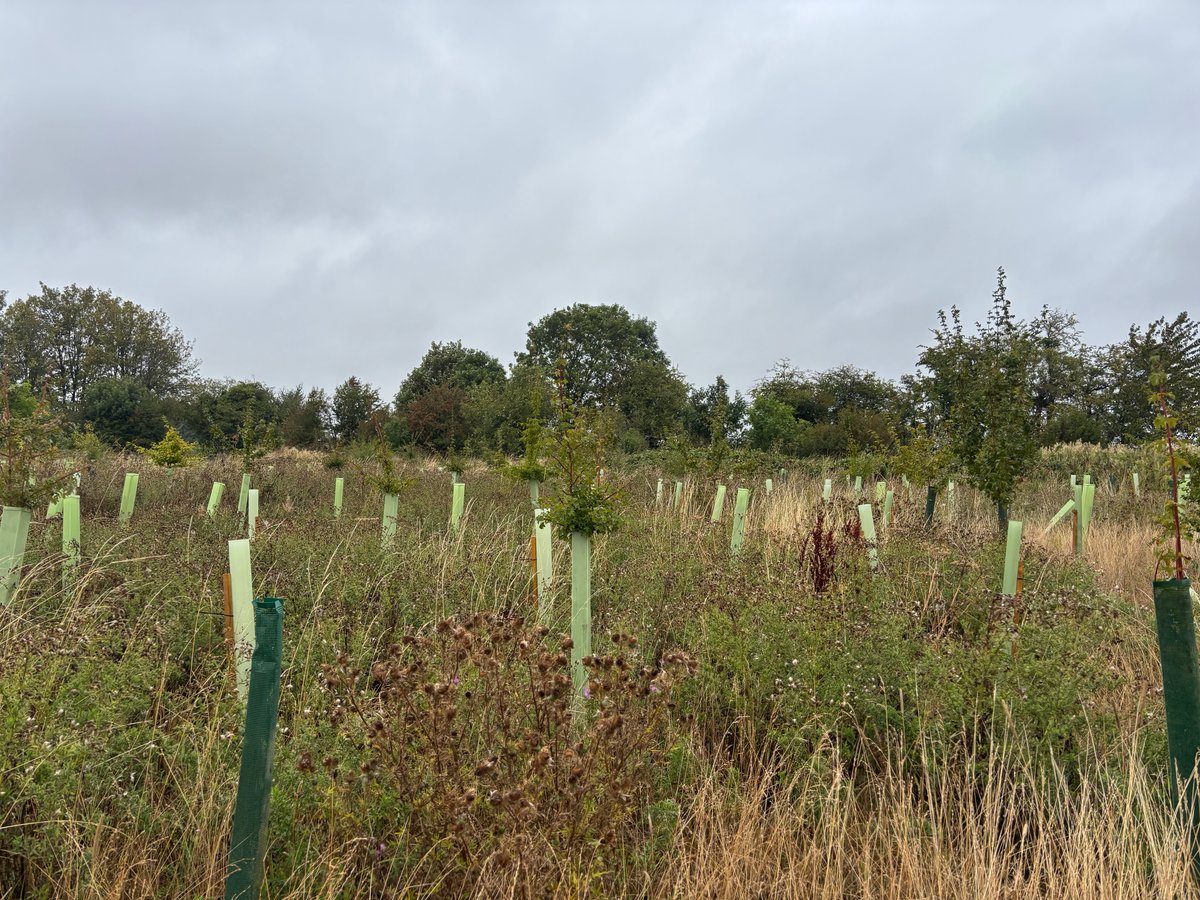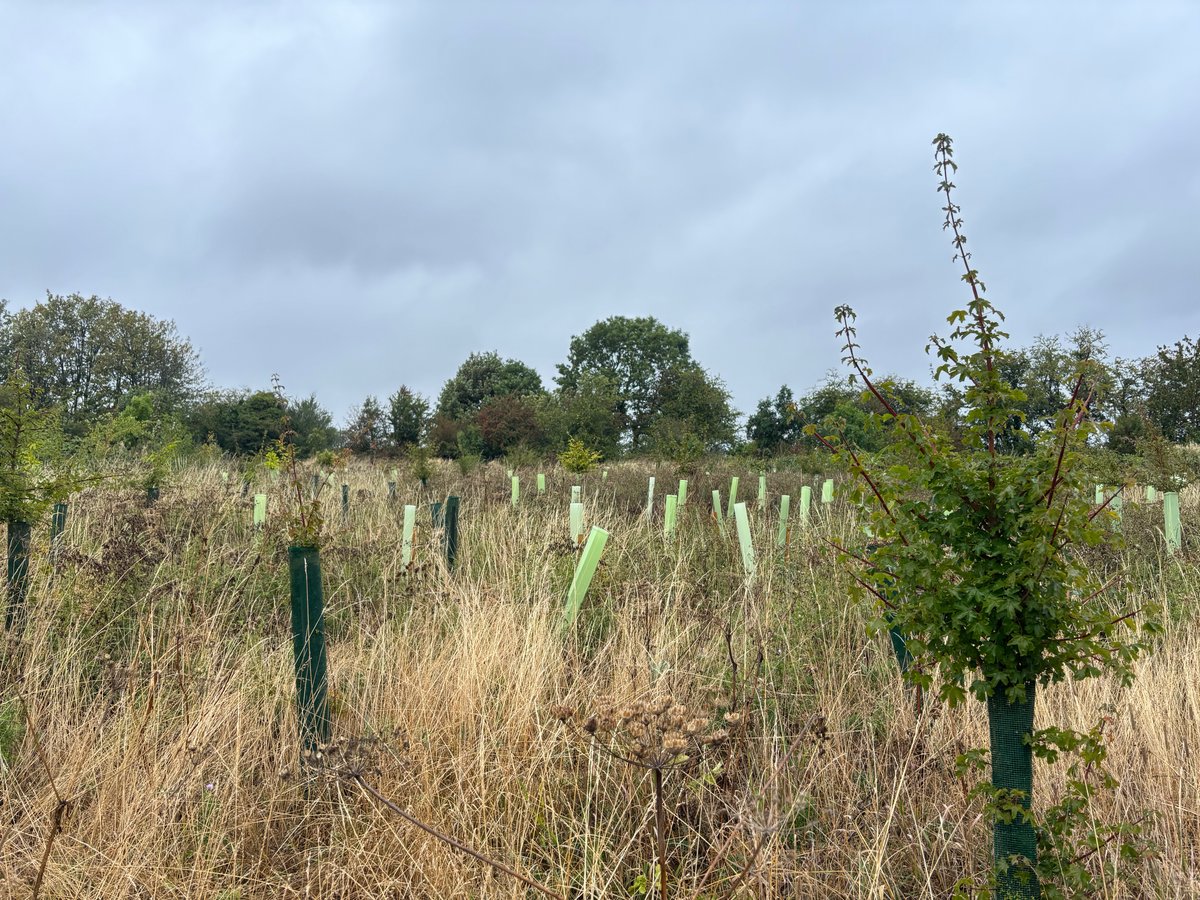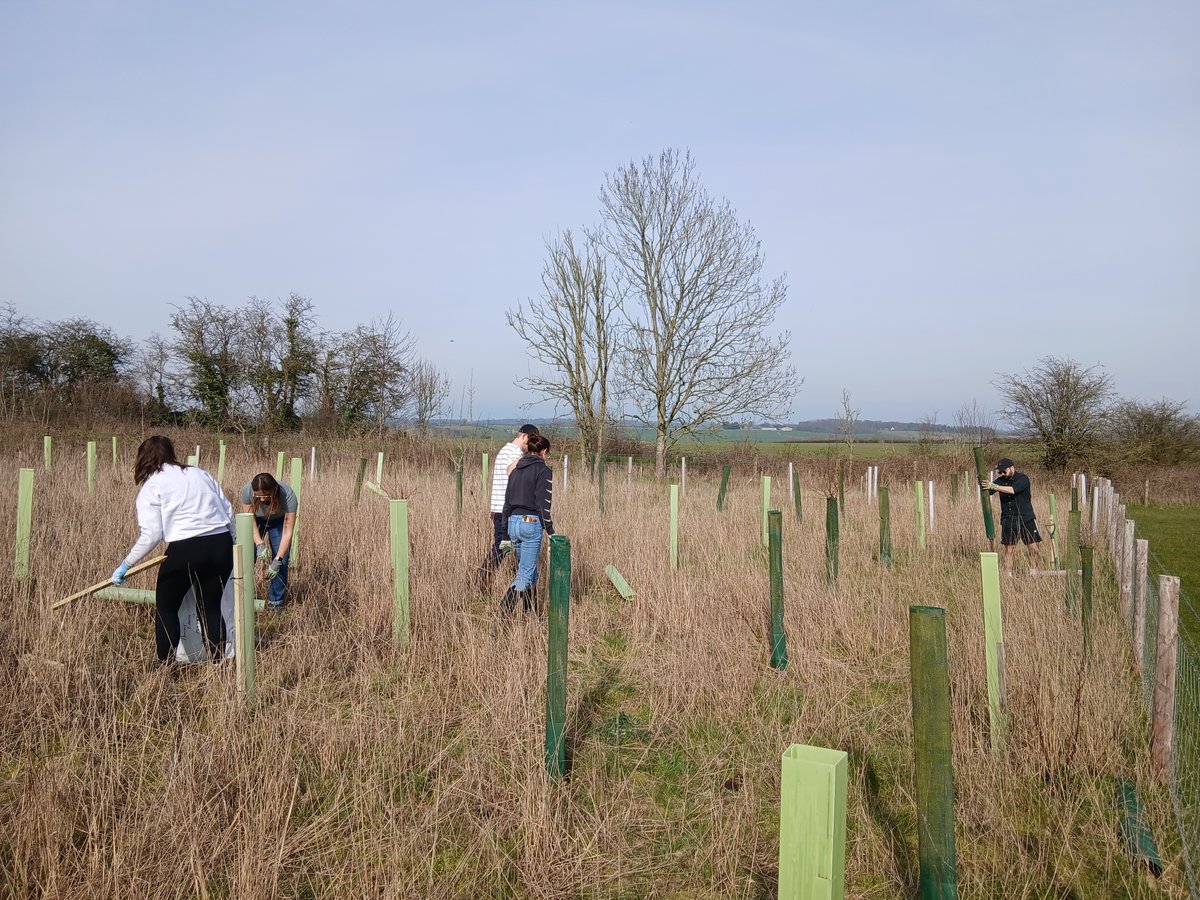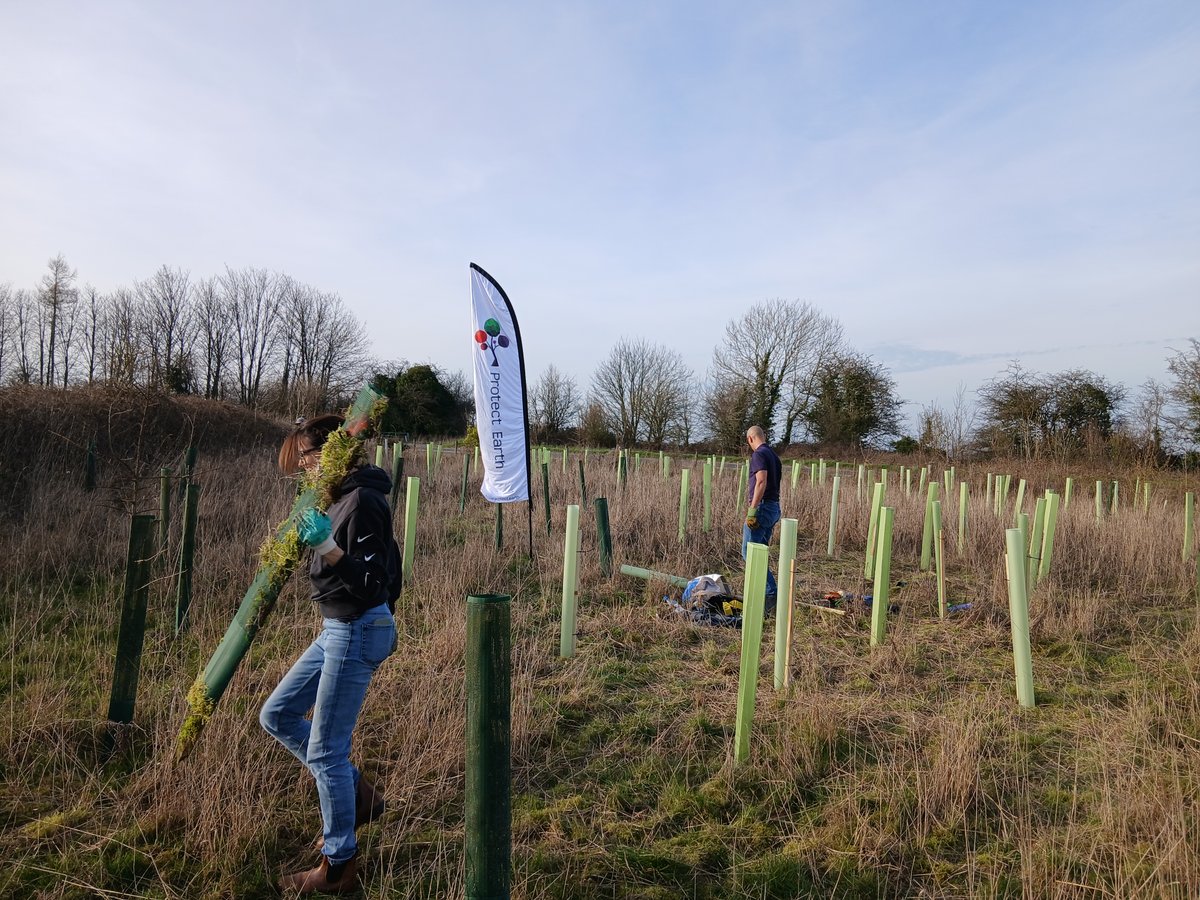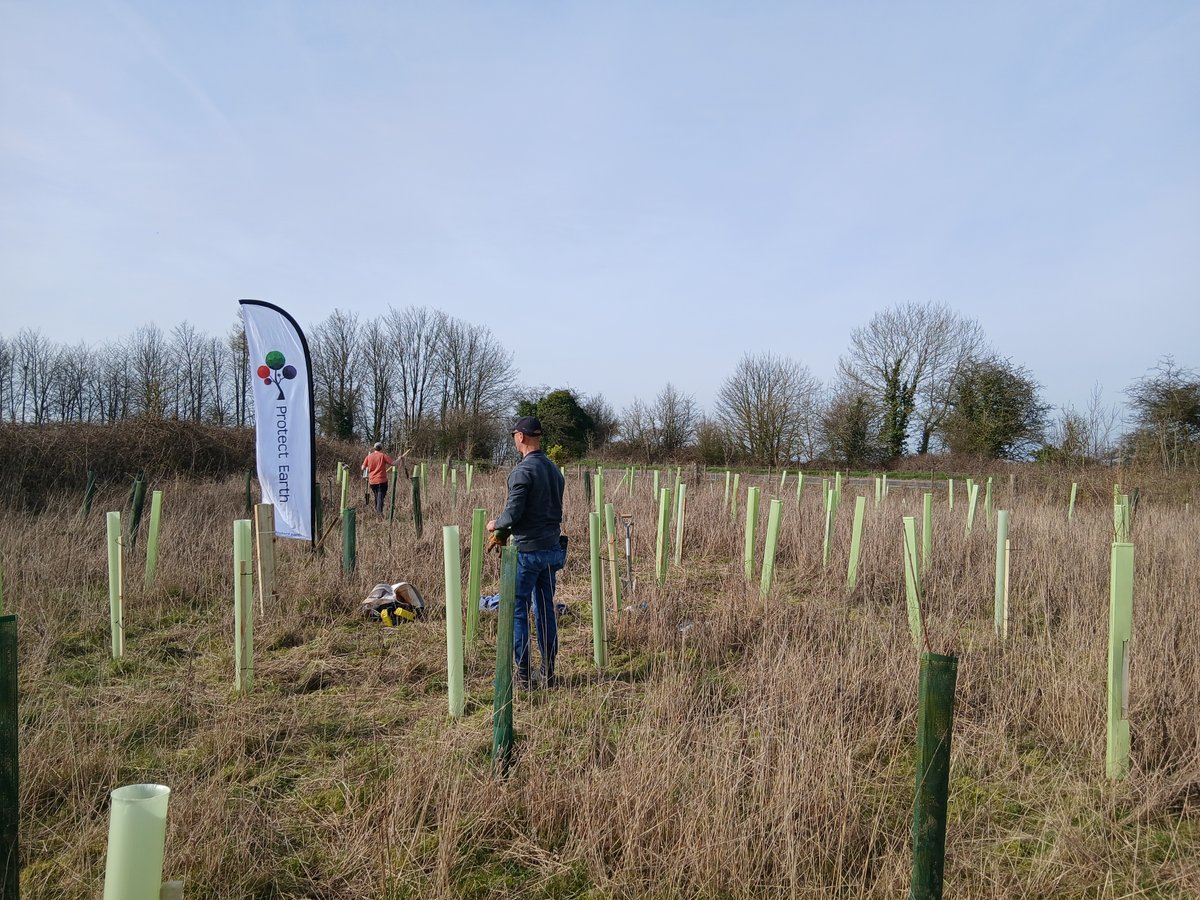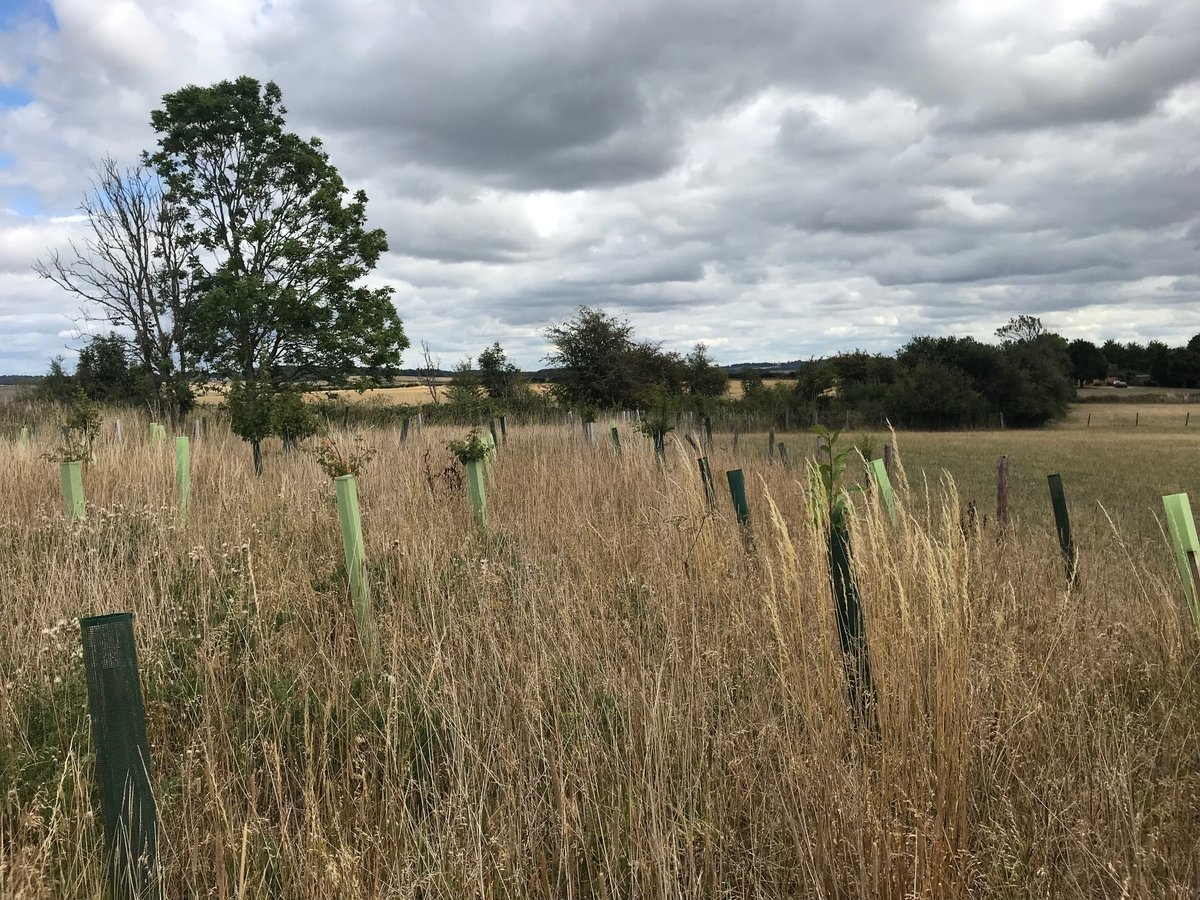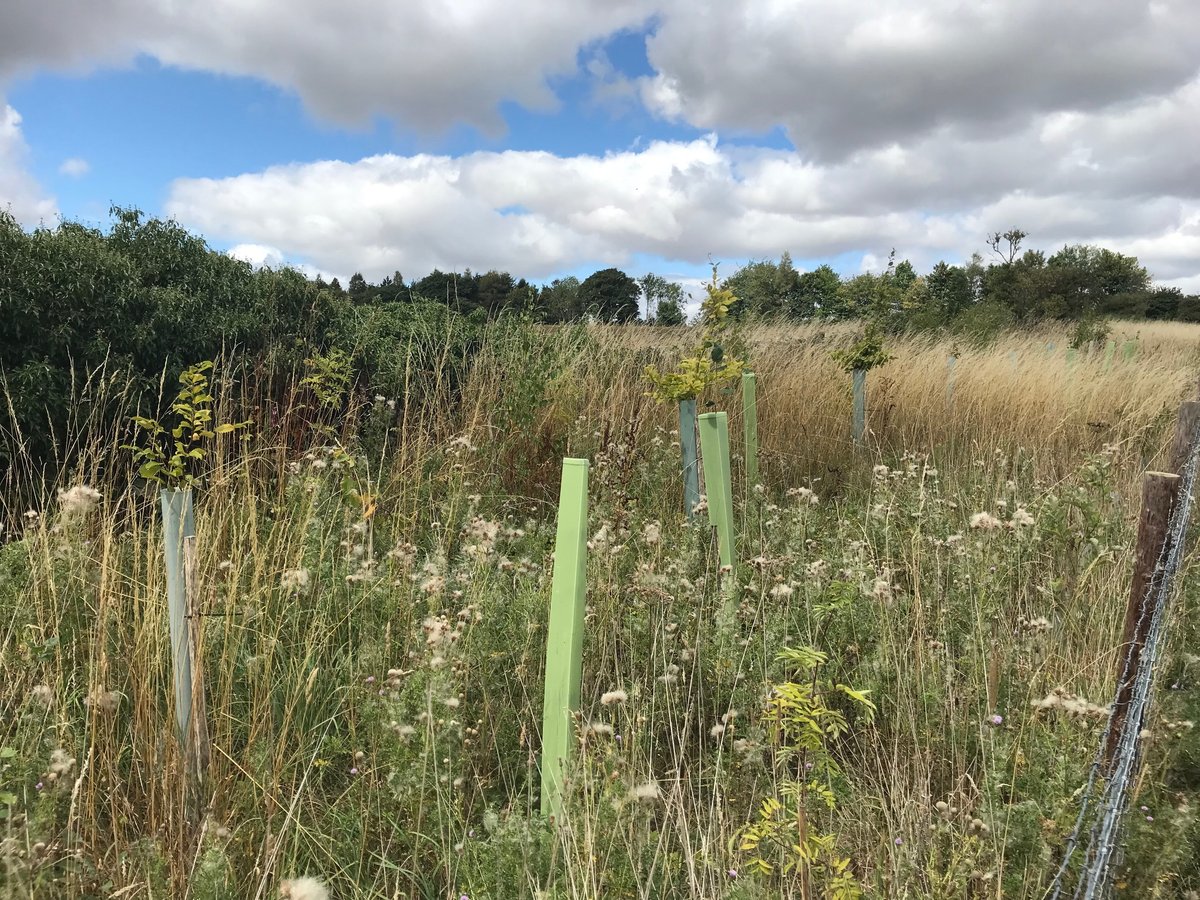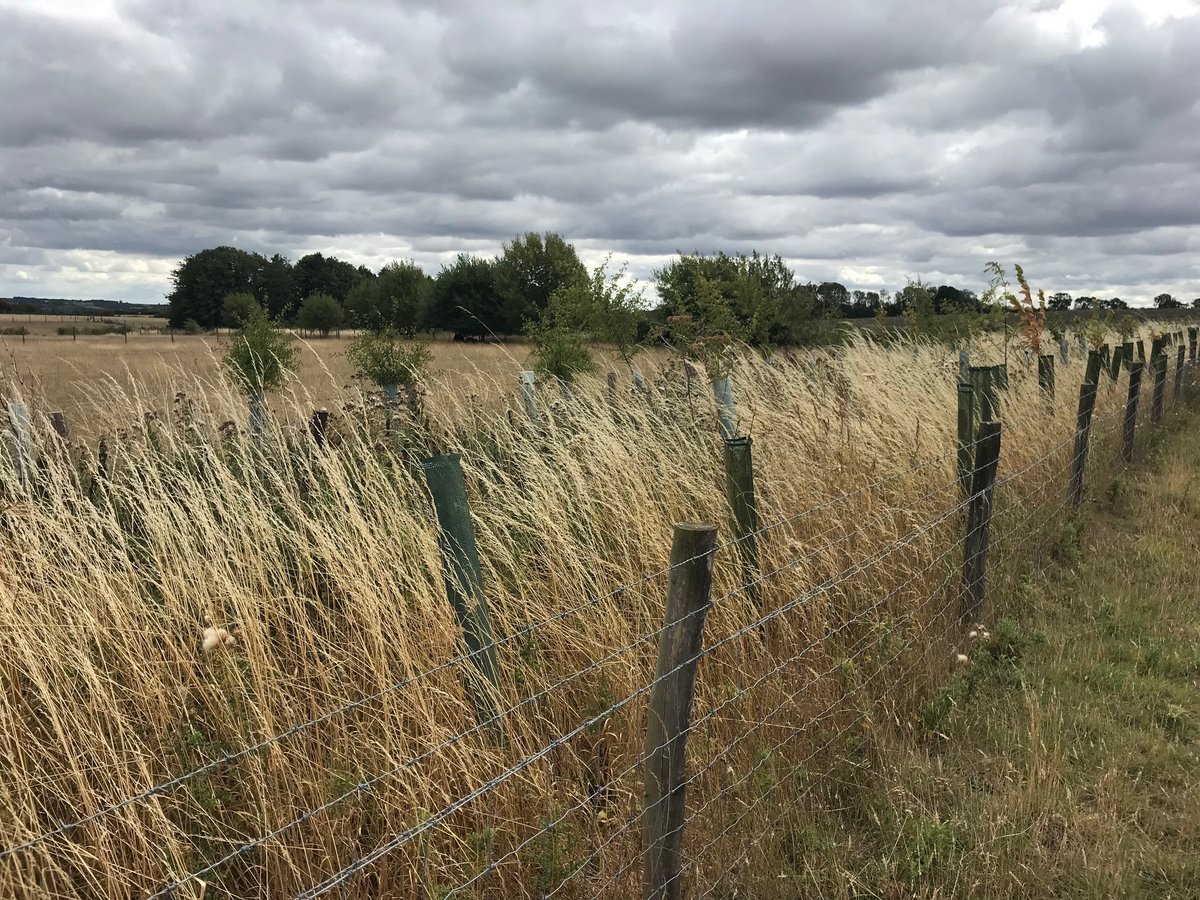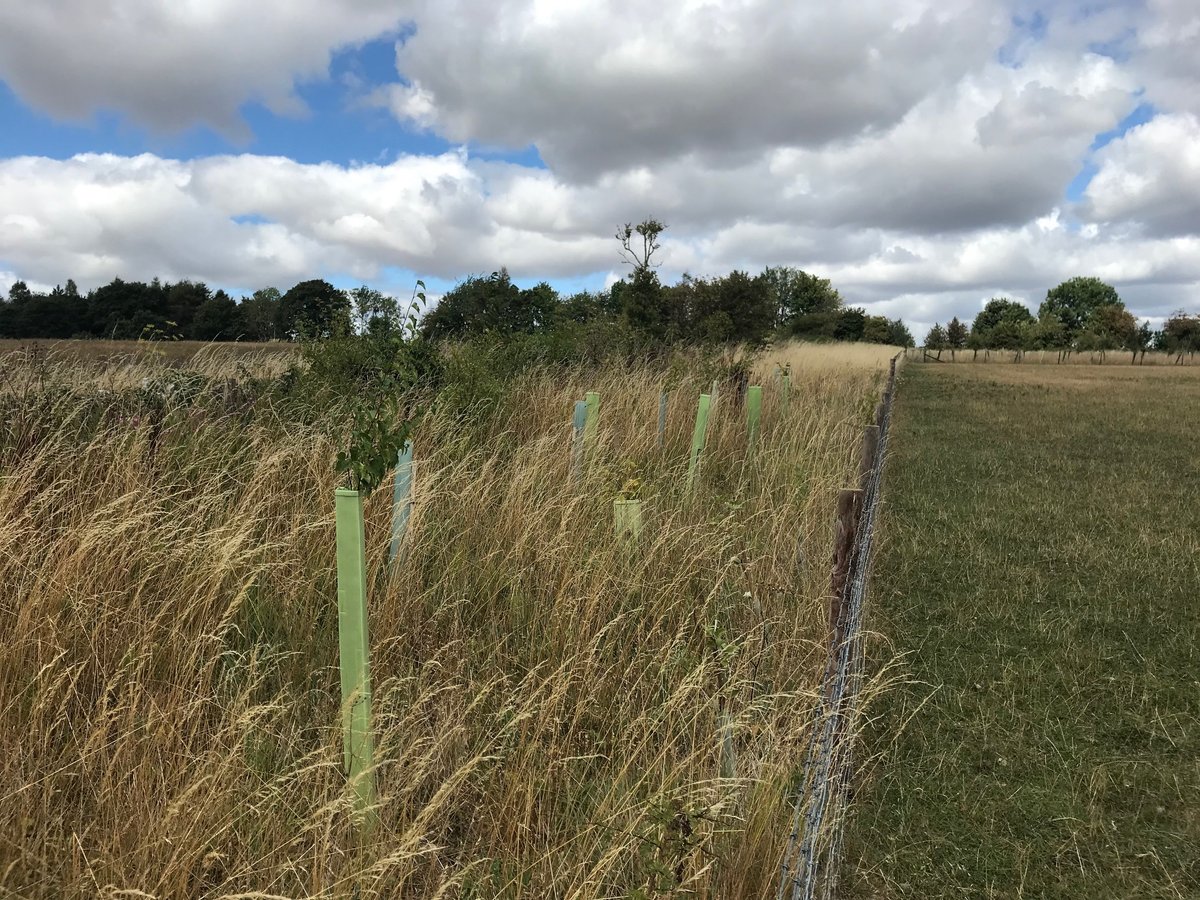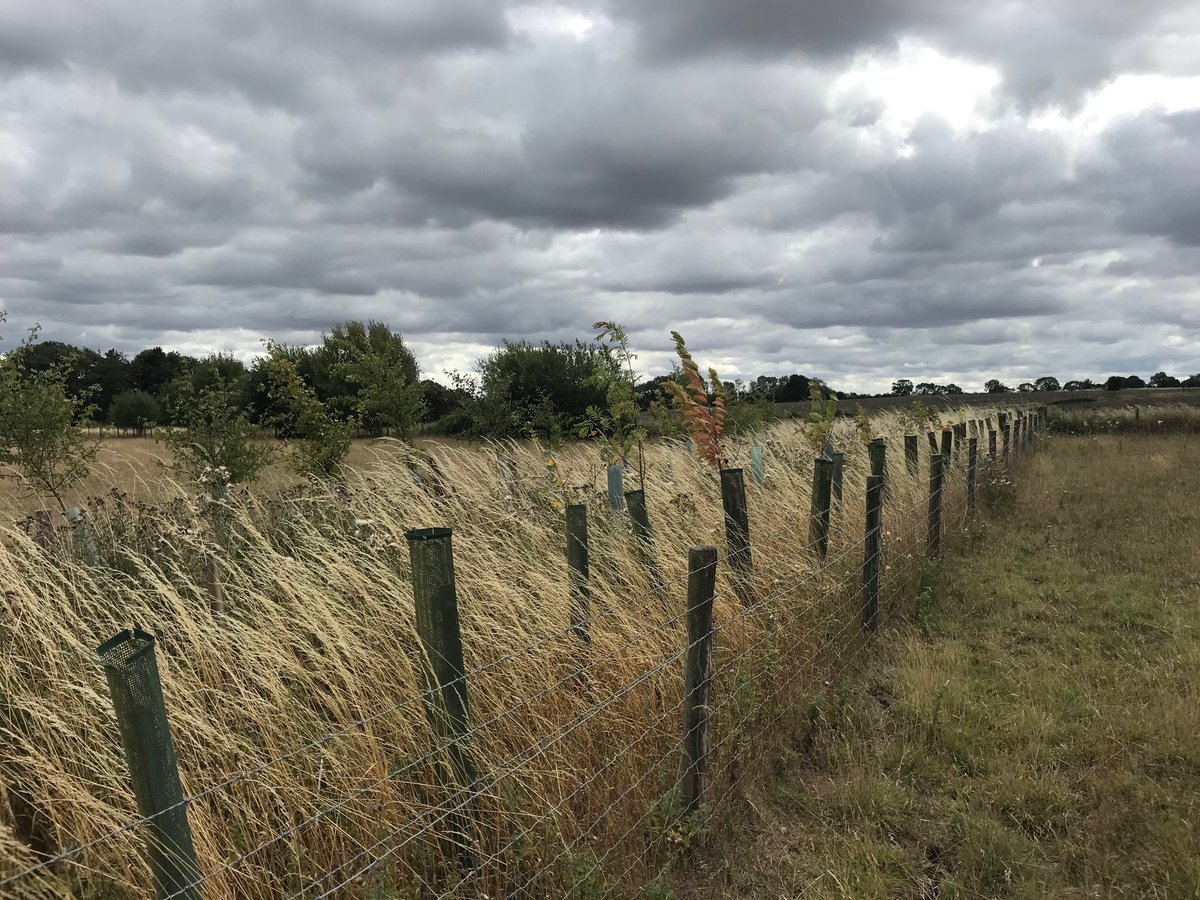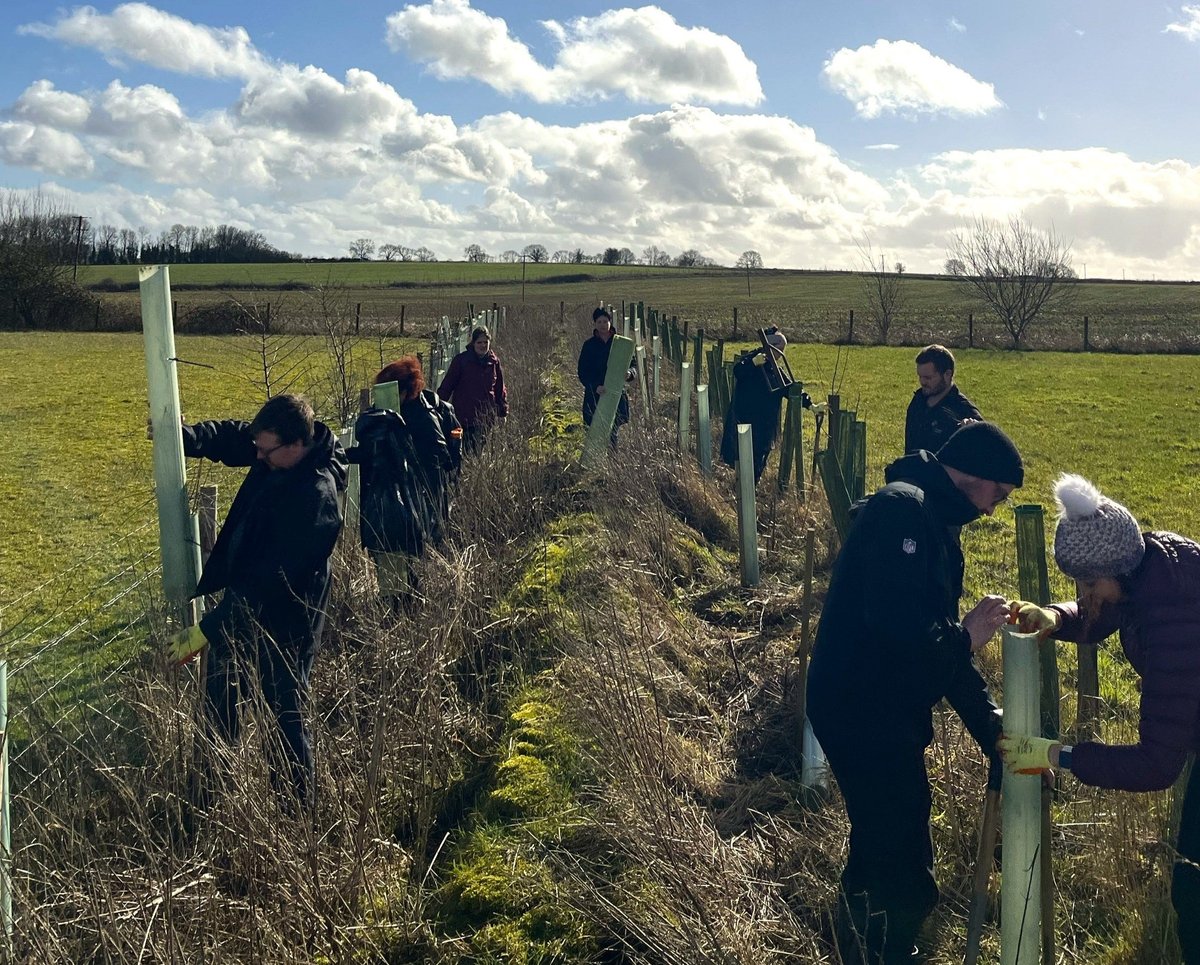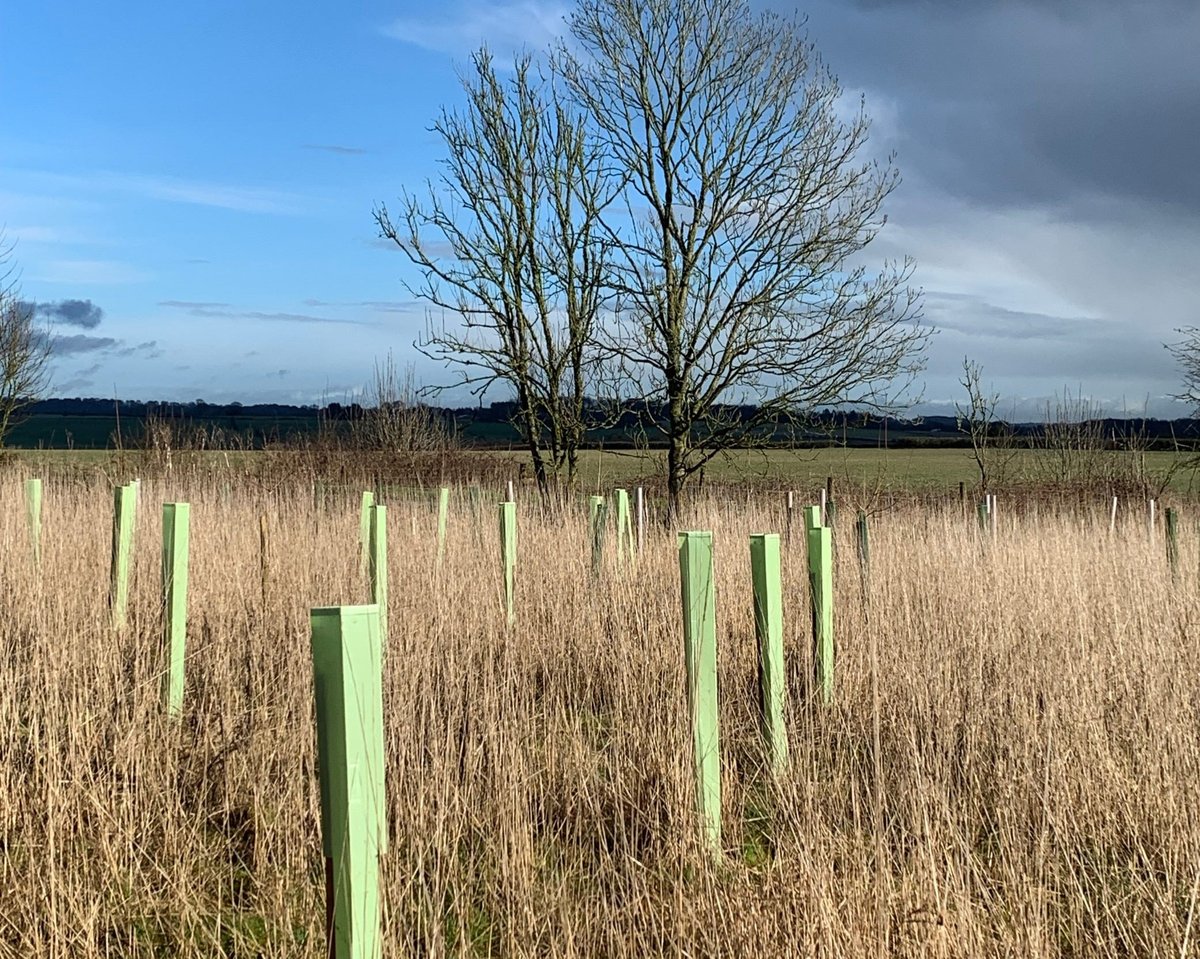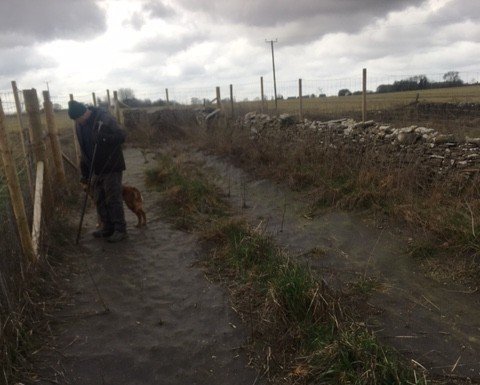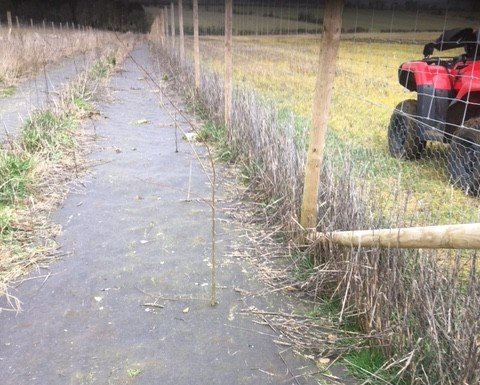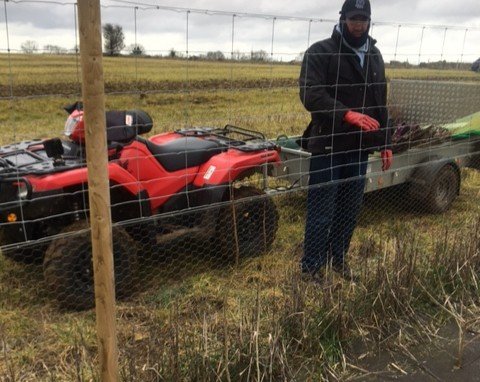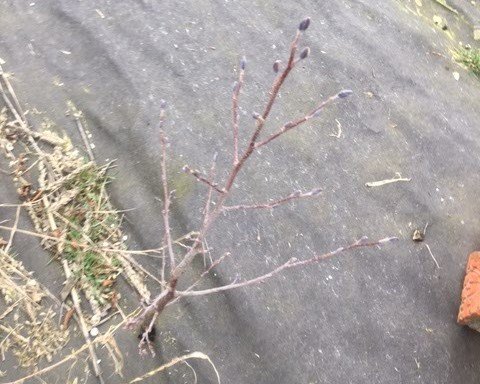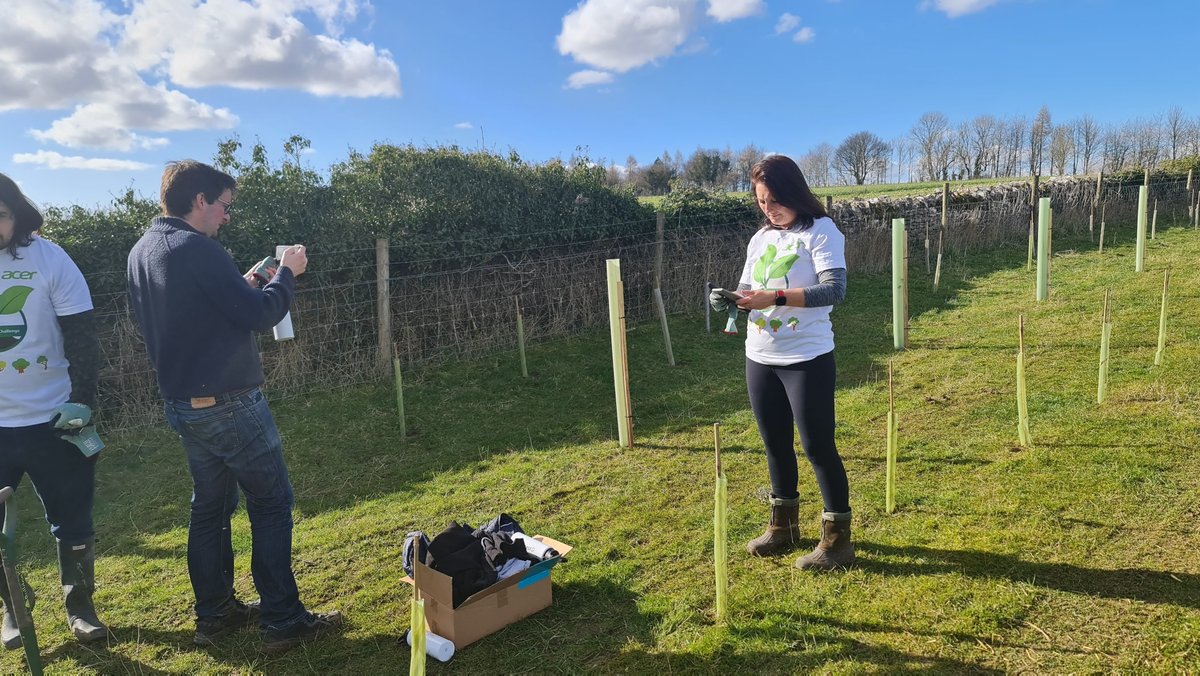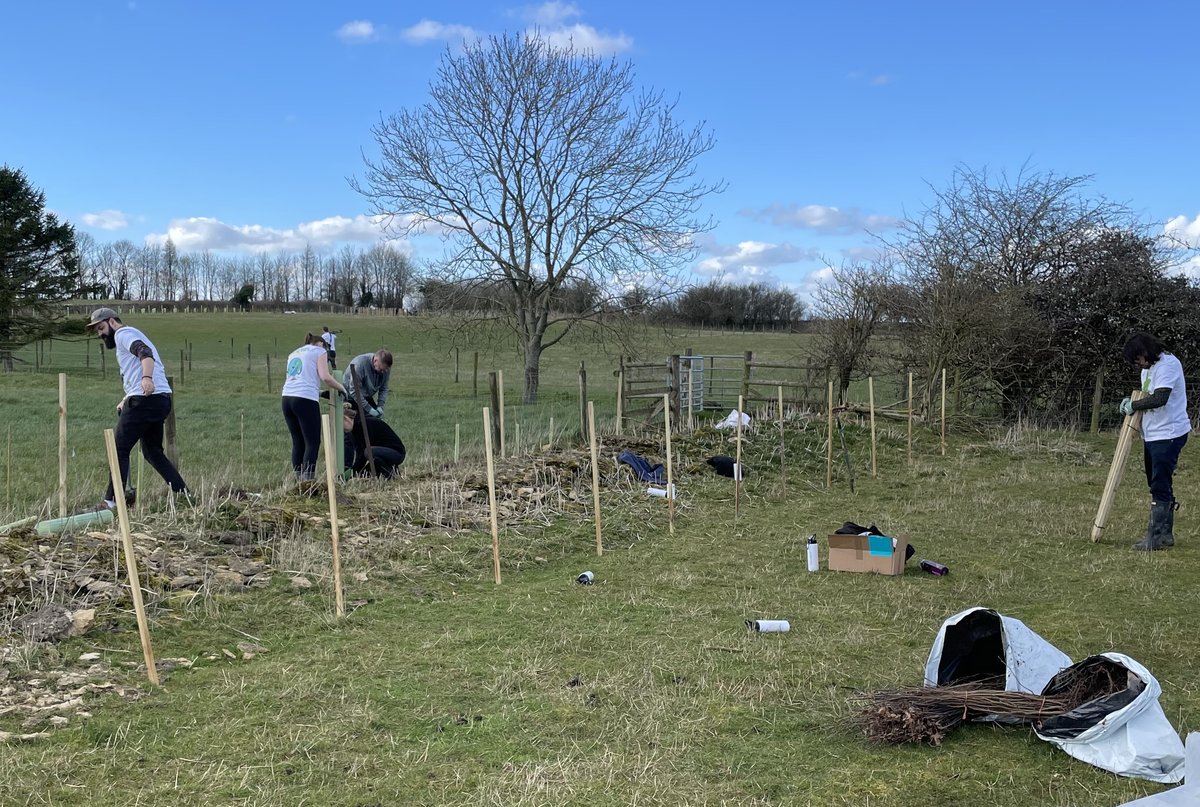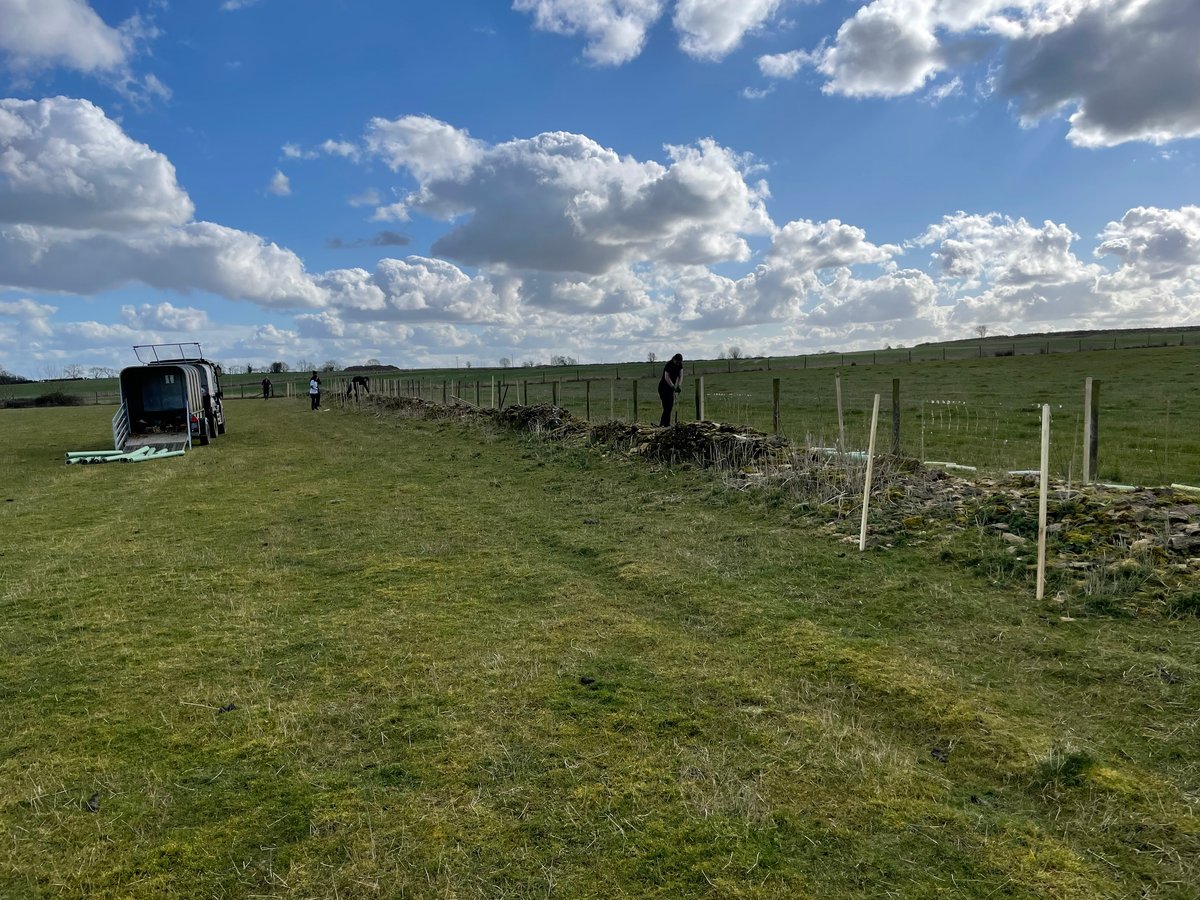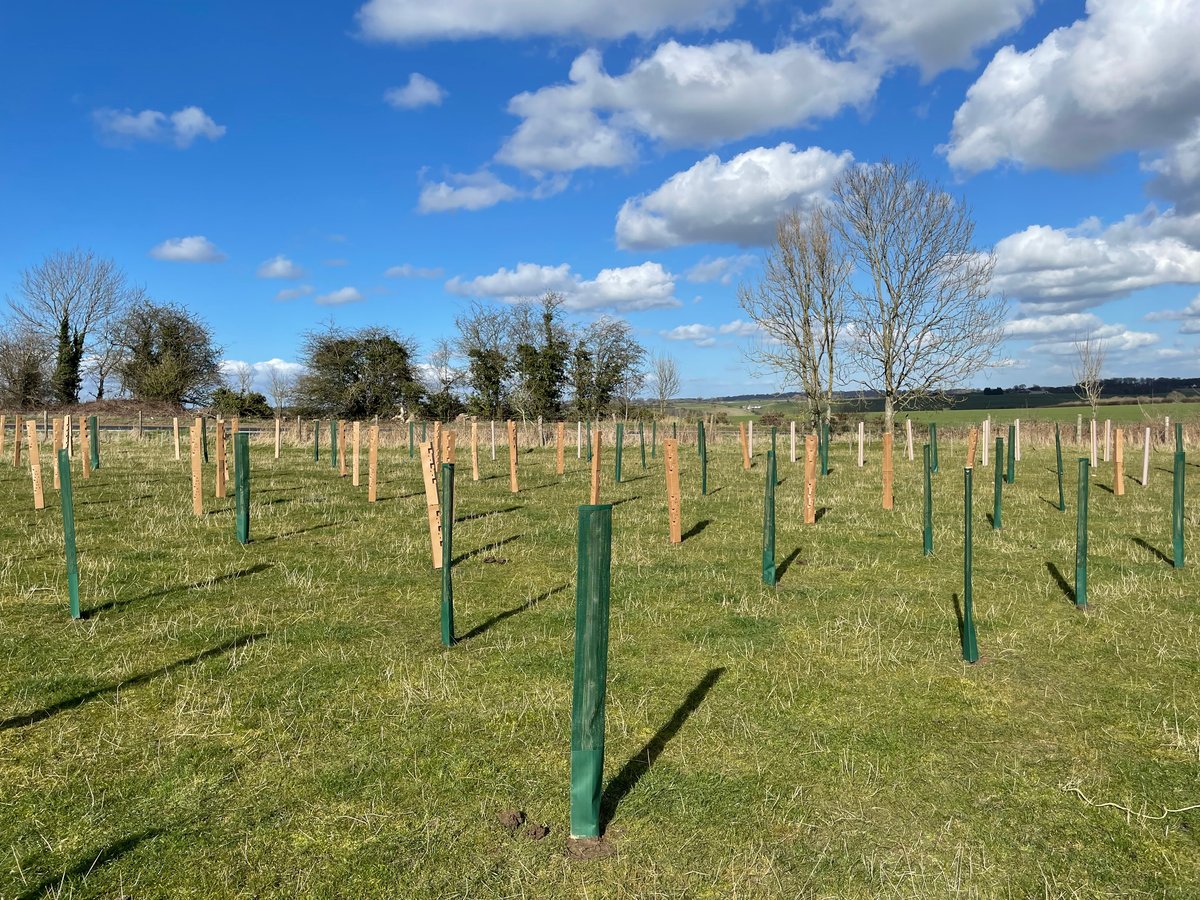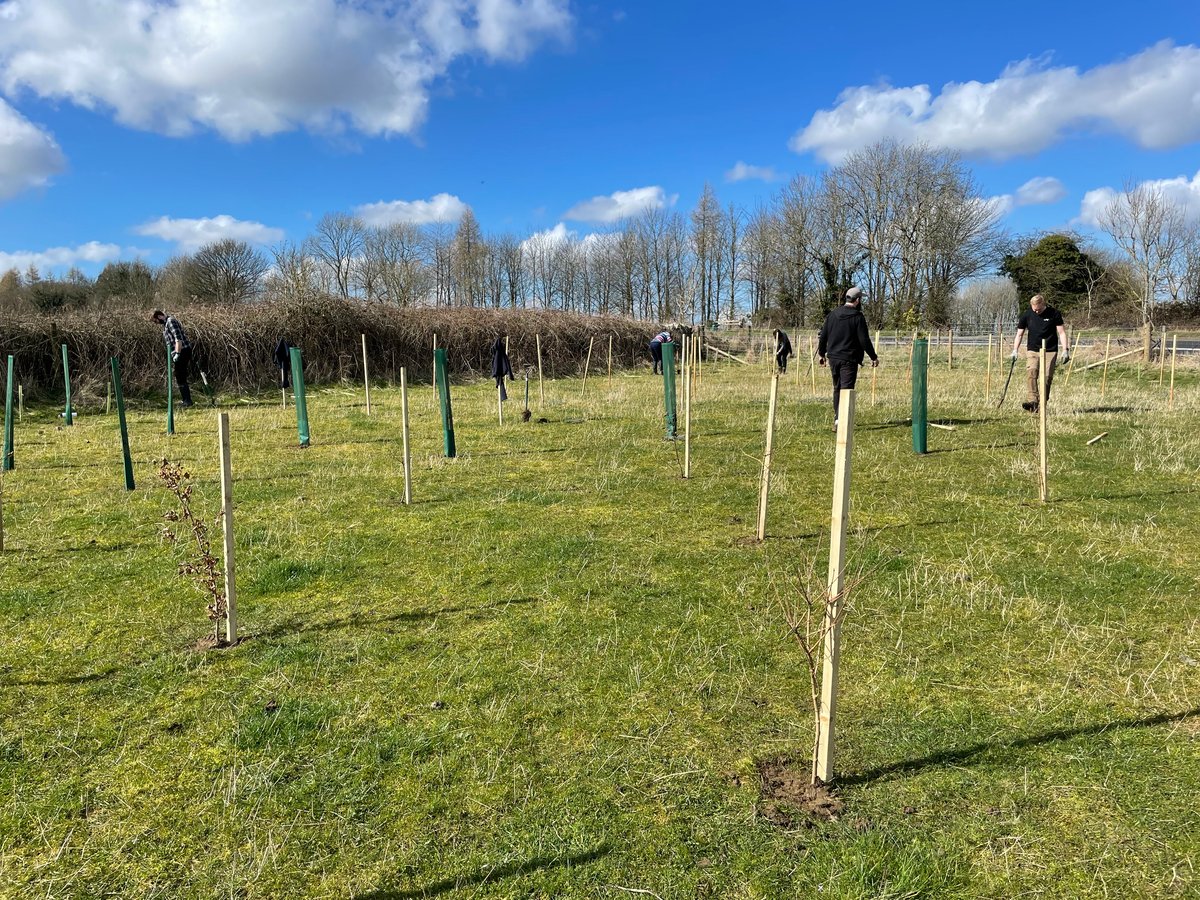


The woodland and shelterbelts were difficult to survey because of very thick thistle growth, and cracks and holes in the ground lurking below the growth to grab at ankles. Some saplings were lost to the cracks appearing below them, exposing their roots to the elements. This is where woodchip mulch comes in brilliantly, but these sites had mulch matts that have long since biodegraded. Growth and survival rates for the rest of the woodland are variable with some notably robust and tall saplings alongside some alive but stunted trees chugging along throughout these tough conditions. Despite the apparent state of things, the woodland and top shelterbelt were both holding firm with a respectable survival rate of 71%, which is not far off the target 80%.
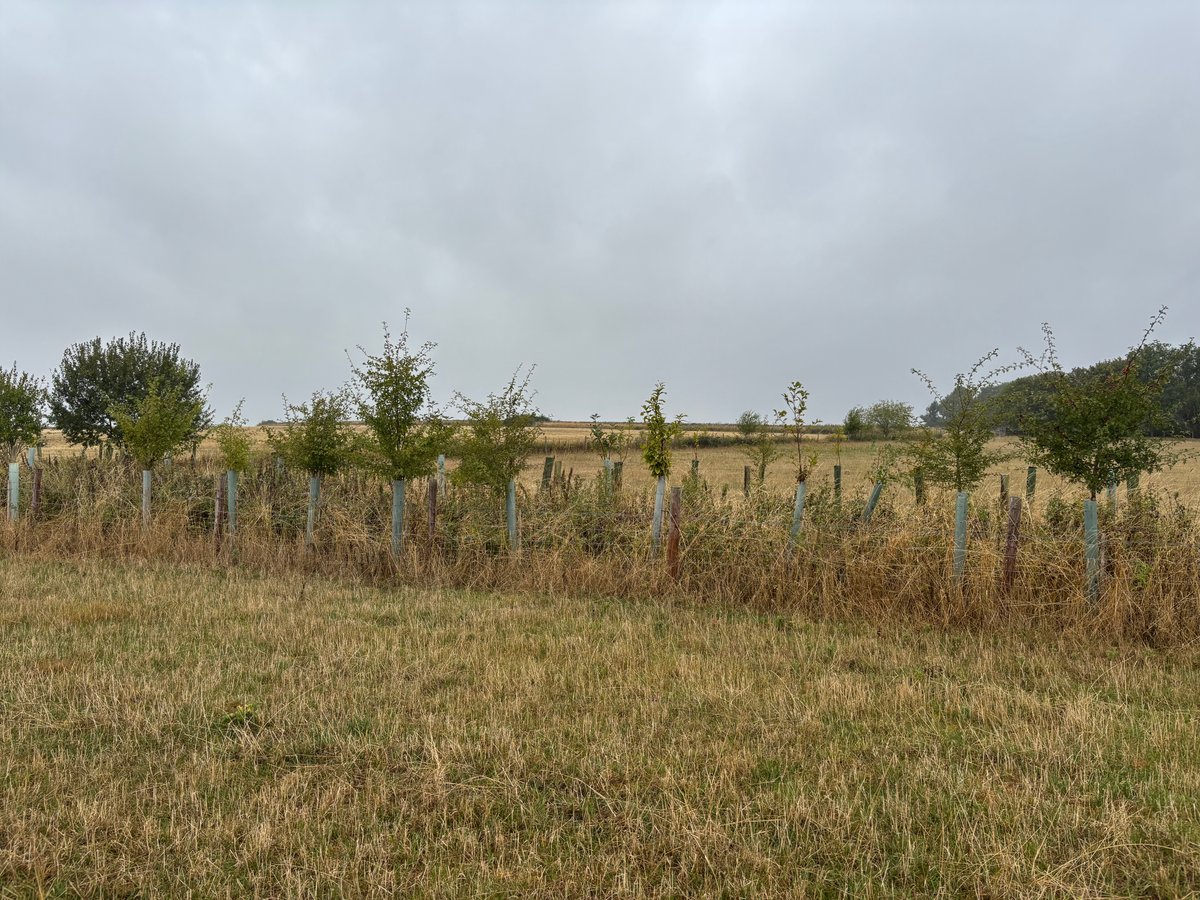
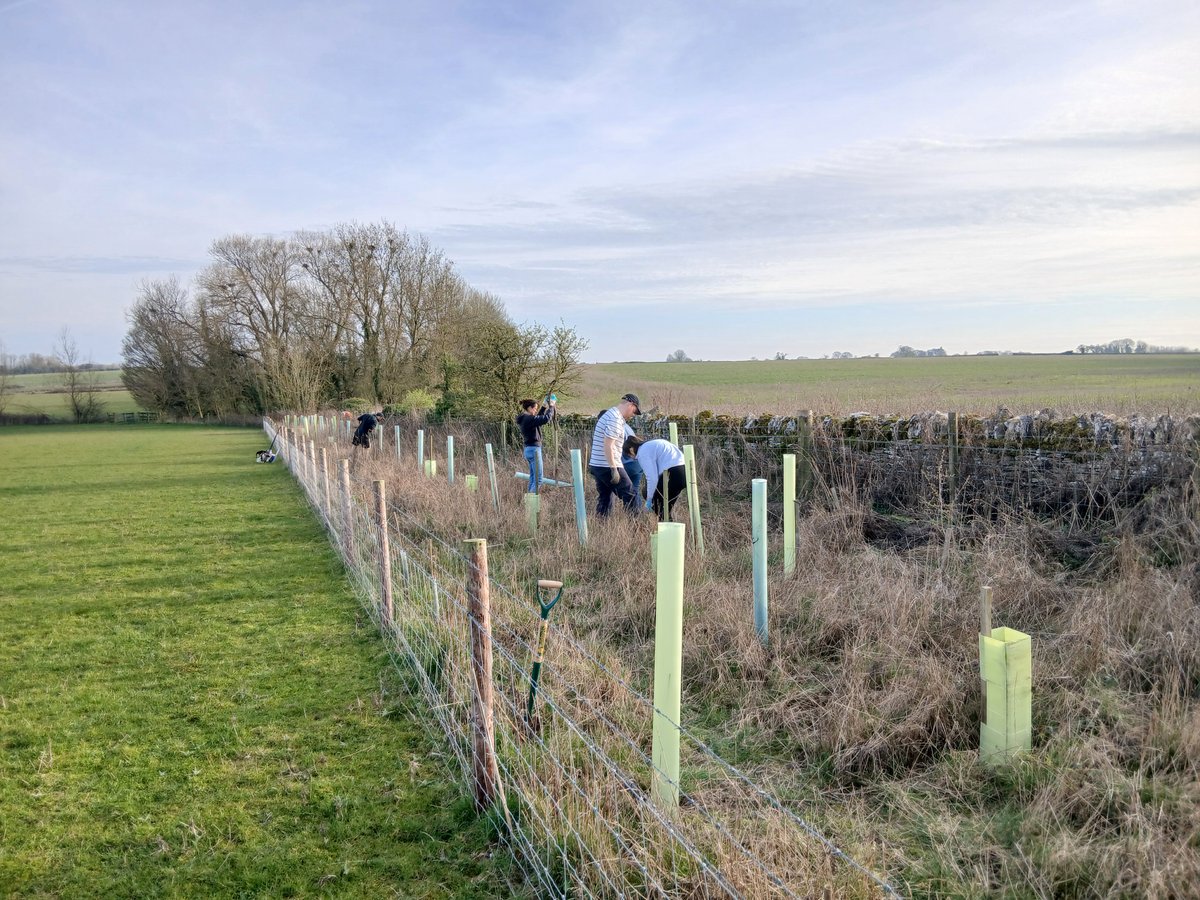
The second shelterbelt to the south was not doing quite so well. A few trees were simply smothered by the vigorously growing grass competing for space and nutrients. The southern end of the shelterbelt meets a small woodland area with a small pond, and here the soil is damper. There is some great willowherb in this area which seems to be less of a problem for the trees.
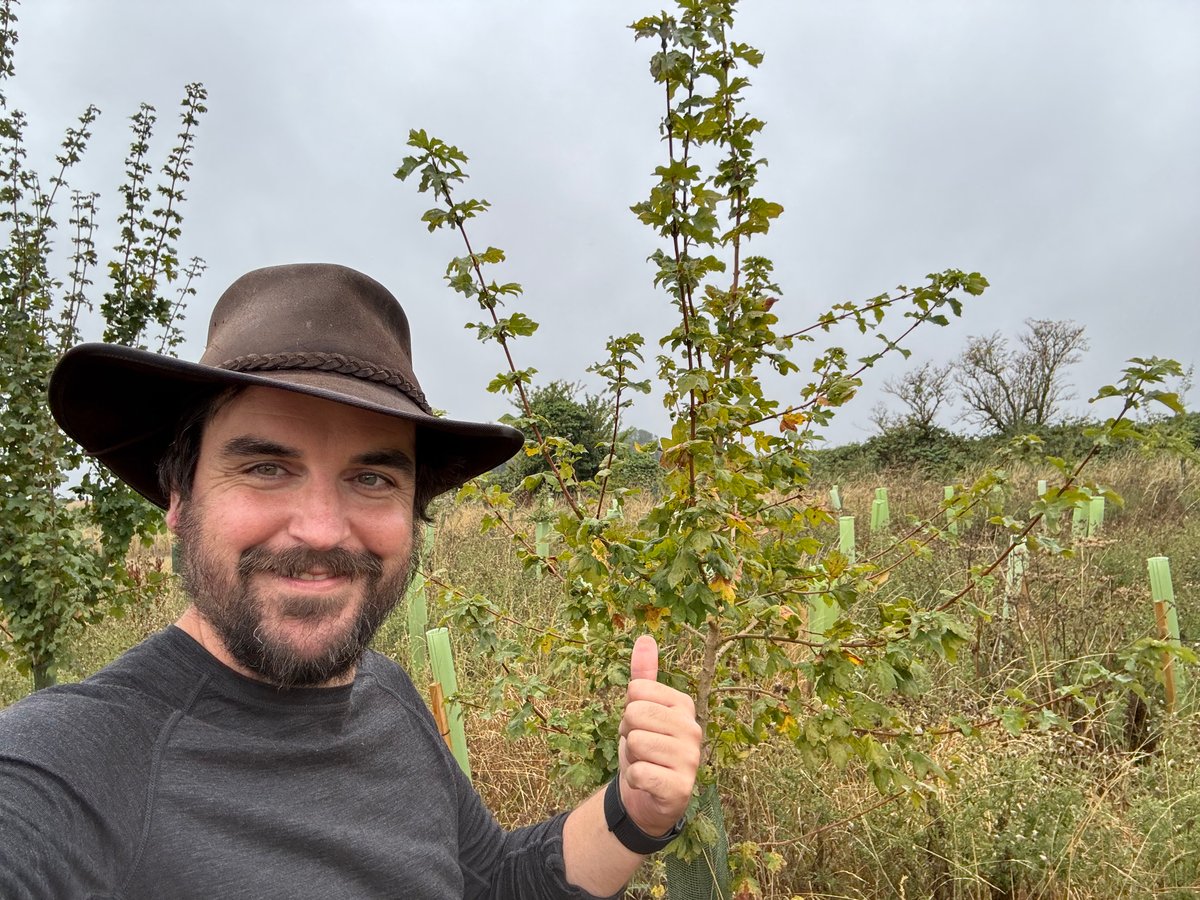
The surviving trees are strong and healthy, with some almost 3m in height. It will be interesting to see if any longer-term difference in survival rates emerge between the northern and southern ends of the shelterbelt due to different water availability and the likely less aggressive competition from great willowherb. For now, the survival rate is 65%, which also needs some work.
The plan here:
- another smaller restocking in winter, with a focus on getting compost around the soil of each planted tree to reduce the cracking of the clay soil, and some woodchip mulch to go on top.
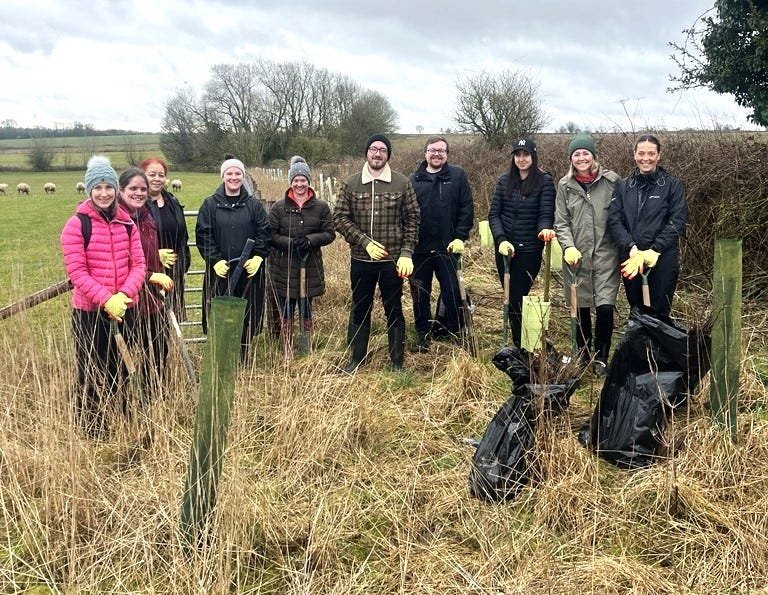
- In early spring, a quick visit with the electric strimmer to knock back the thistle growth. A handful of volunteers with rakes can turn those cuttings into yet more mulch.