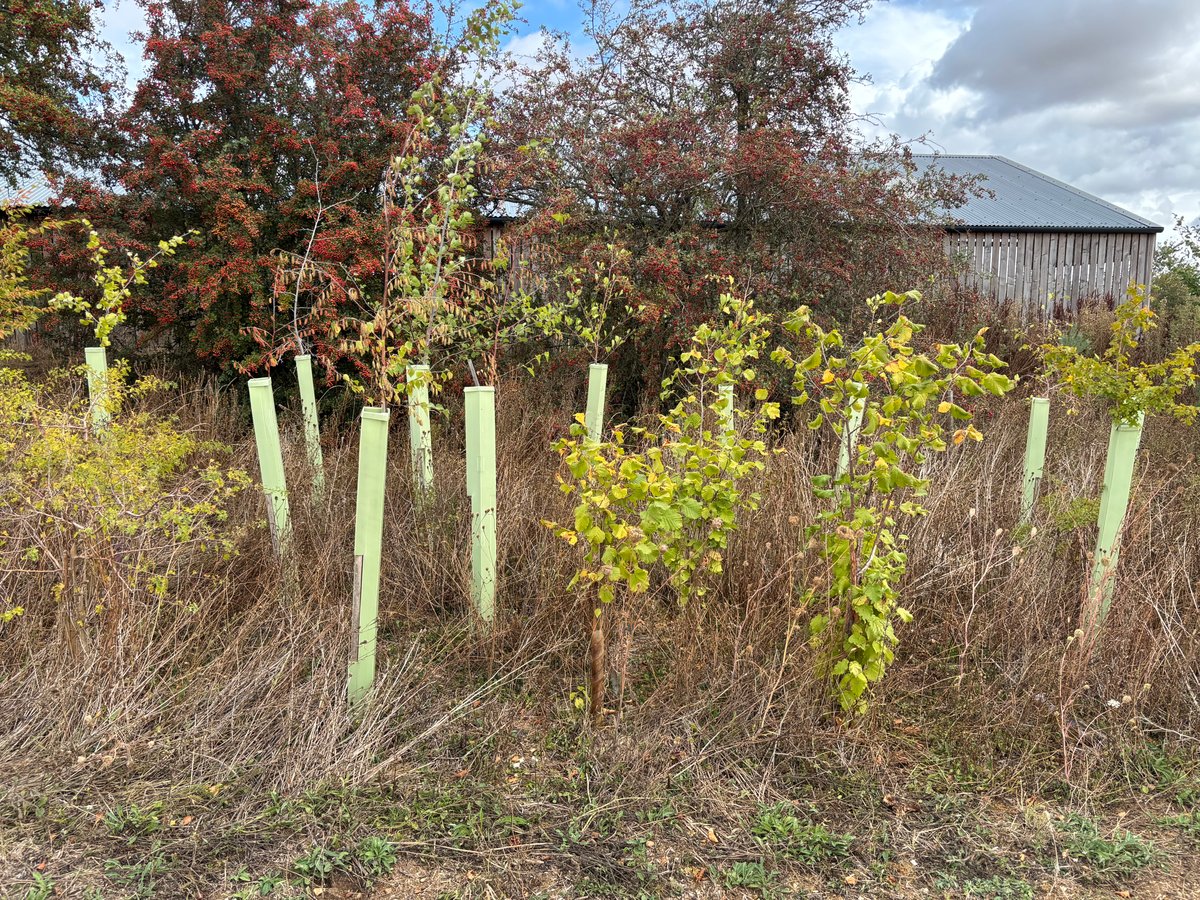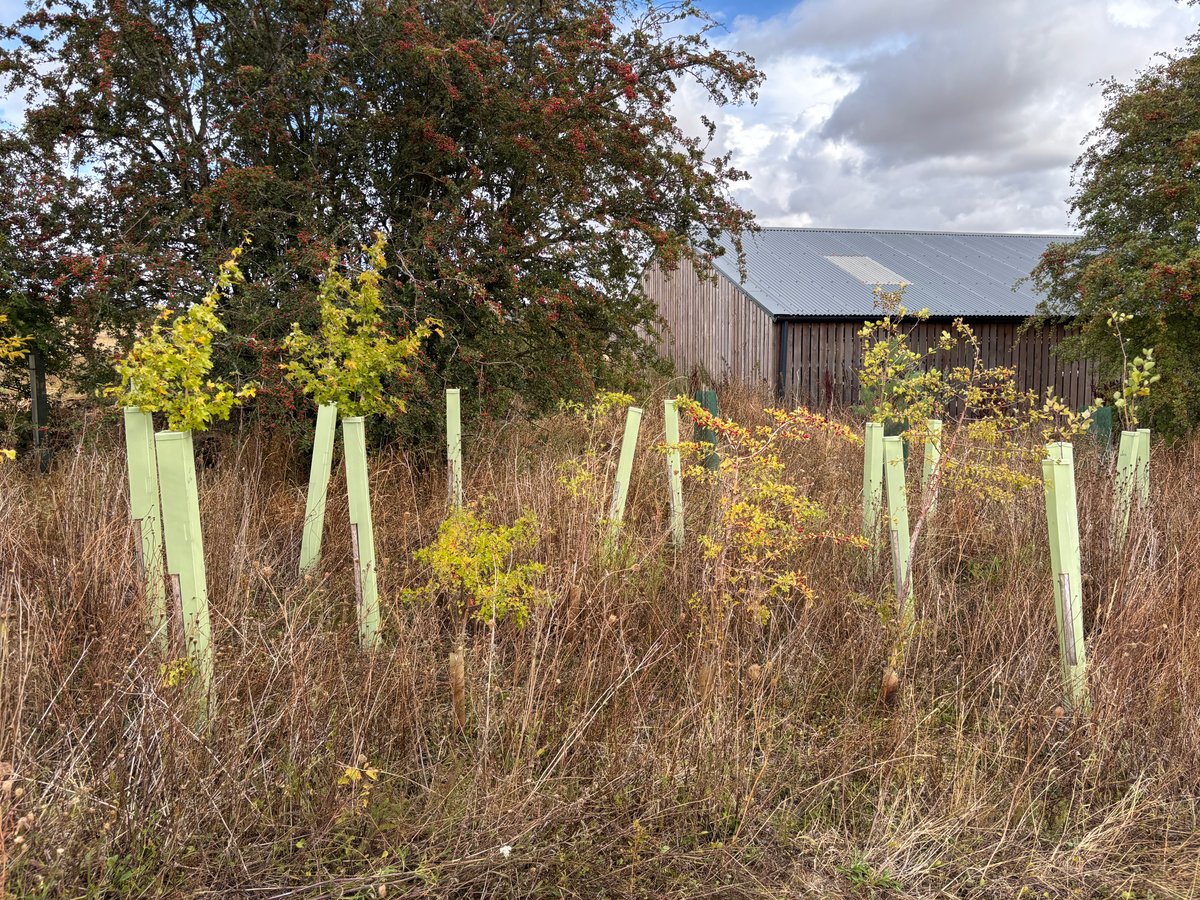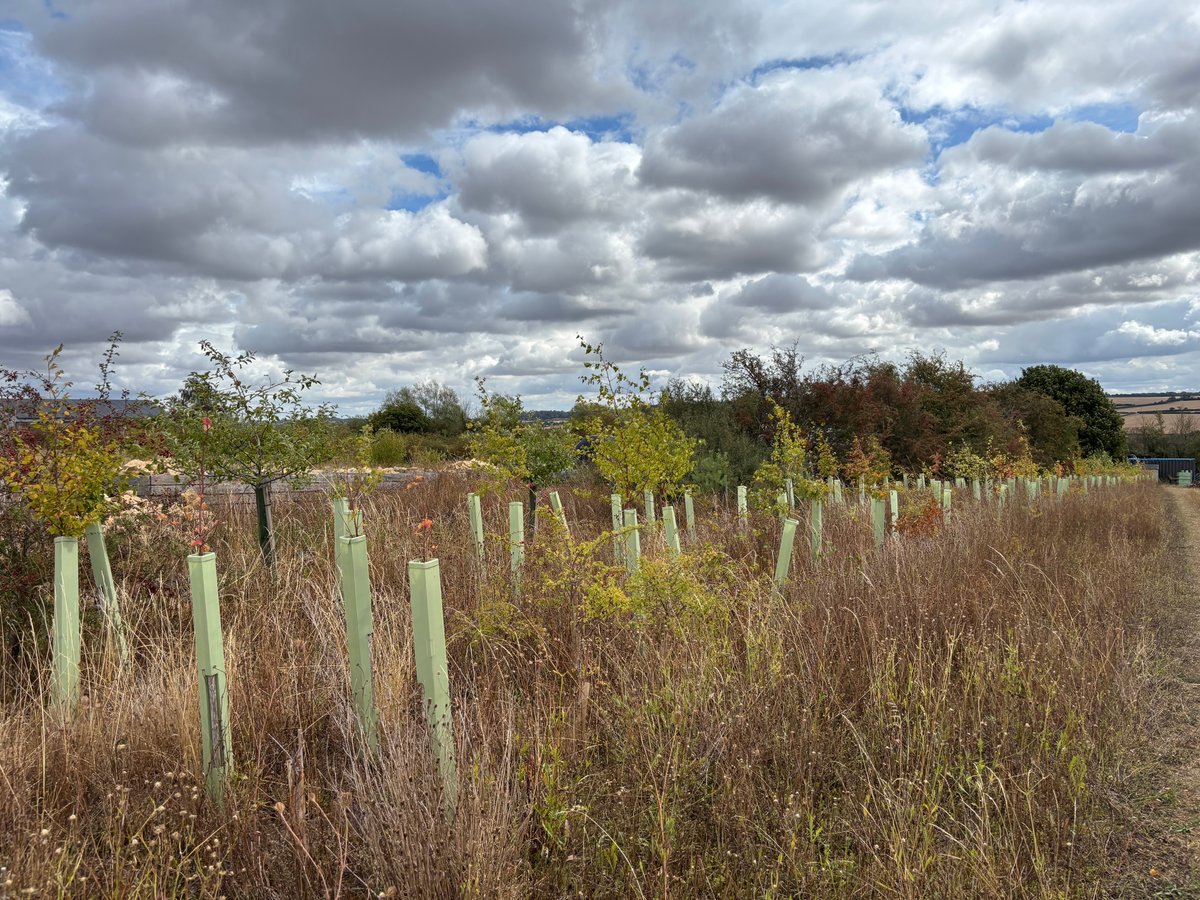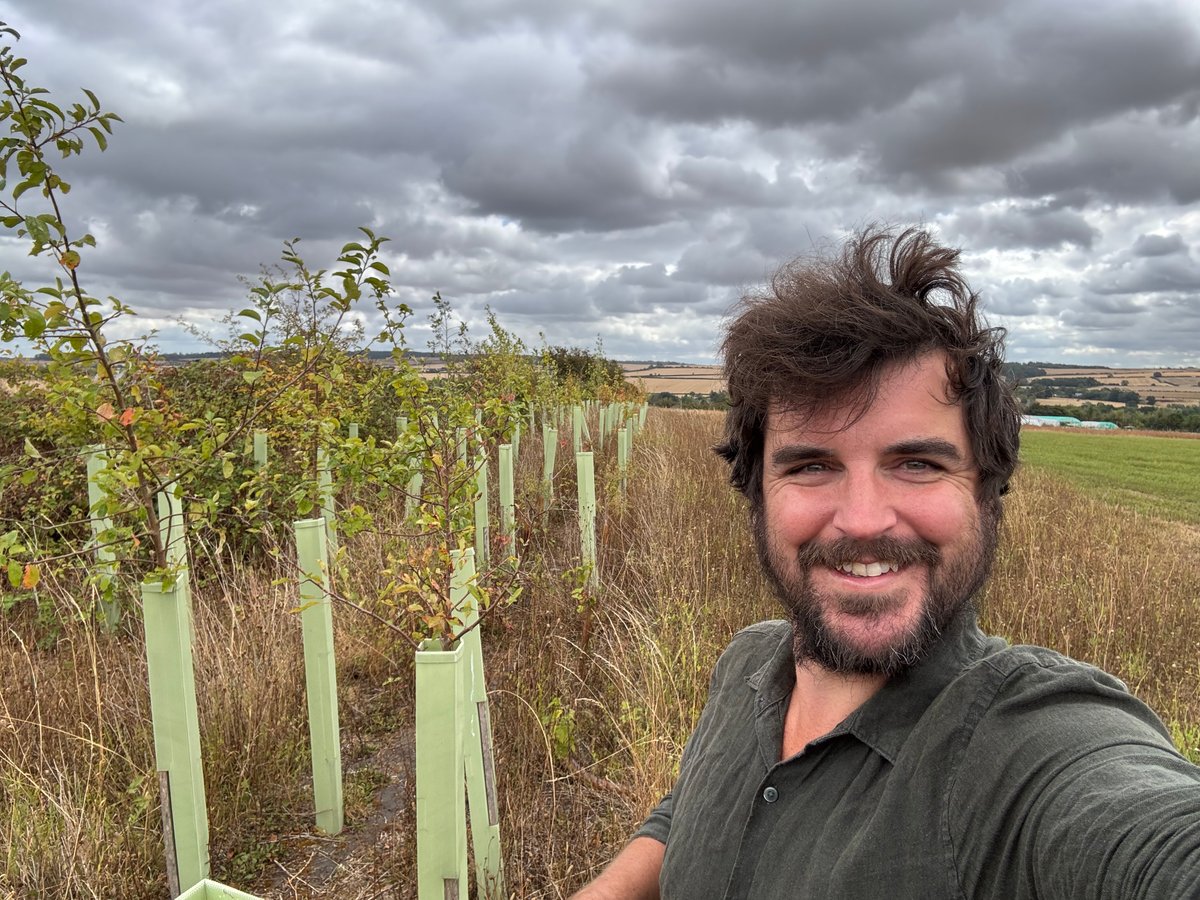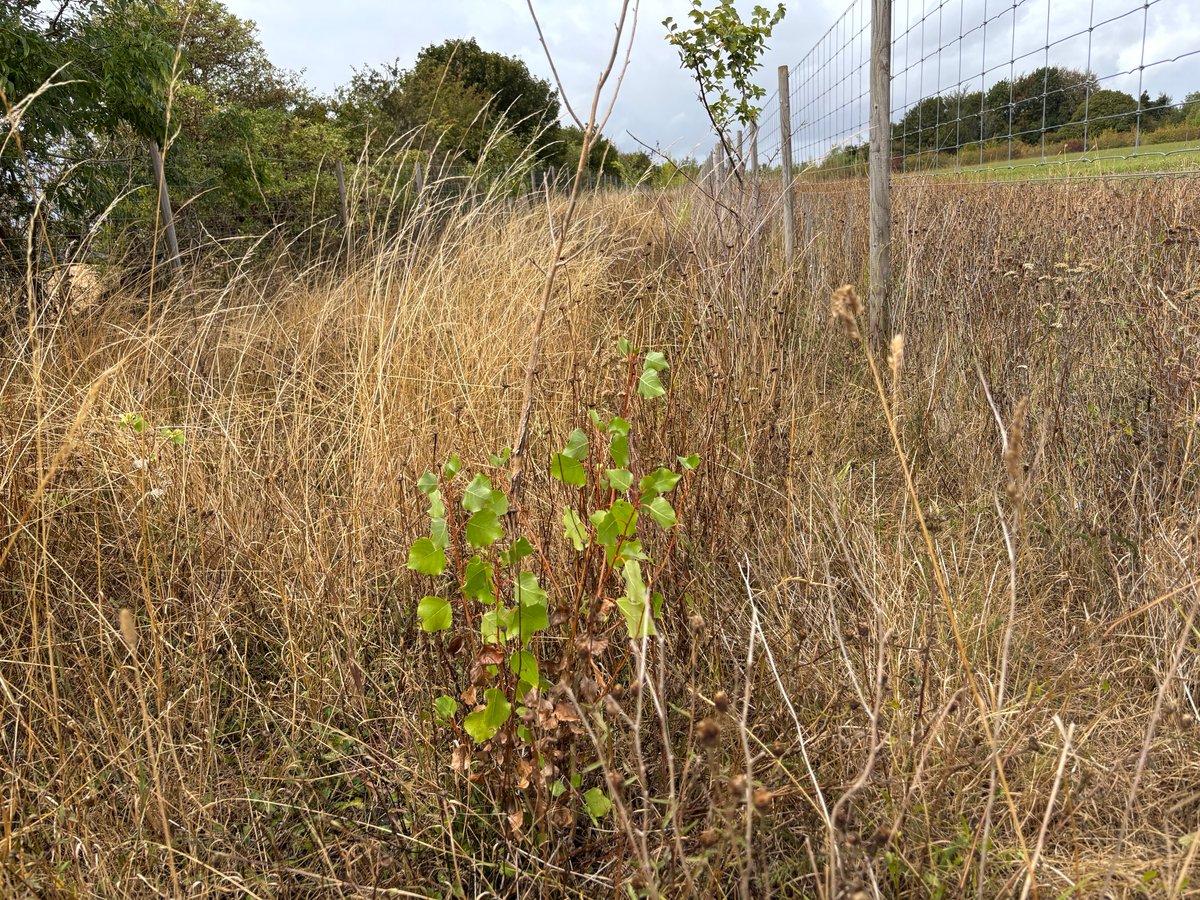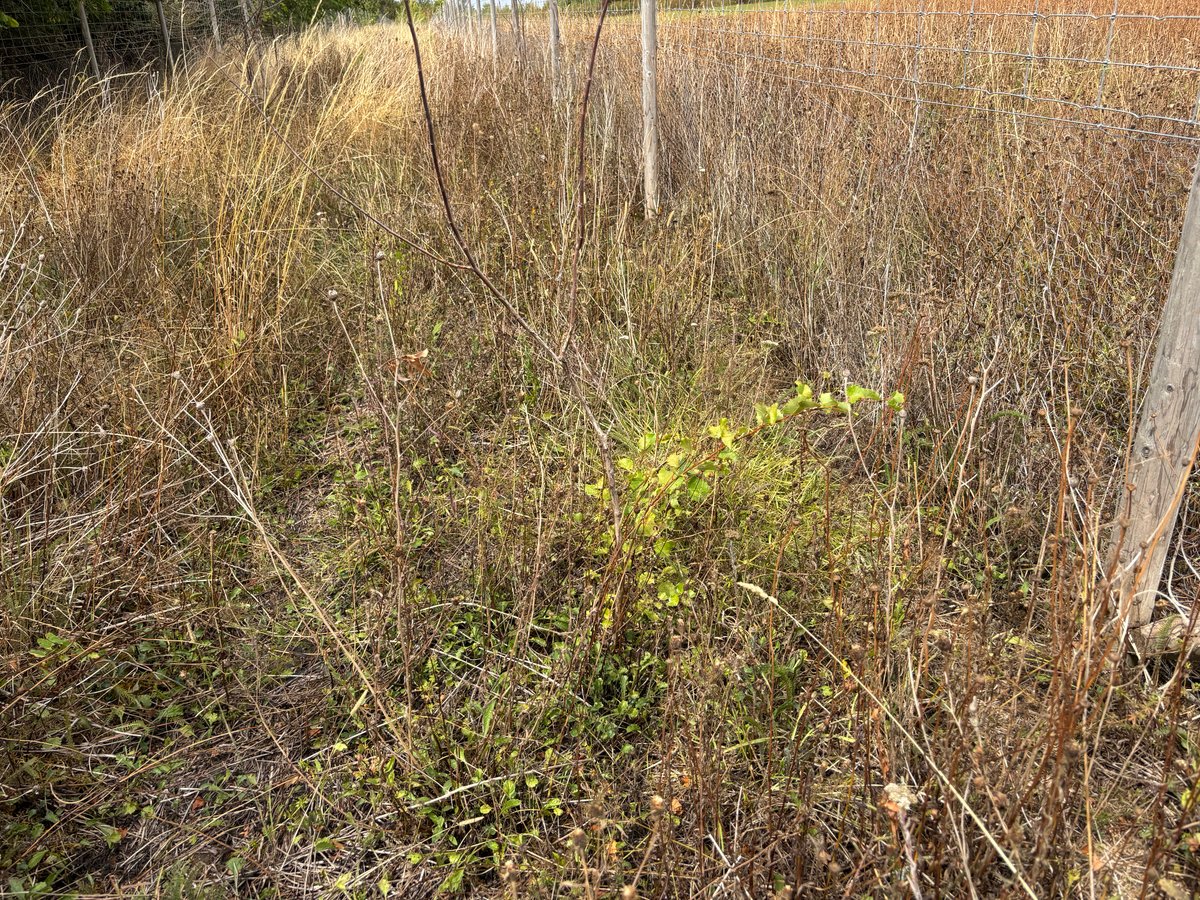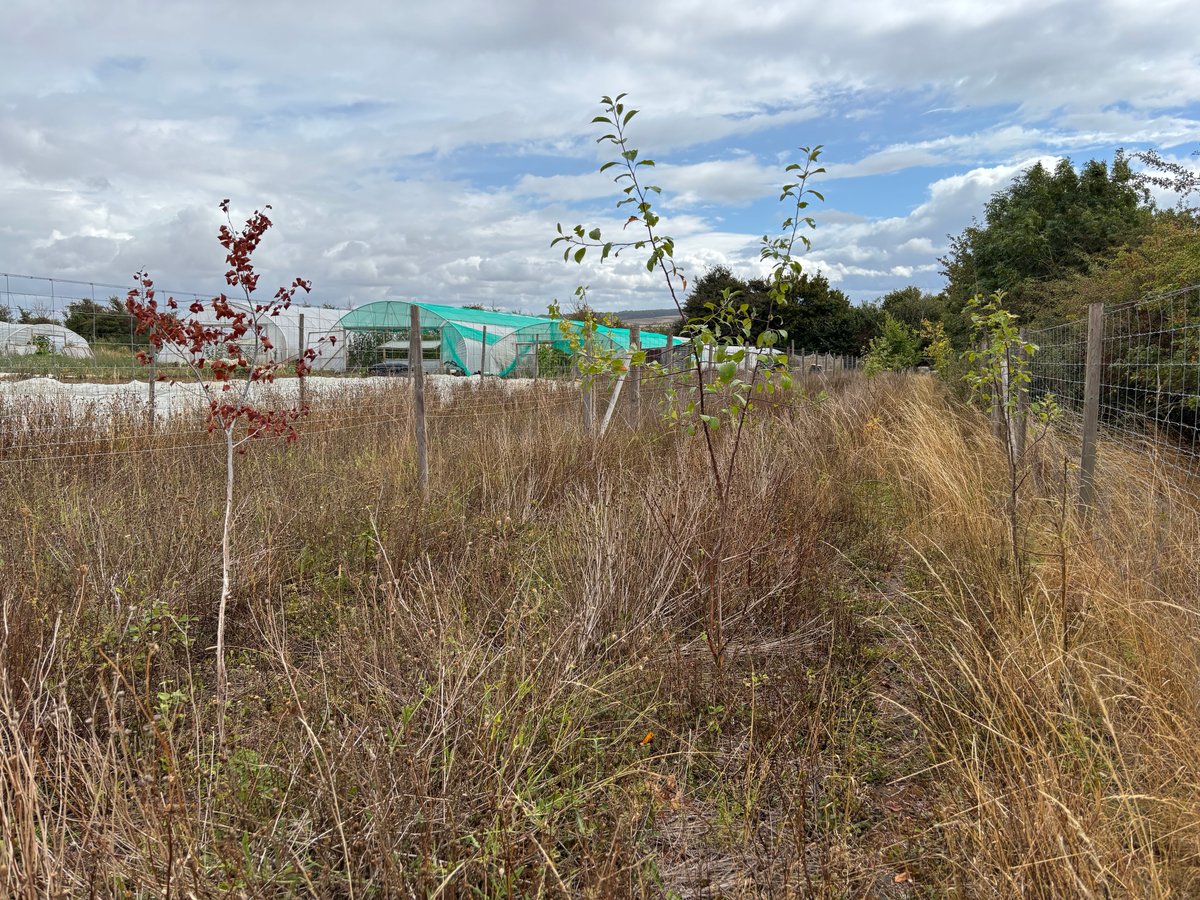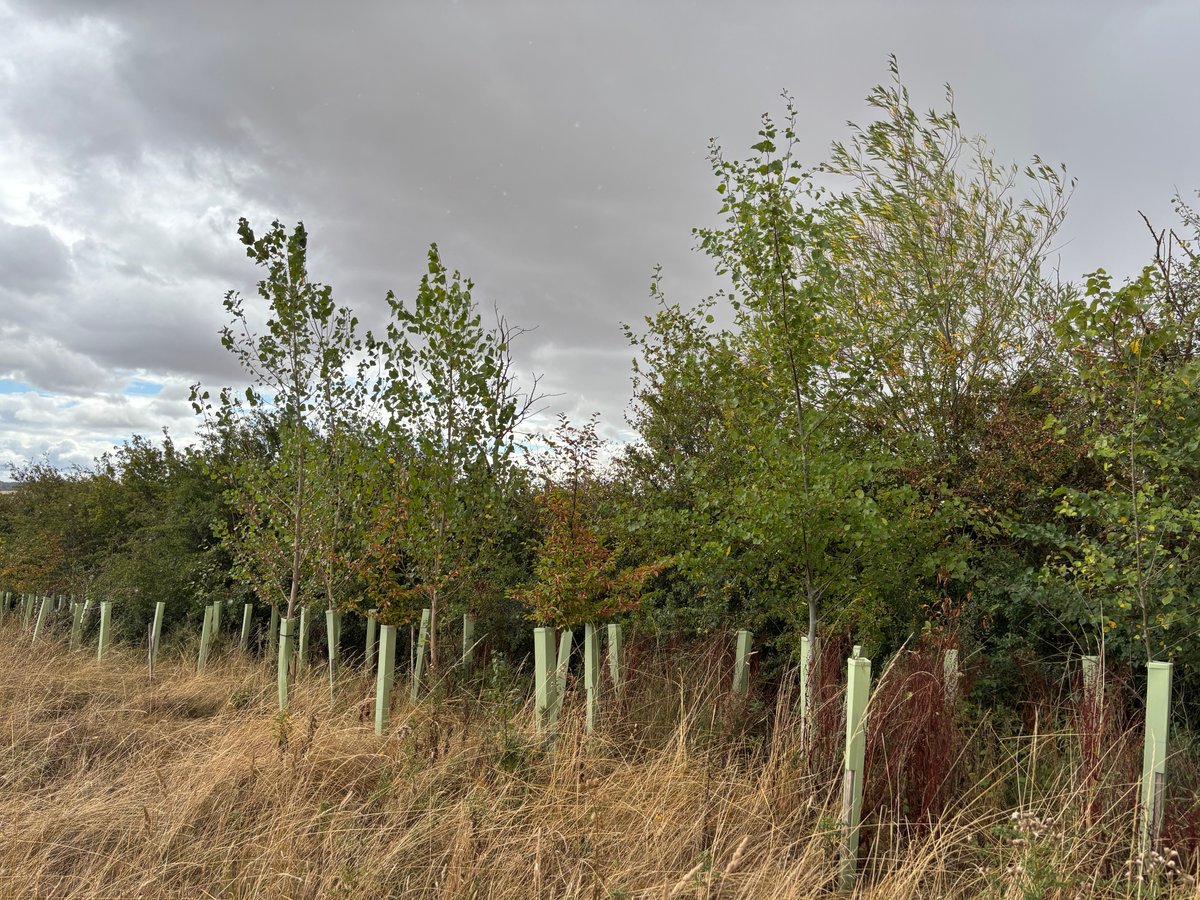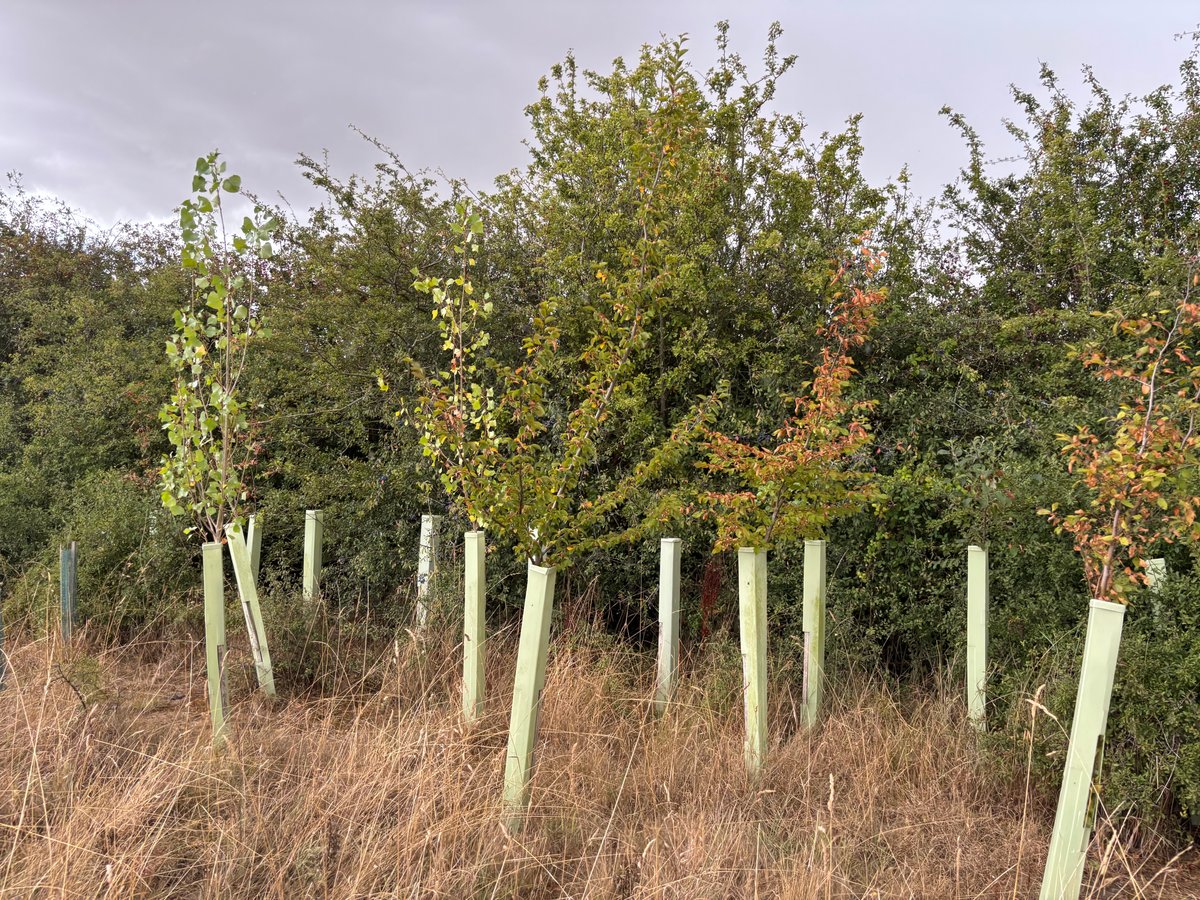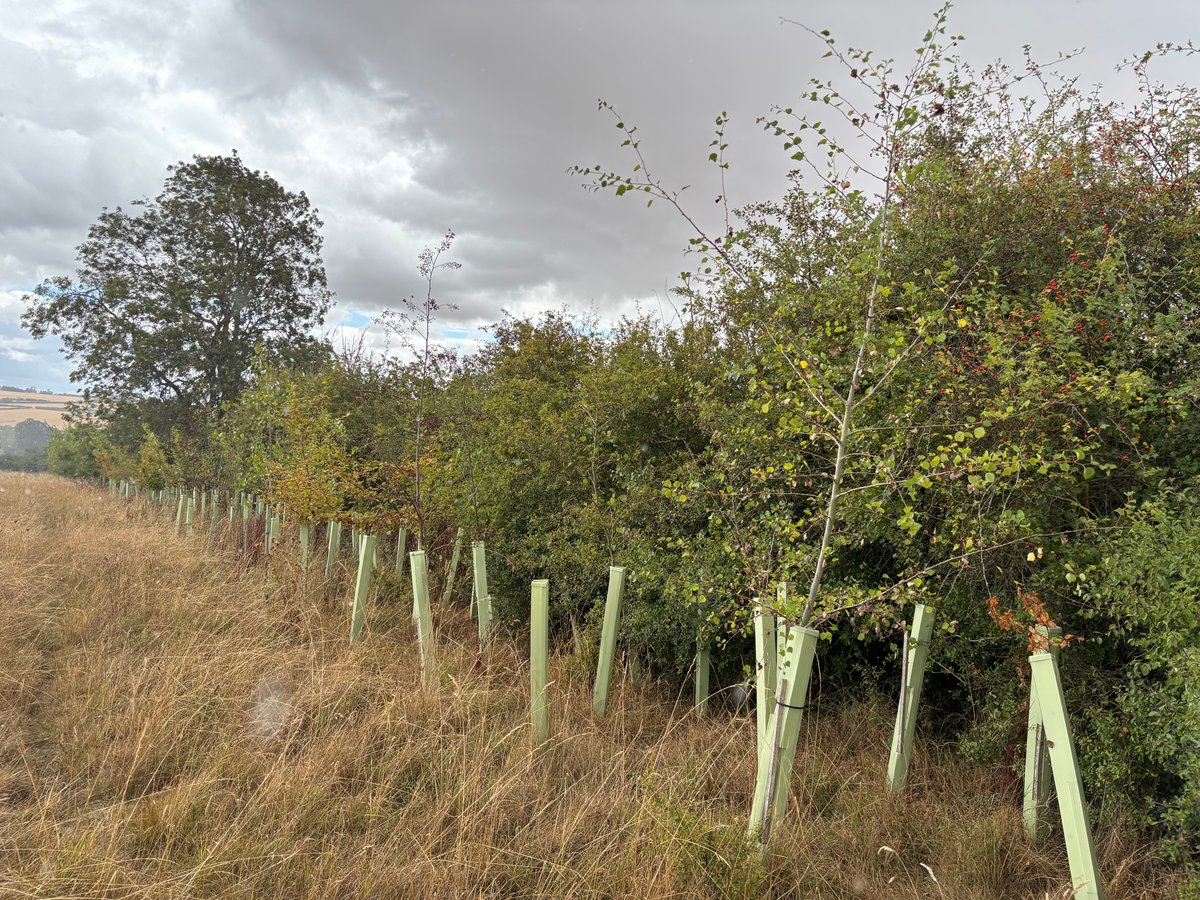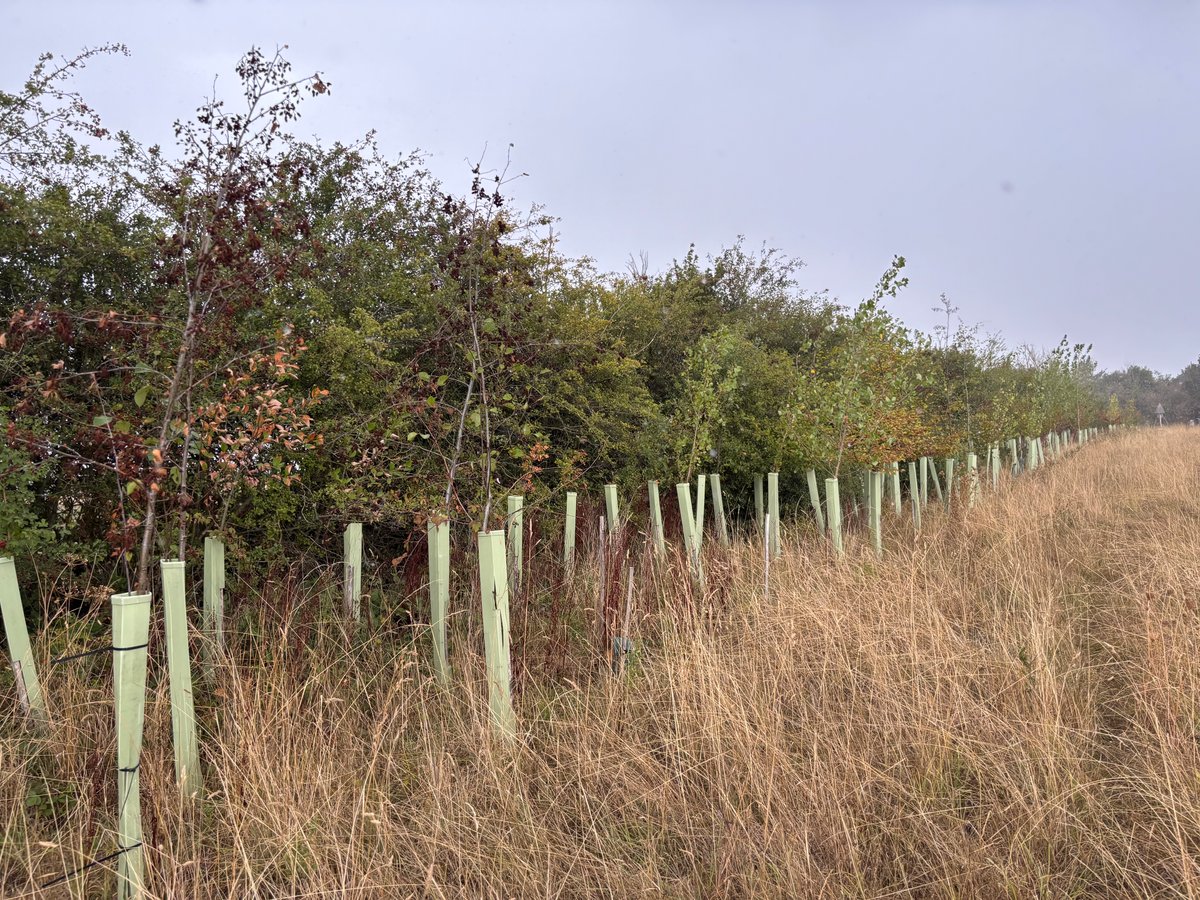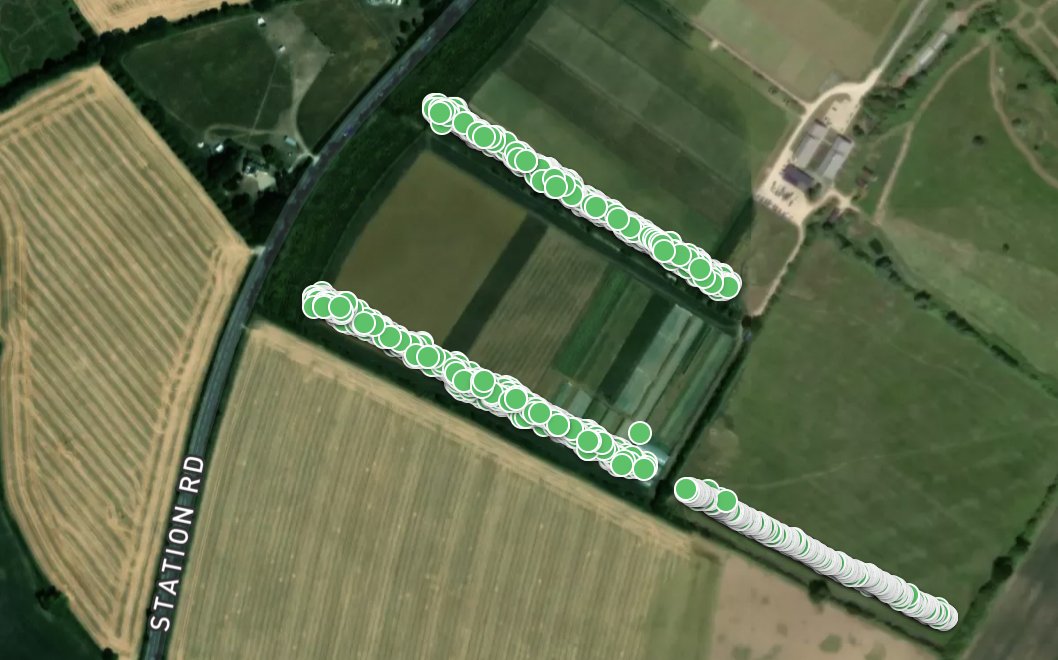

This is a special site so we sent Phil the Trustee to go and see how this experimental site is coming along.
The experimental nature of the site means different slightly different approaches were taken with each of the shelterbelts, combining mulch mat or not, deer fence or deer guards.
The first shelterbelt used deer guards and was doing very well. These were standard recyclable plastic and were holding up despite the wind. The survival rate for this shelterbelt was 82.35%.
The second shelterbelt was thickening up an old hedgerow. It had deer fencing, but the bottom half was made of chickenwire and it’s not lasted well. There is a hole at the end and the gate post is split, so deer are getting in. Big glorious trees with several years of growth getting above head height are losing their main stems, ringbarked by the deer. These trees are mostly not dead, and many of the saplings are growing back from the base as a shrub. Some trees are entirely missing, suggesting the deer ripped them straight out. This section had an unimpressive 62% survival rate despite being restocked, so the fencing absolutely needs fixing. Phil told the landowners where the hole is and how to fix, and they were so grateful they treated him to lunch at the amazing FarmEd cafe.
The third and final shelterbelt is also thickening out an existing hedgerow, but this section is very dominated by blackthorn. Lots of the trees closest to the blackthorn were dead, possibly shaded out from the blackthorn. This is the “lower” side of the shelterbelt made of shrubs and medium trees, so the blackthorn might make an effective replacement as the goal of this row is to ramp up the wind towards the taller trees. The rows of larger trees were doing much better, so the shelterbelt should still do its job, and these sheep will still get the shade required to help them through difficult summers. The survival rate here was 73.43%, but the blackthorn was bringing that rate effectively higher.
In total, once we’ve controlled for the differing sizes of these three shelterbelts, the overall survival rate is 70.68%, which means a little work will be needed to get that back above 80%.