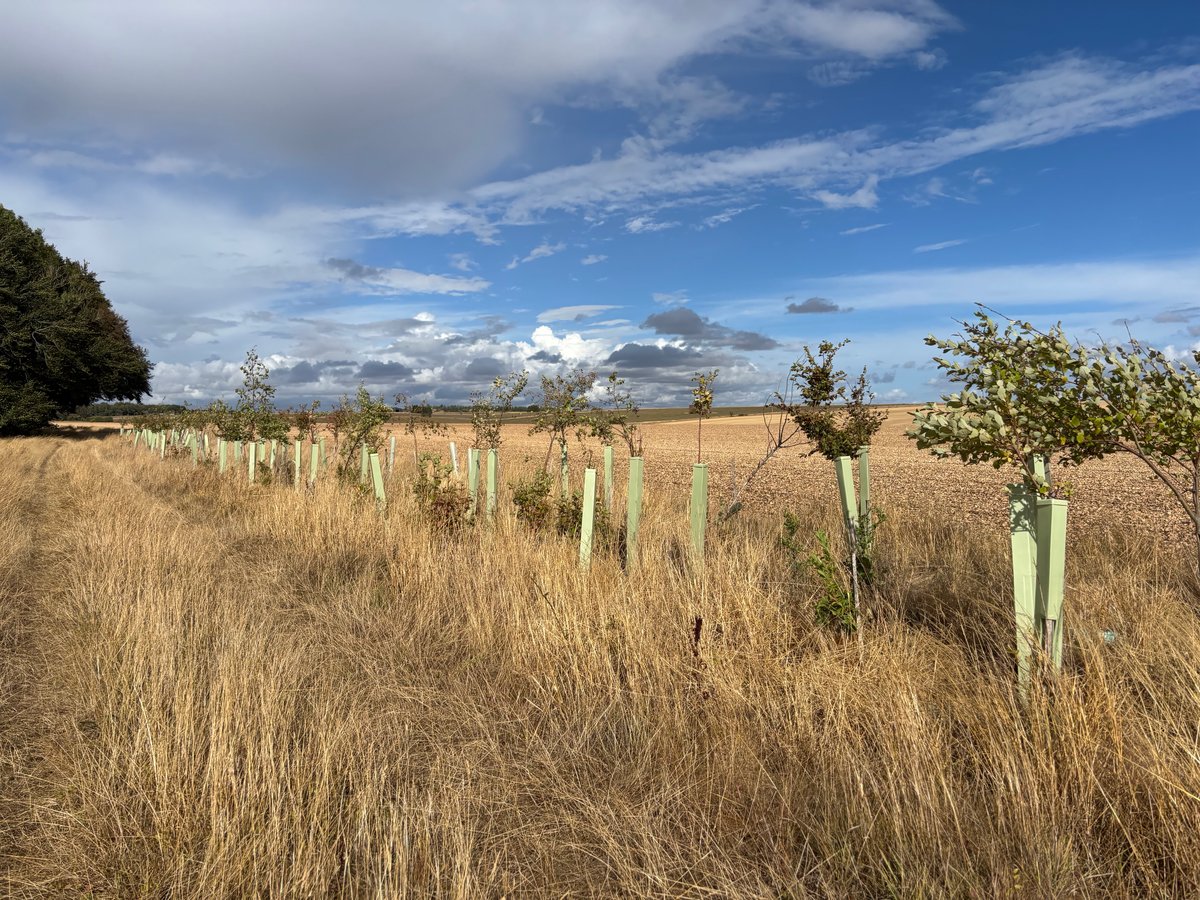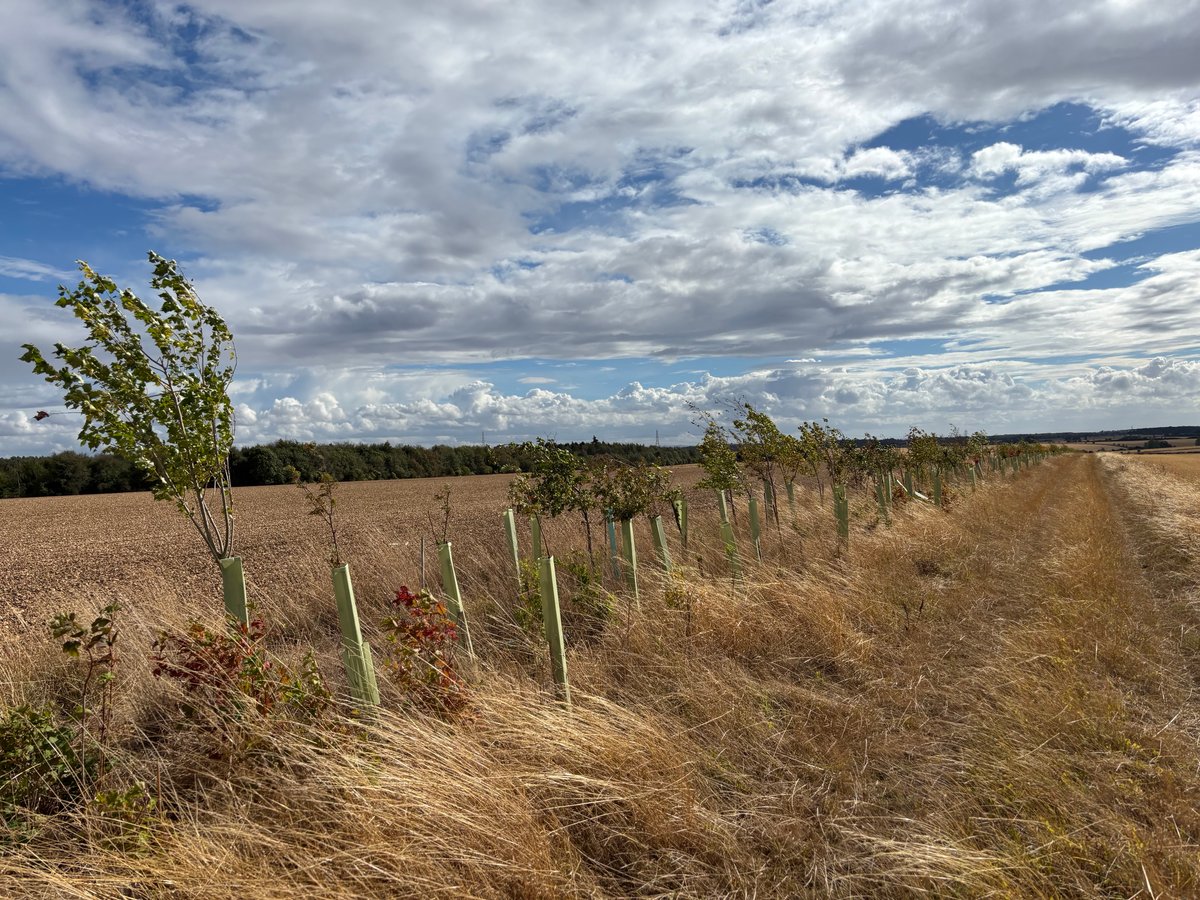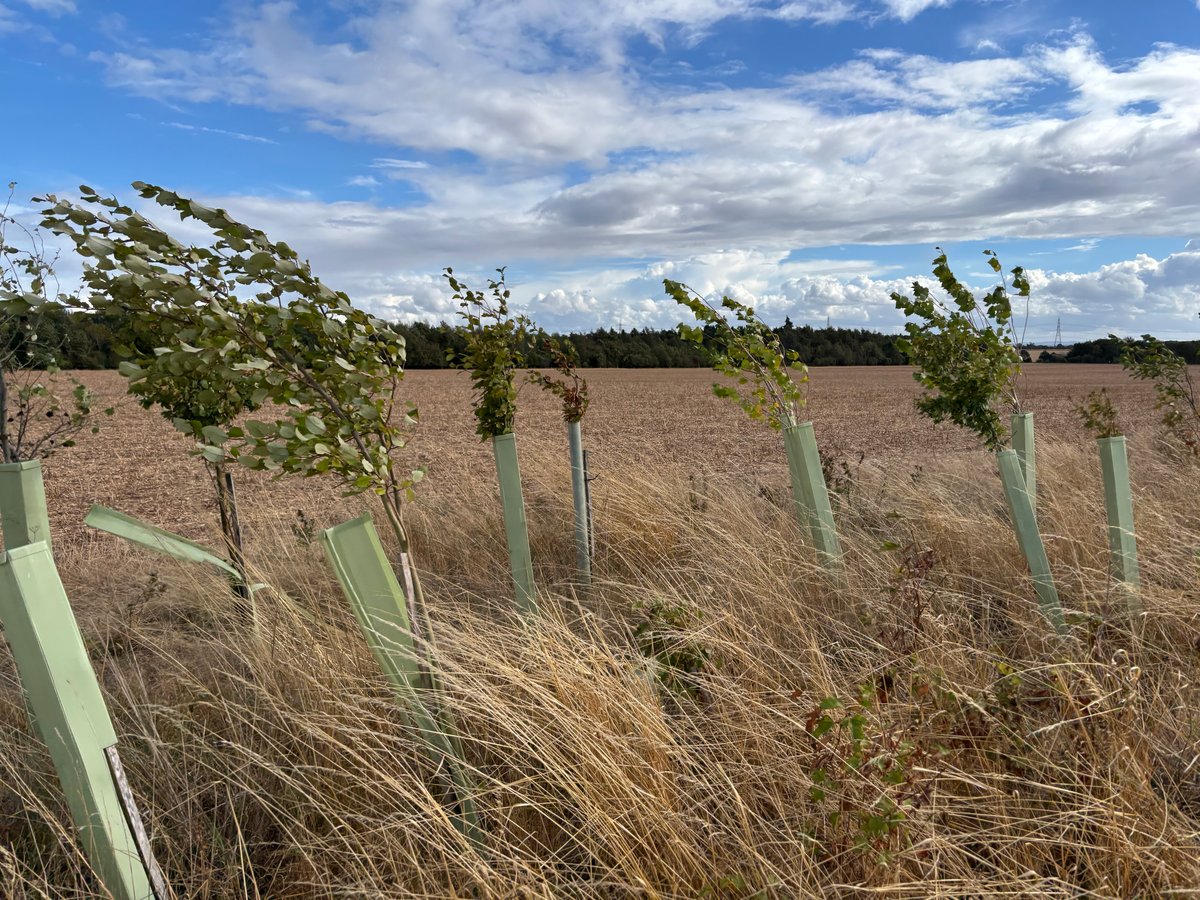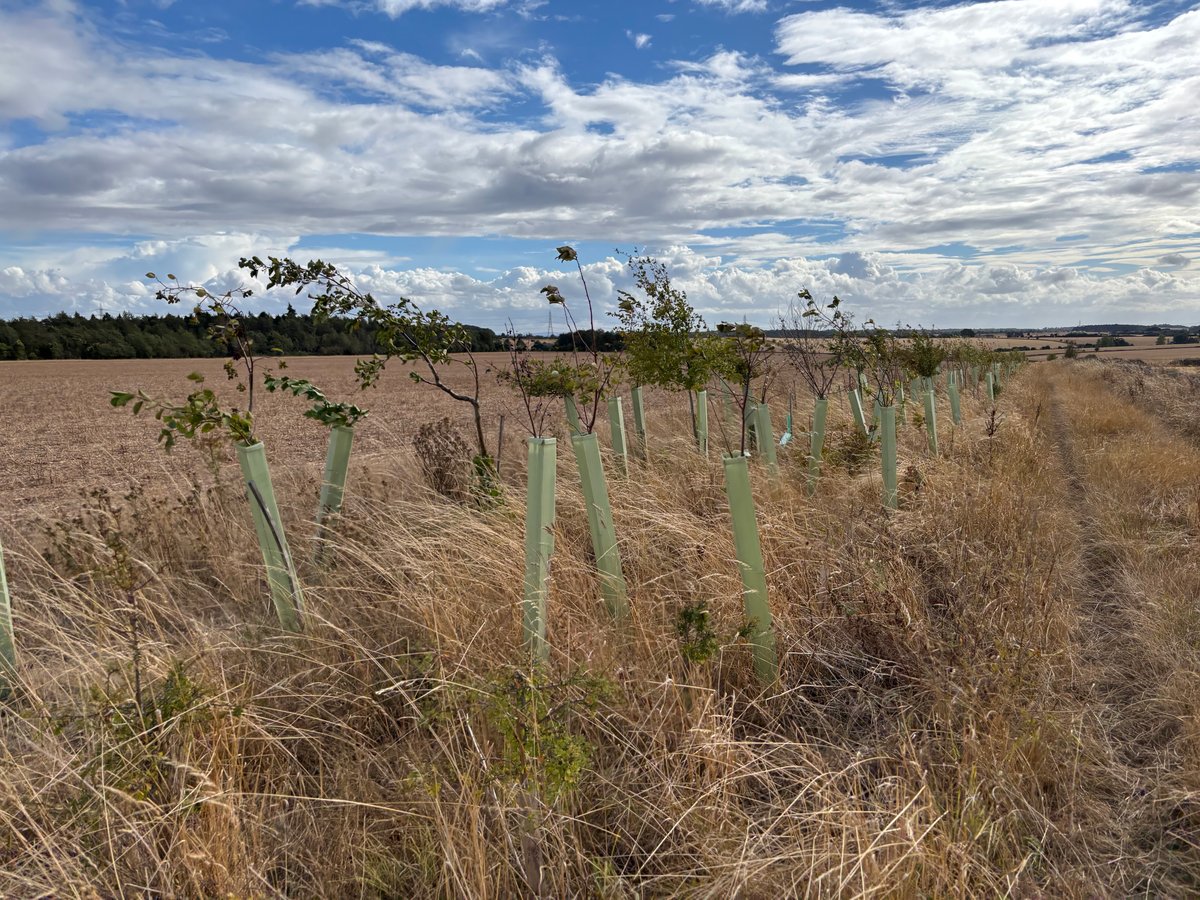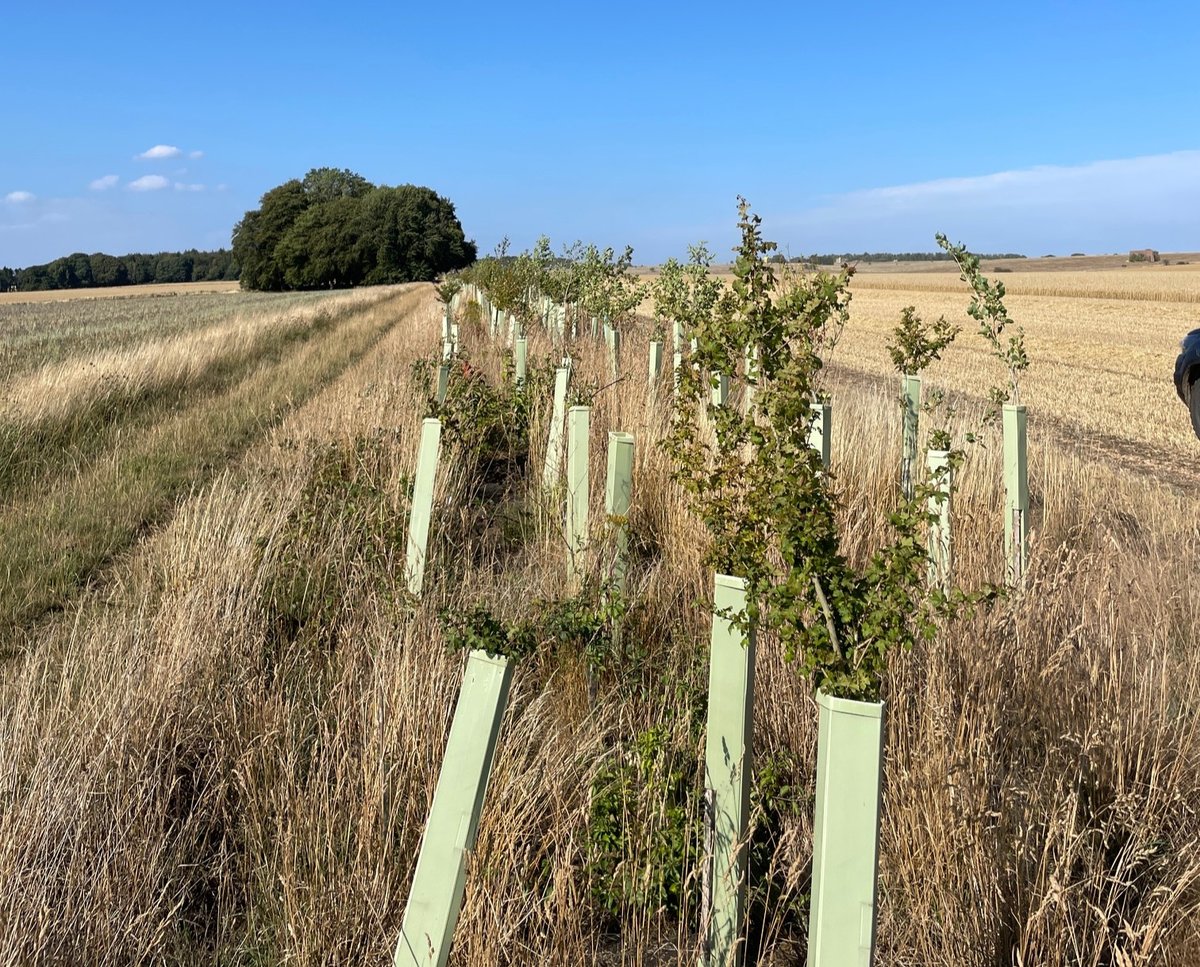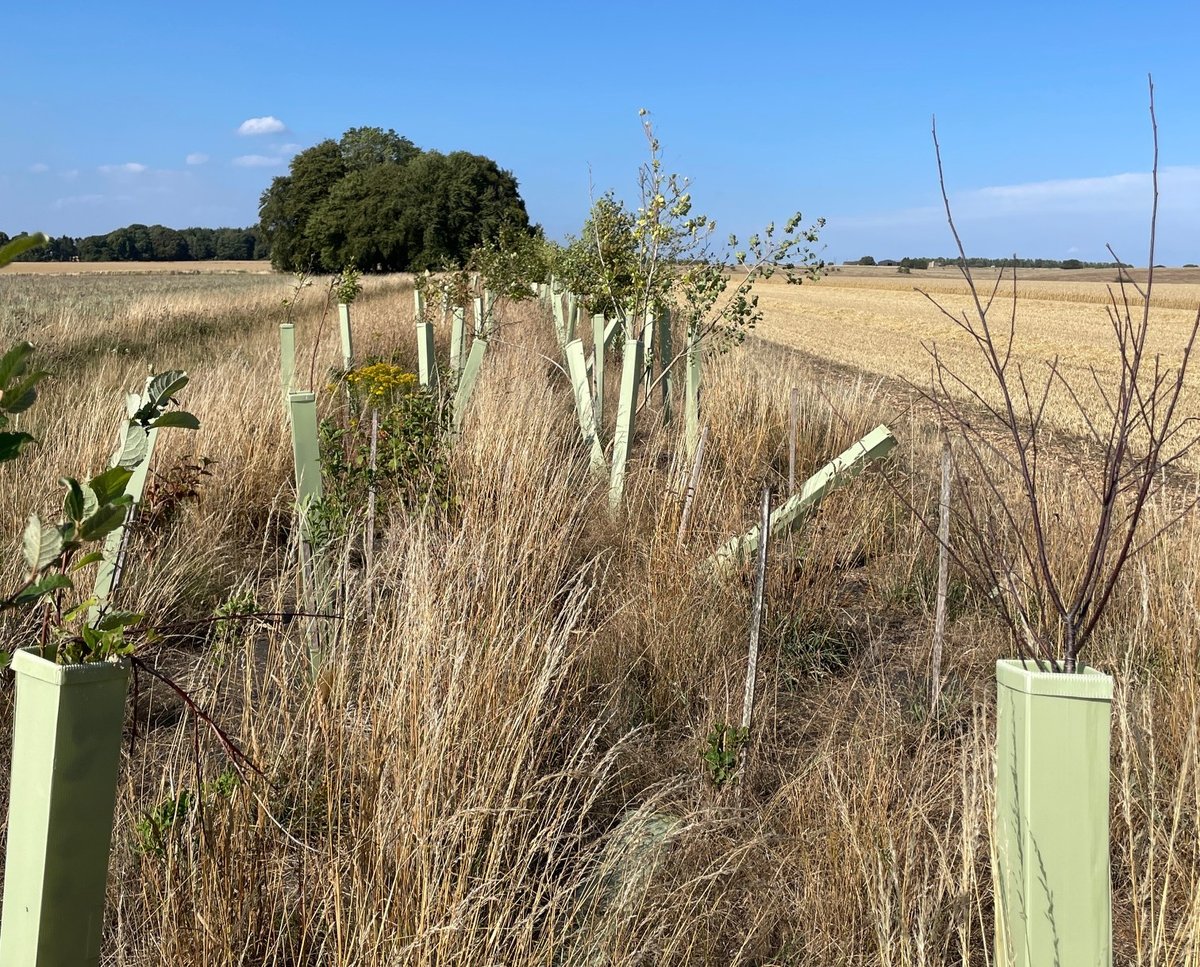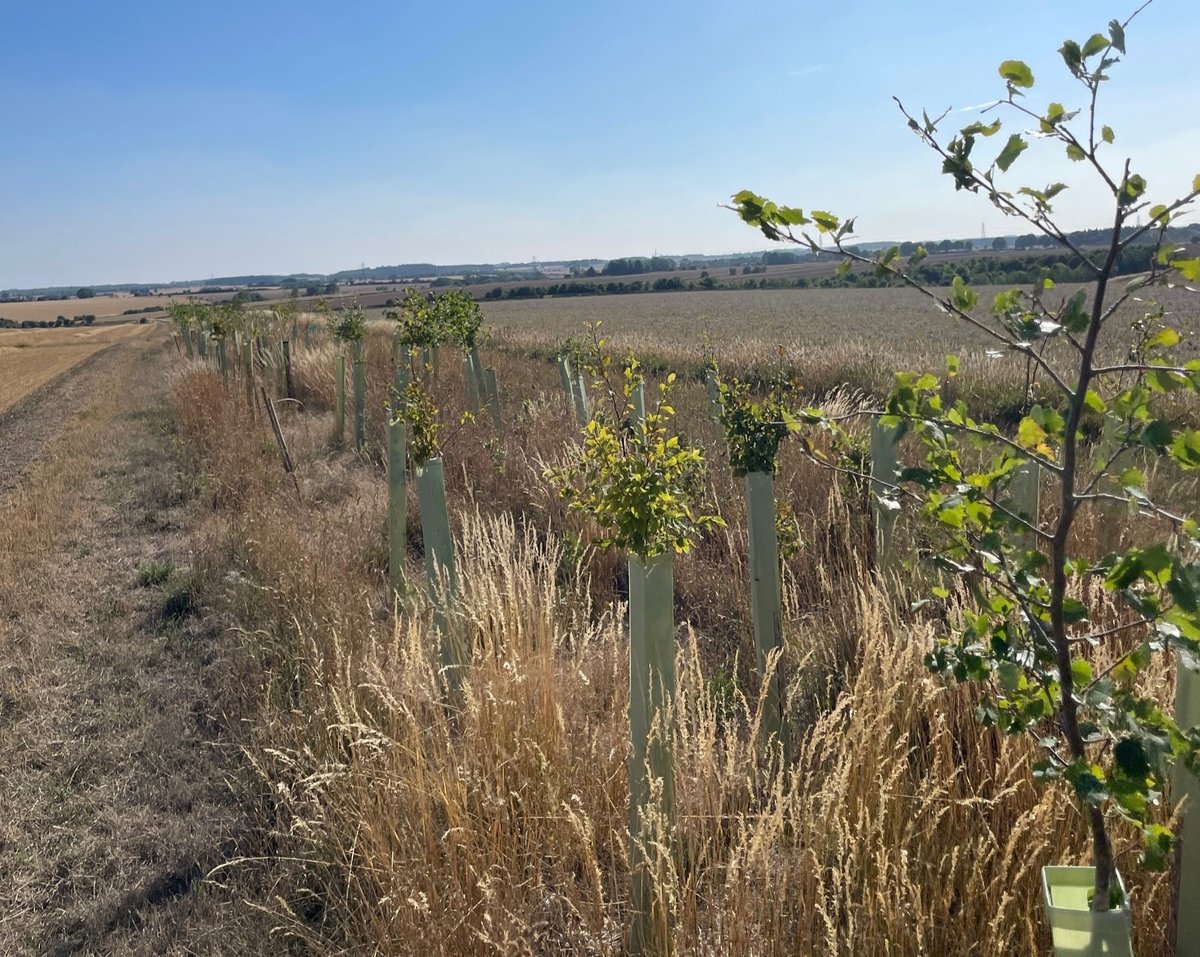

Wandering along the public footpath that goes right past this shelterbelt, Phil went to see how things were coming along.
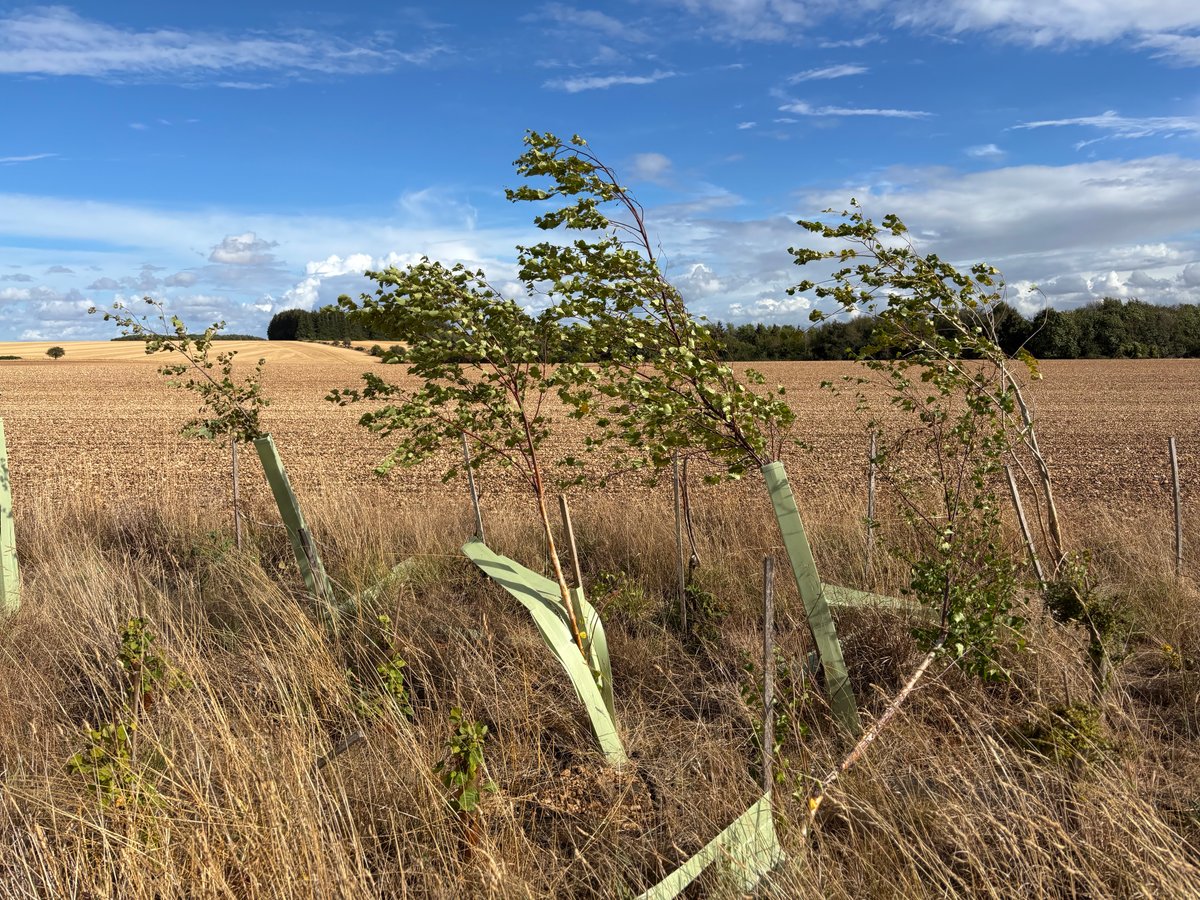
Clearly this is a site that needs a shelterbelt, the wind was intense for the entire survey, but that wind is making life difficult for the saplings. They are all bent over from consistent prevailing winds from the south west.
First, the survival rates. The shelterbelt is split in half by a track, so North and South were counted separately.
- North: 50 alive out of 52 counted = 96.15% survival
- South: 87 alive out of 101 counted = 86.13% survival
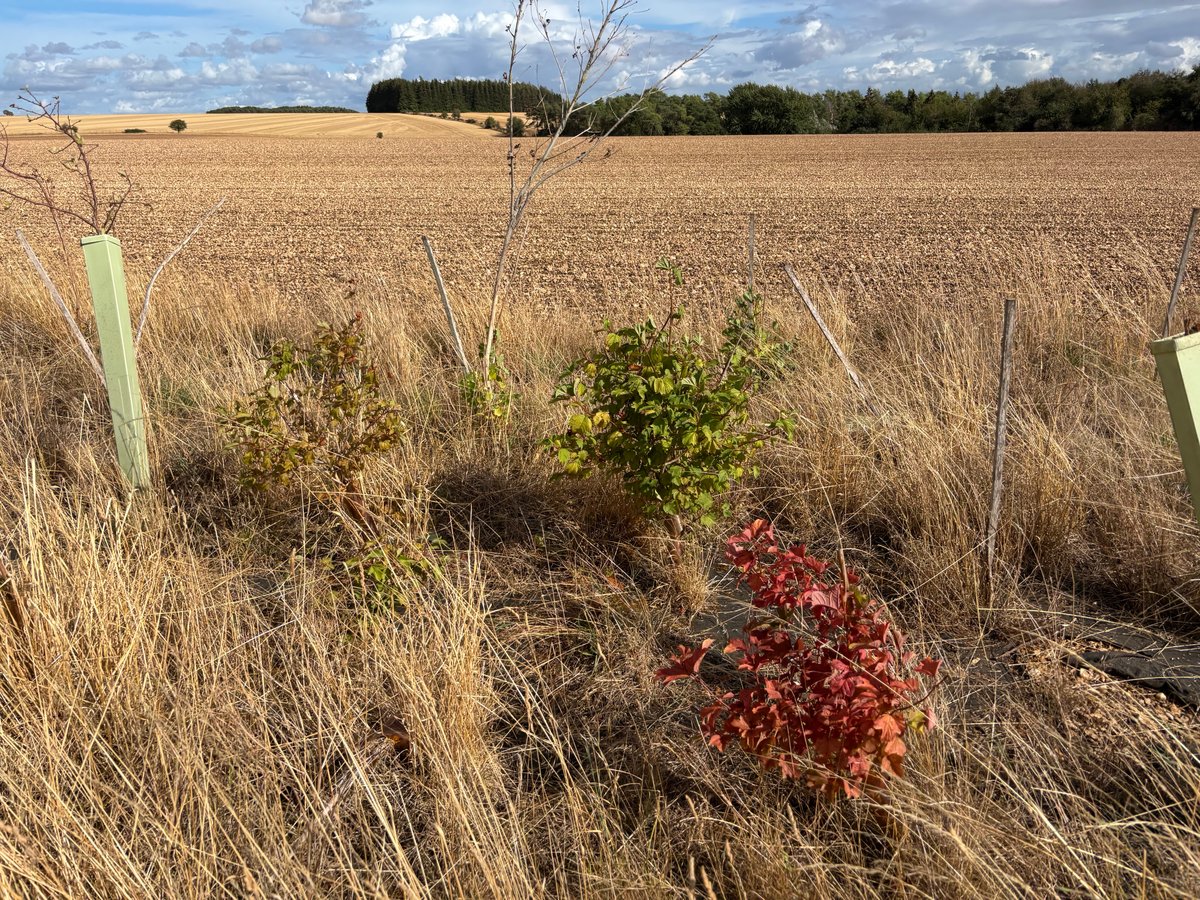
- Overall: 137 alive out of 153 counted = 89.54% survival Although that’s an impressive survival rate, “alive” is not the only metric for success here. Many of these have been ringbarked by browsing deer, with 2 meters of growth on the main trunk killed off, turning the trees into shrubs as they regrow from the base. These will be stronger against drought and winds, and more resilient to deer, but we need to protect them enough they can start doing their job as a shelterbelt.
How have the deer managed to get past the guards? These are the standard recycled/recyclable deer guards we usually use: the Defender Tree Shelters. This location is so windy they are struggling. Worse, the team doing the planting unfortunately selected the wrong holes when sliding these guards onto the wooden stakes. The guards are universal and support many common wooden stake dimensions, but these are small stakes with big holes selected. The wind has rattled them around so aggressively that many of the guards have split, exposing trees large and small to deer who have taken their heads off, or eaten enough of the bark to kill off the main trunk. Switching to windproof “mesh” guards will be the solution here.
A maintenance day should be organized with the landowner to get this tidied up, damaged guards removed and recycled, and replaced where necessary with “photodegradable” windproof guards like Continental Fine Mesh Shelter.